
More of "Cerro Pelón"
SCHOOL VISIT
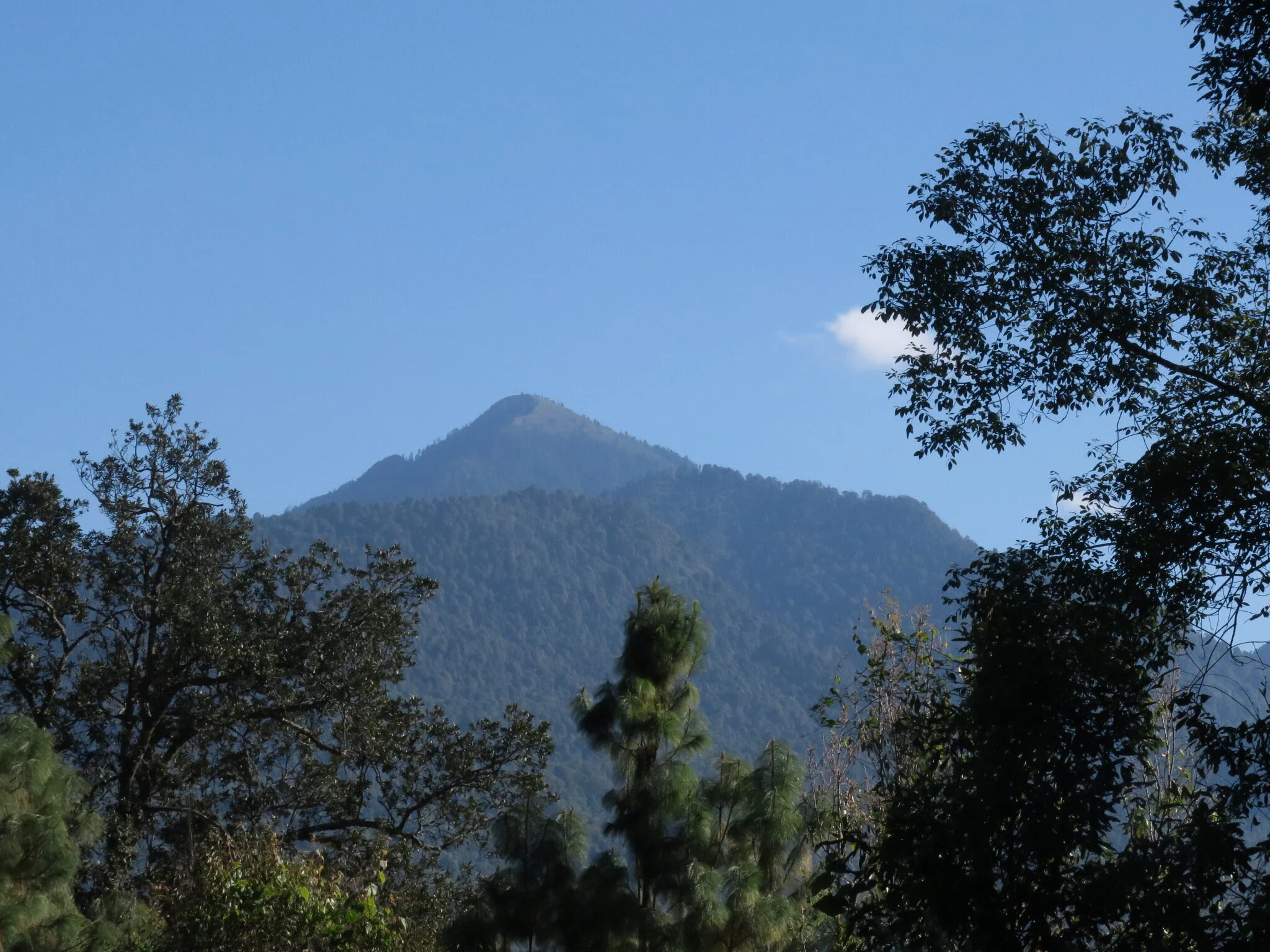
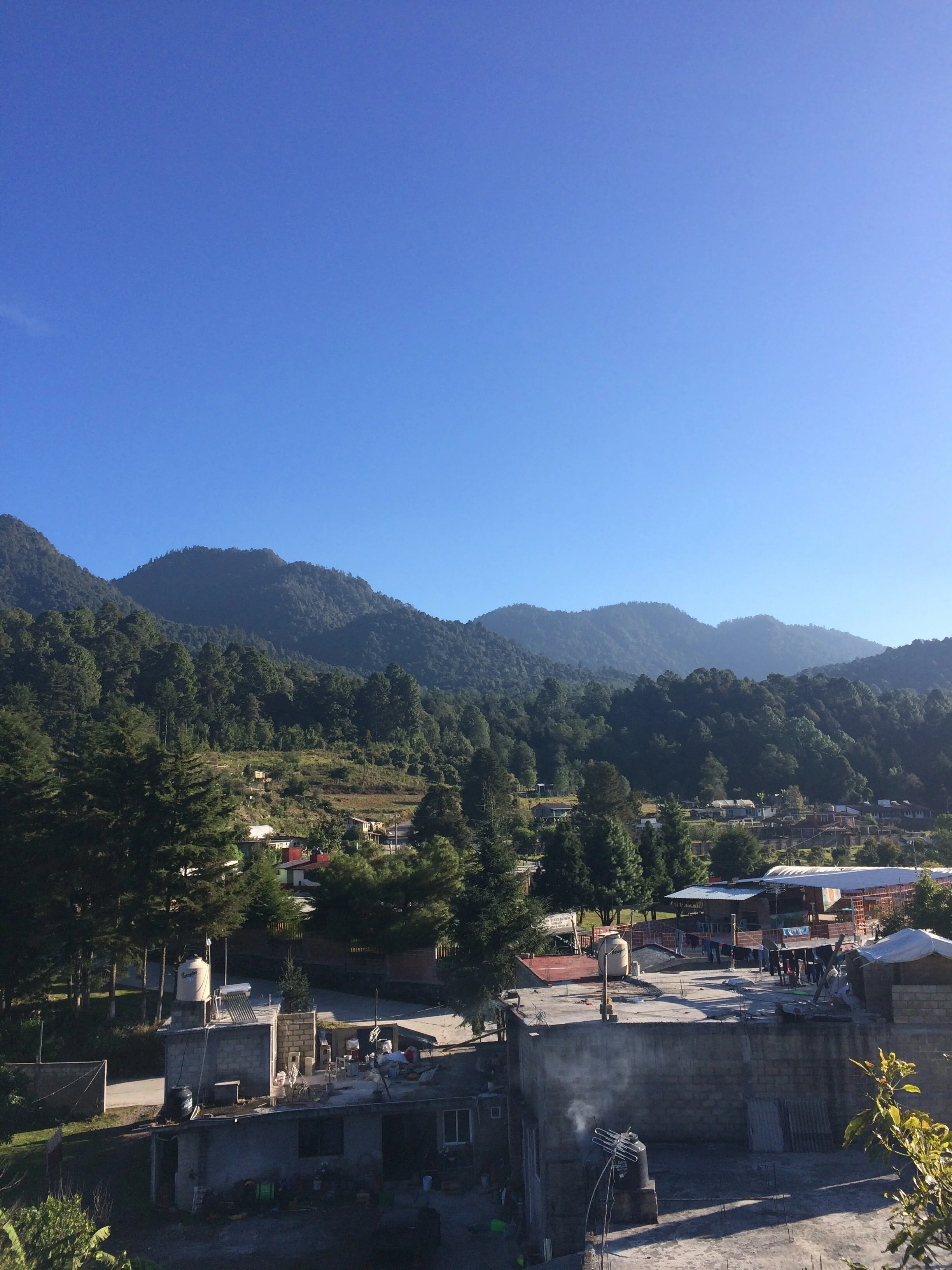
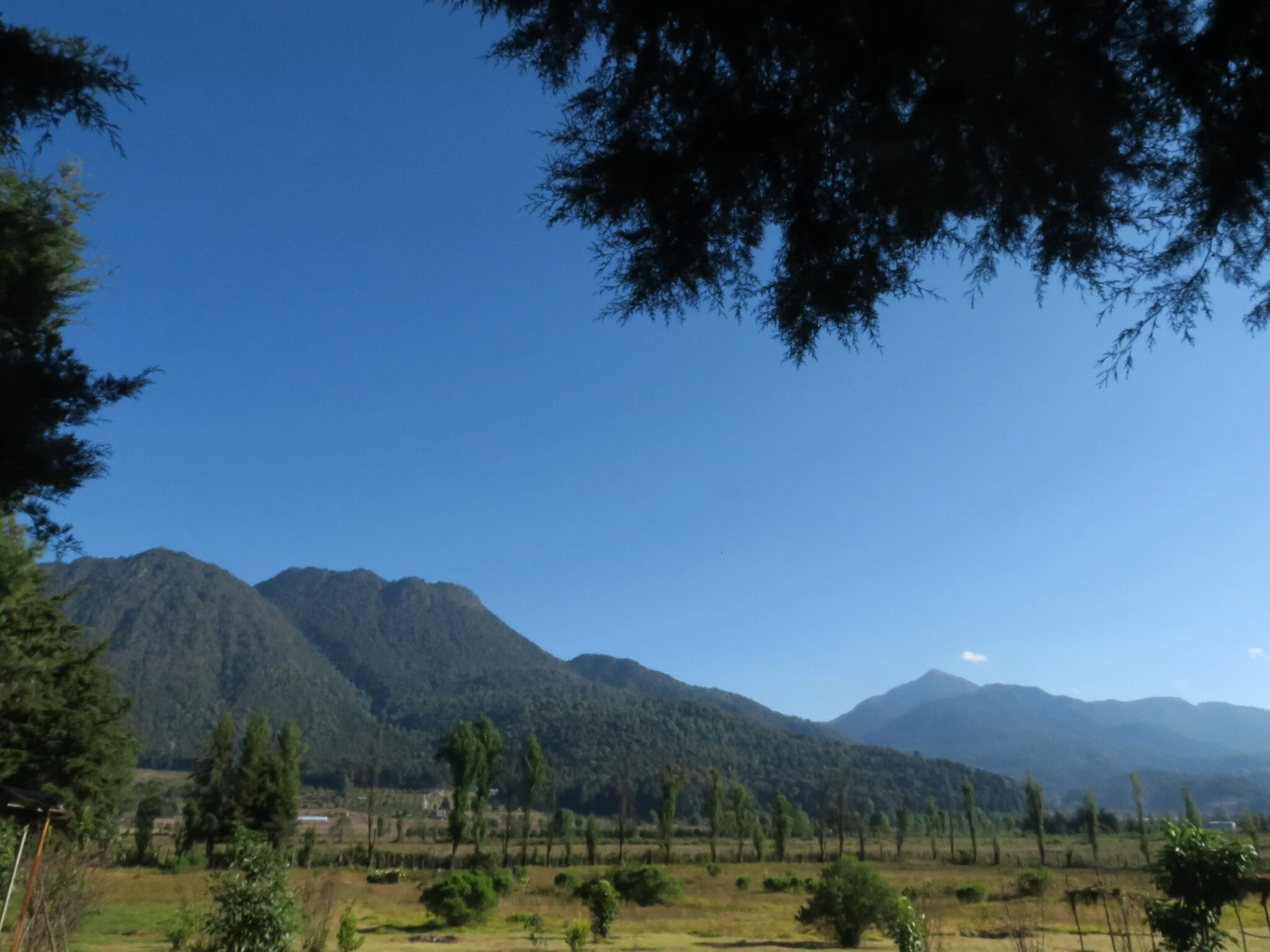
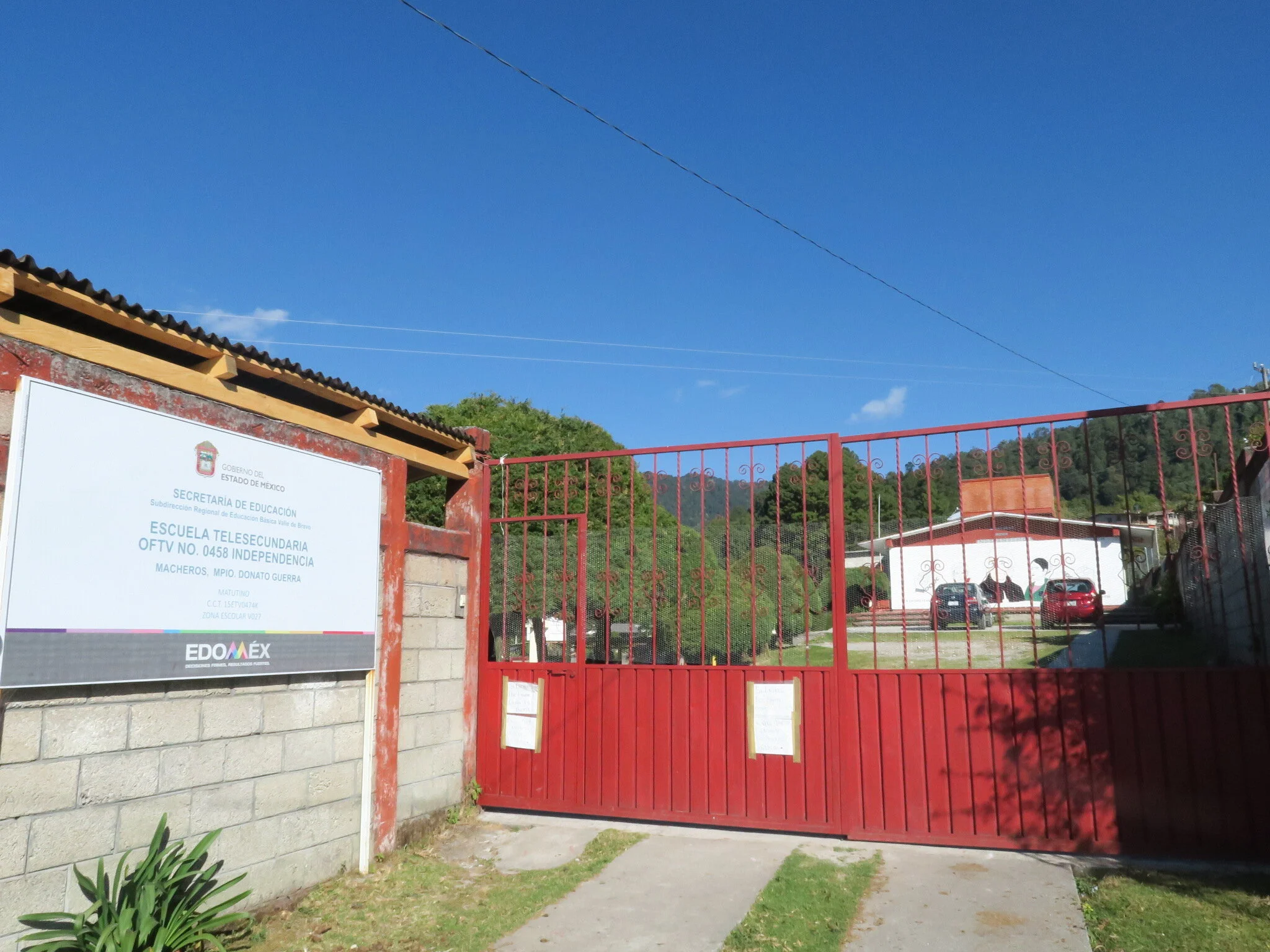
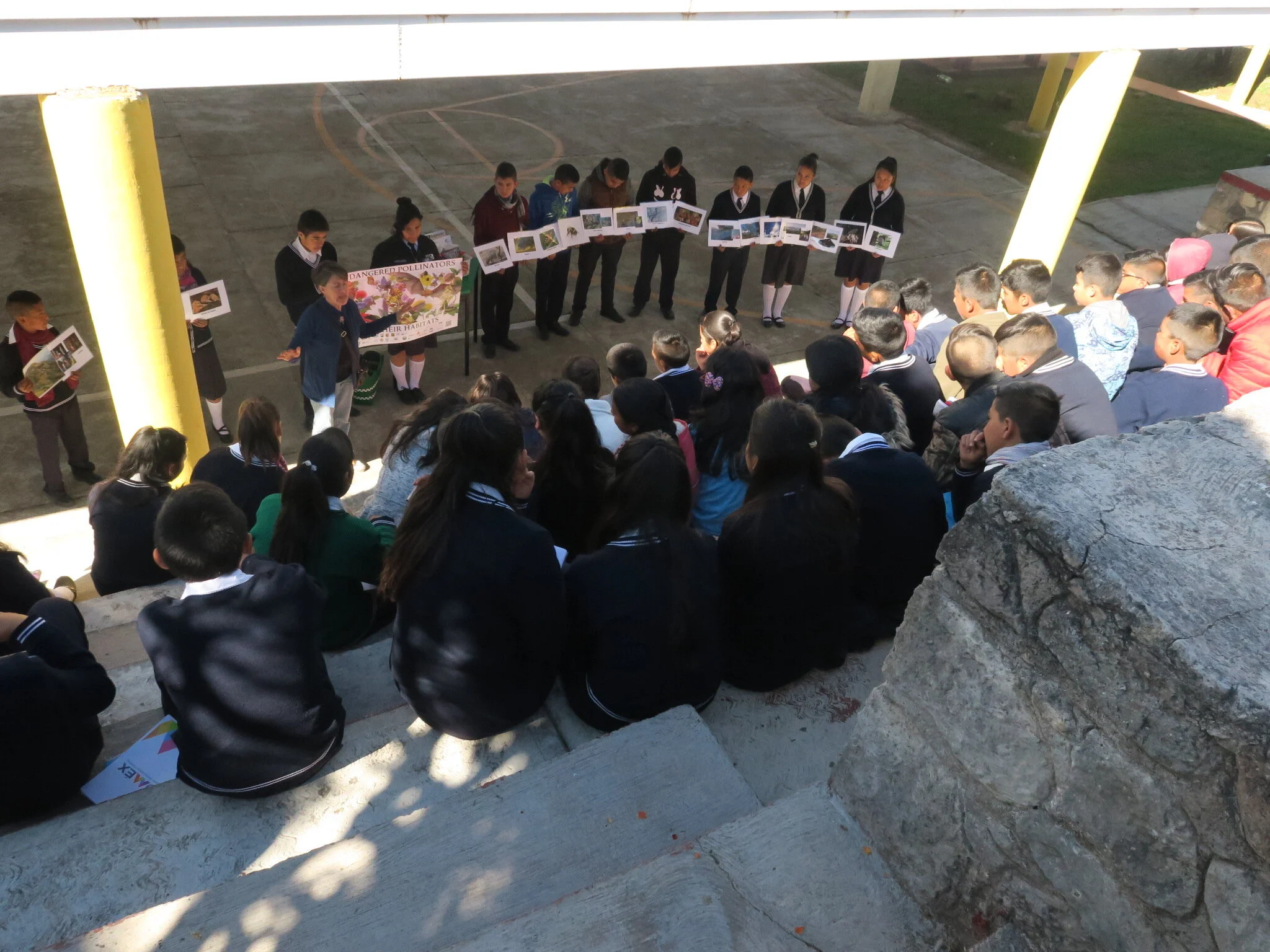
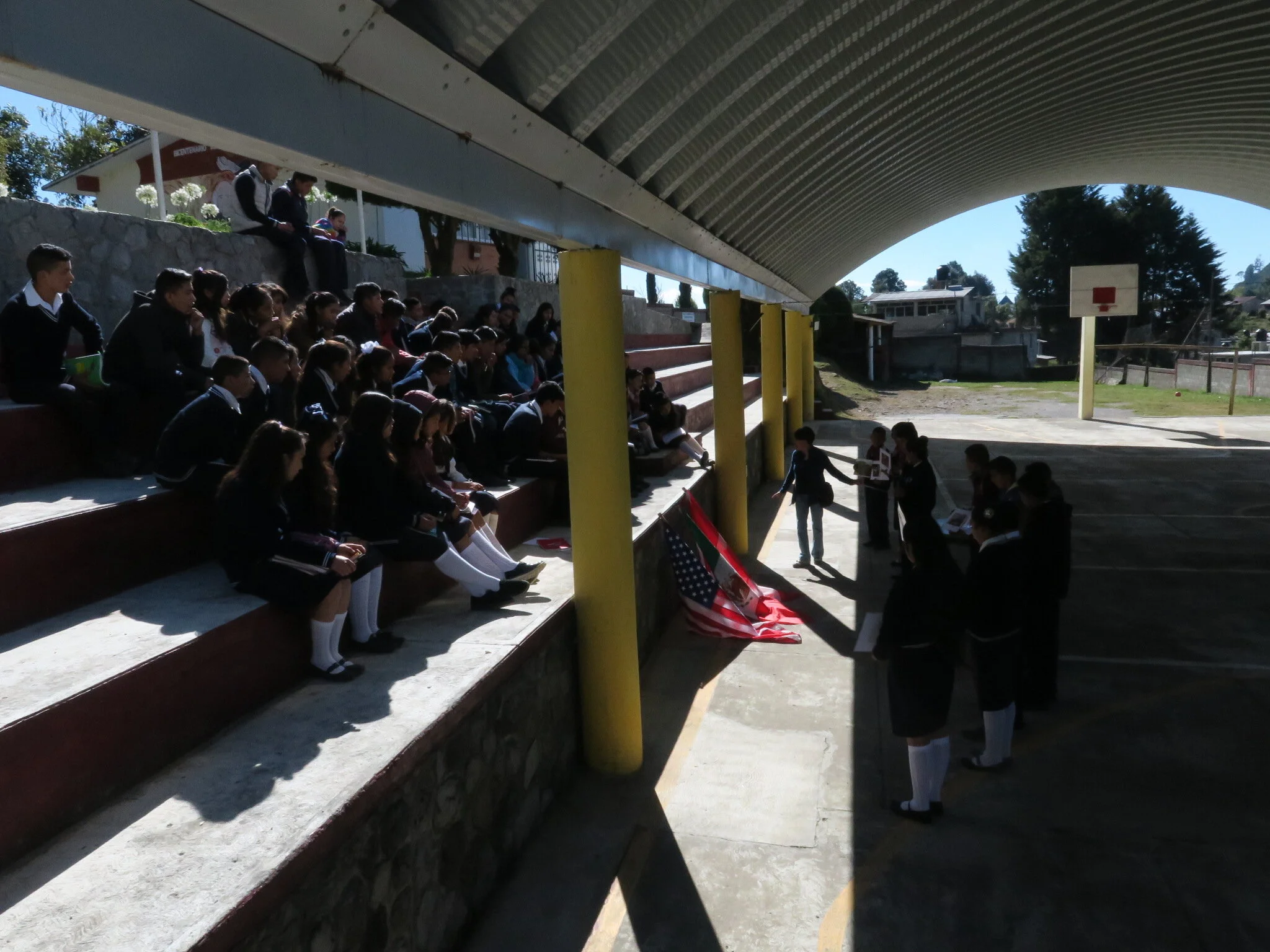
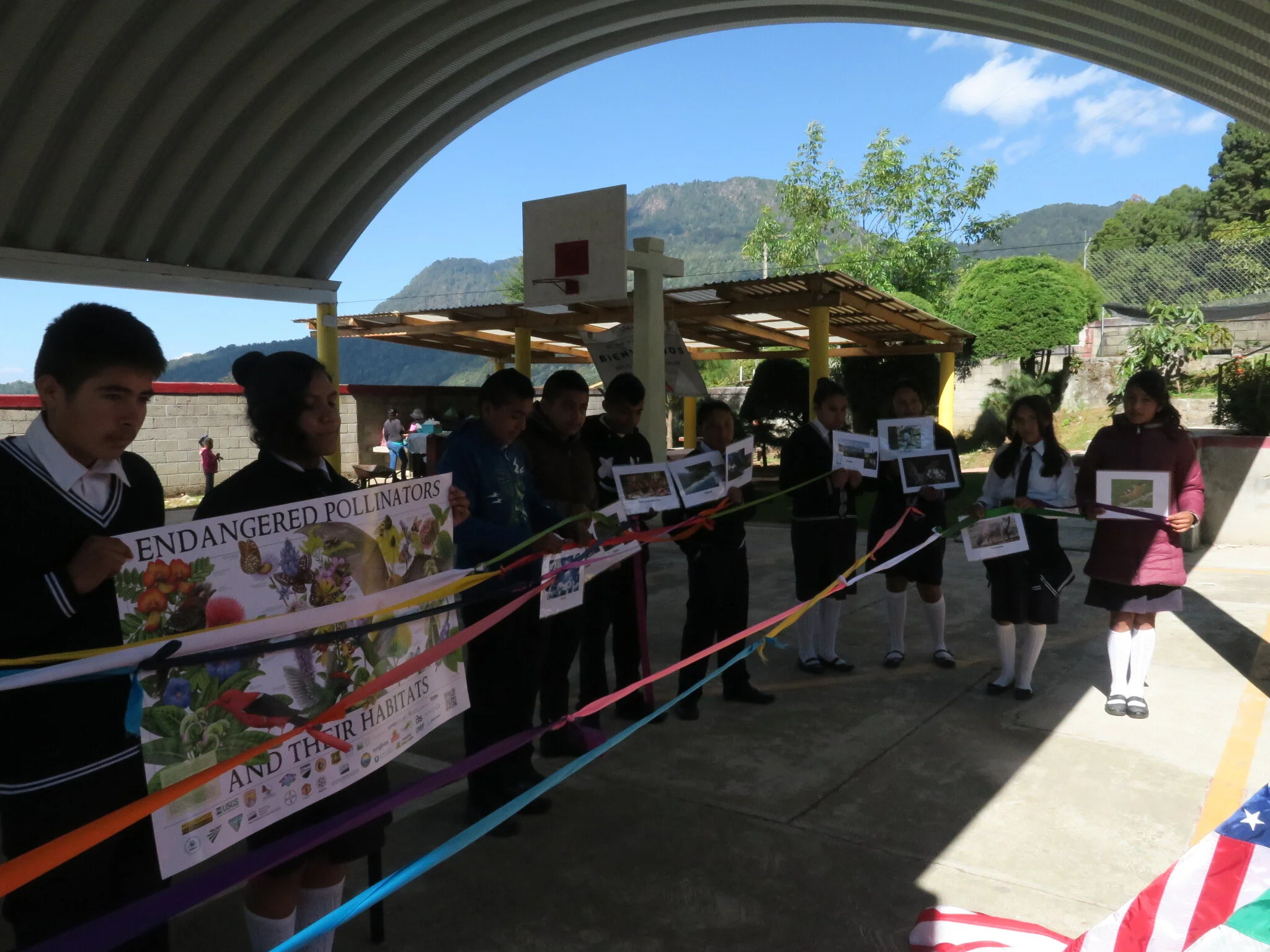
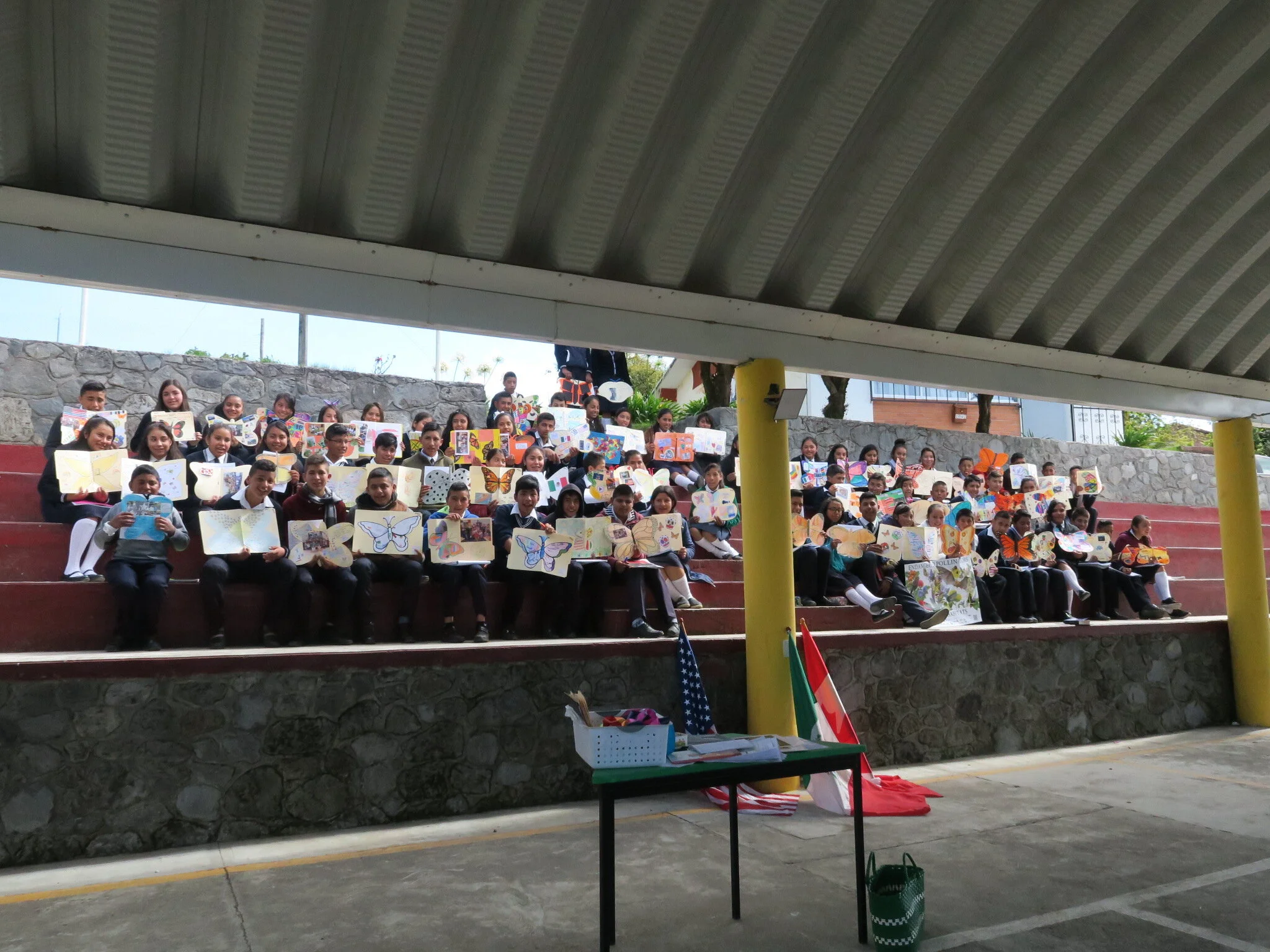
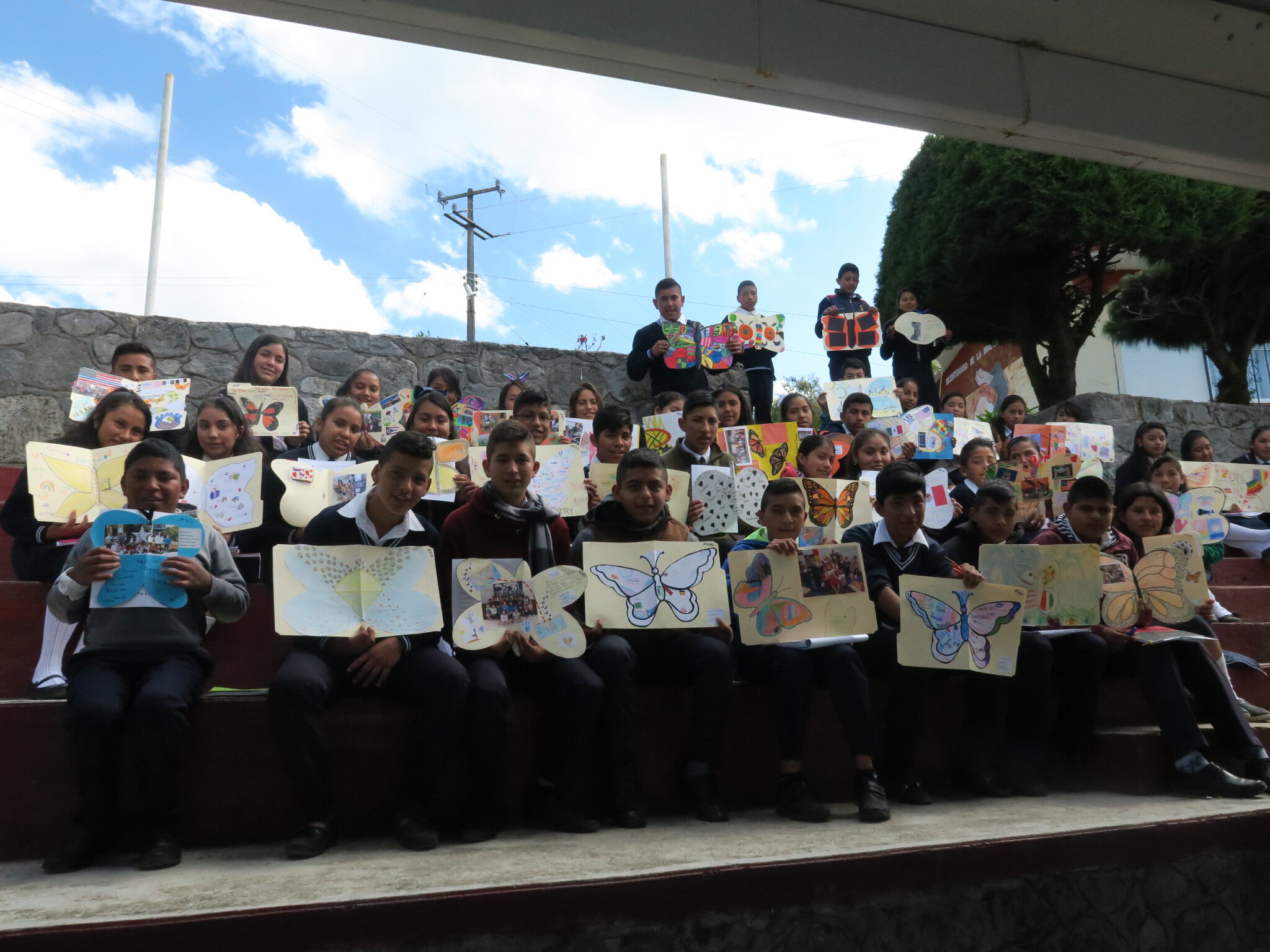
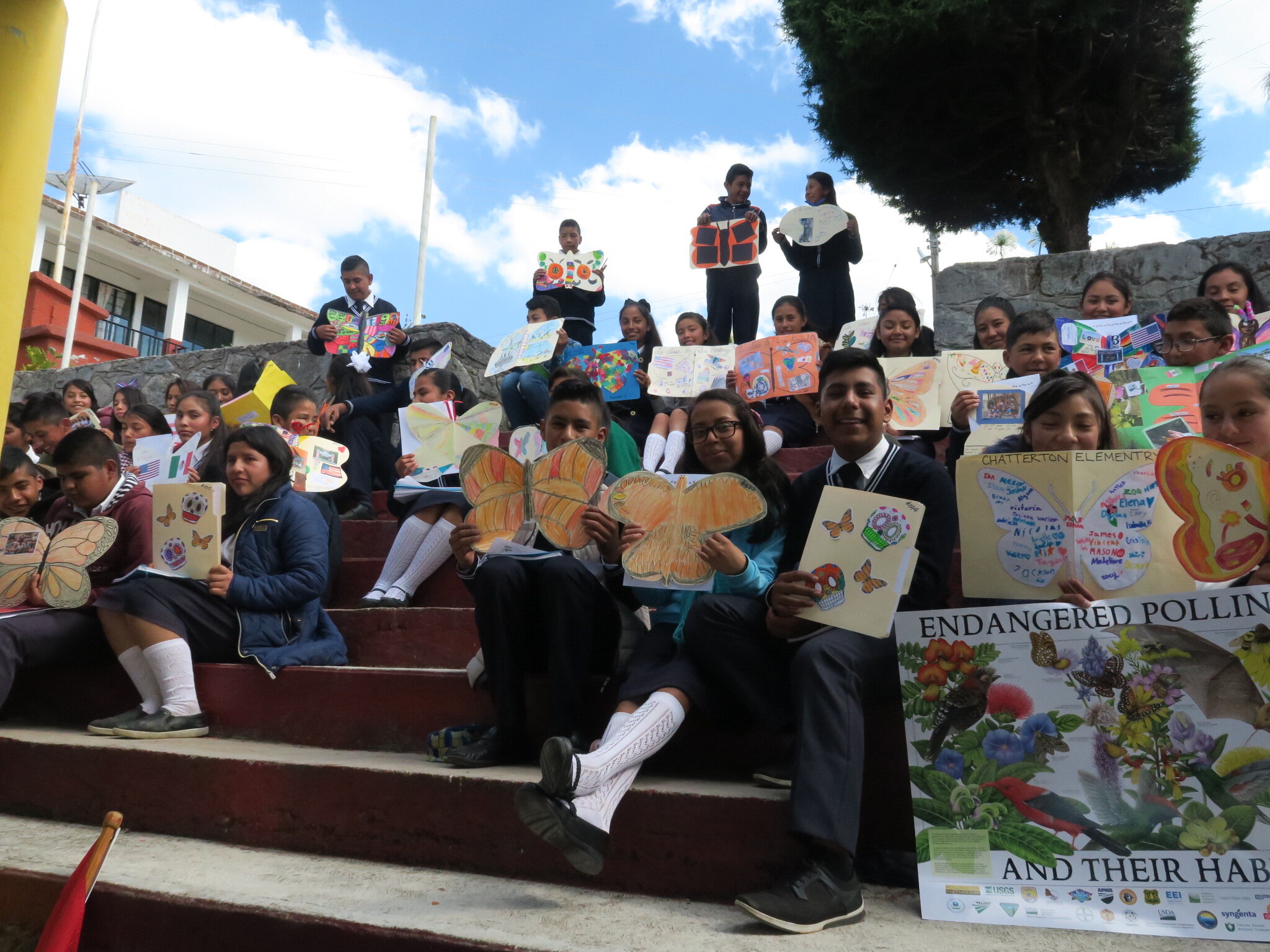
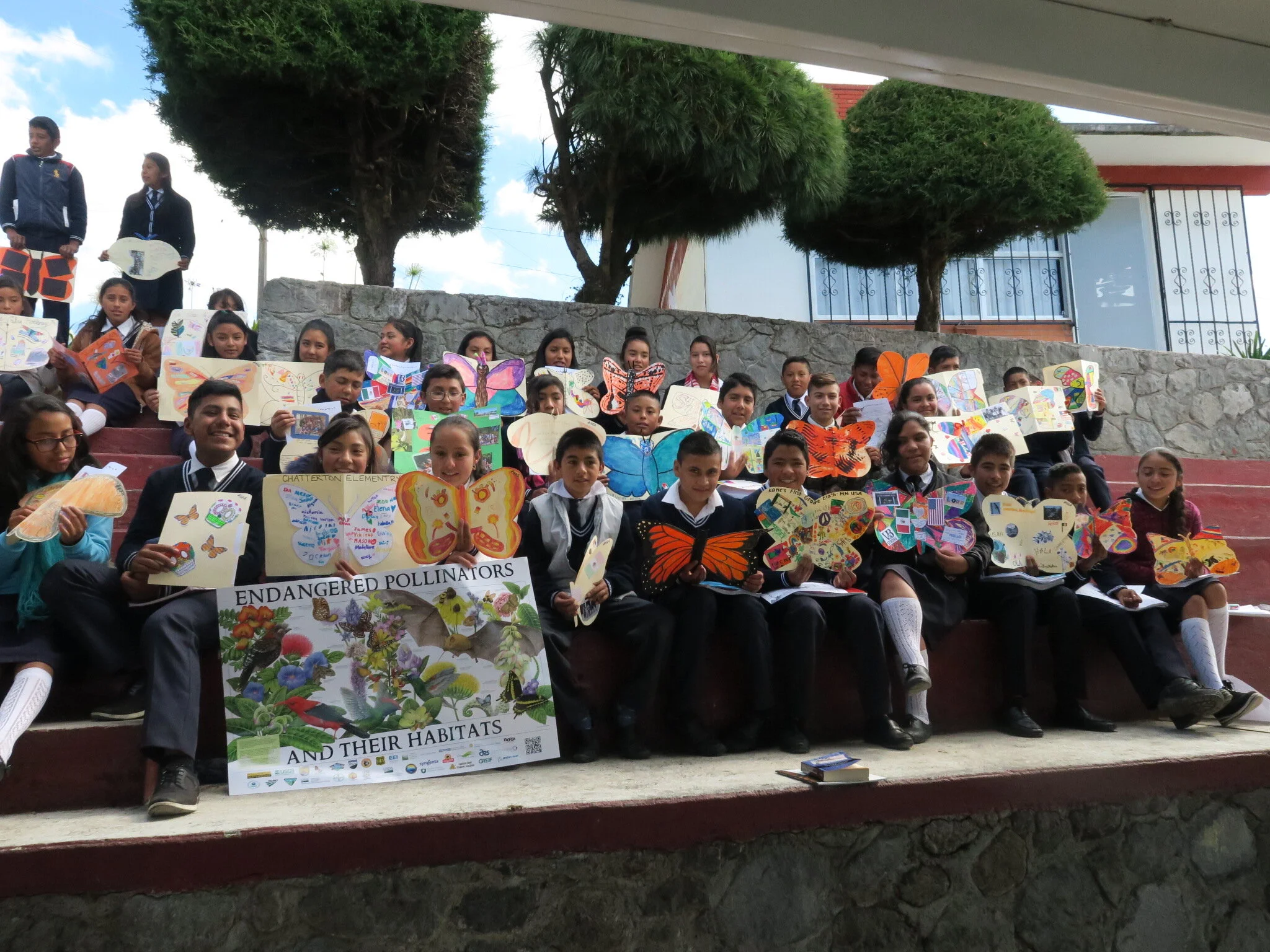
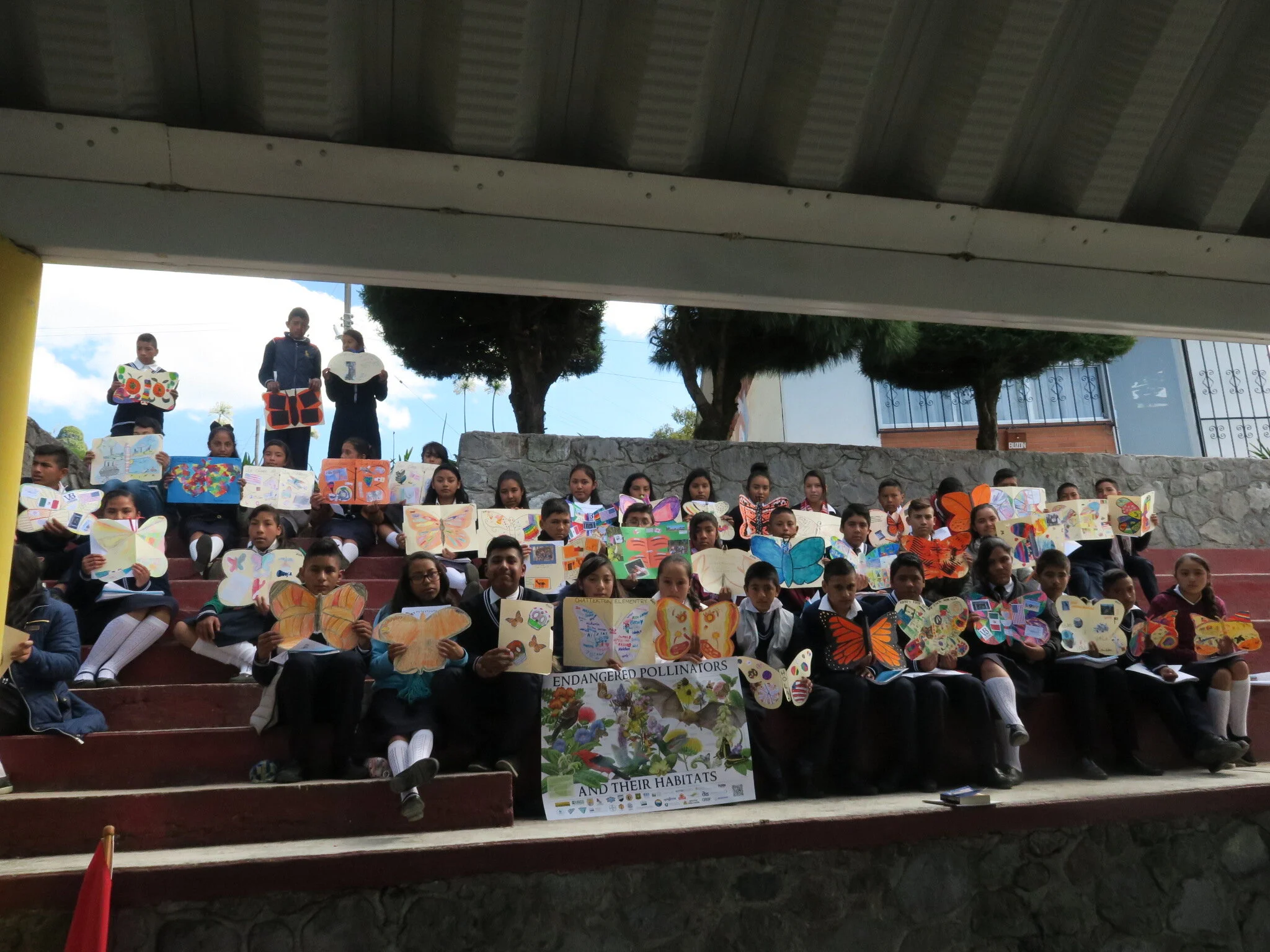
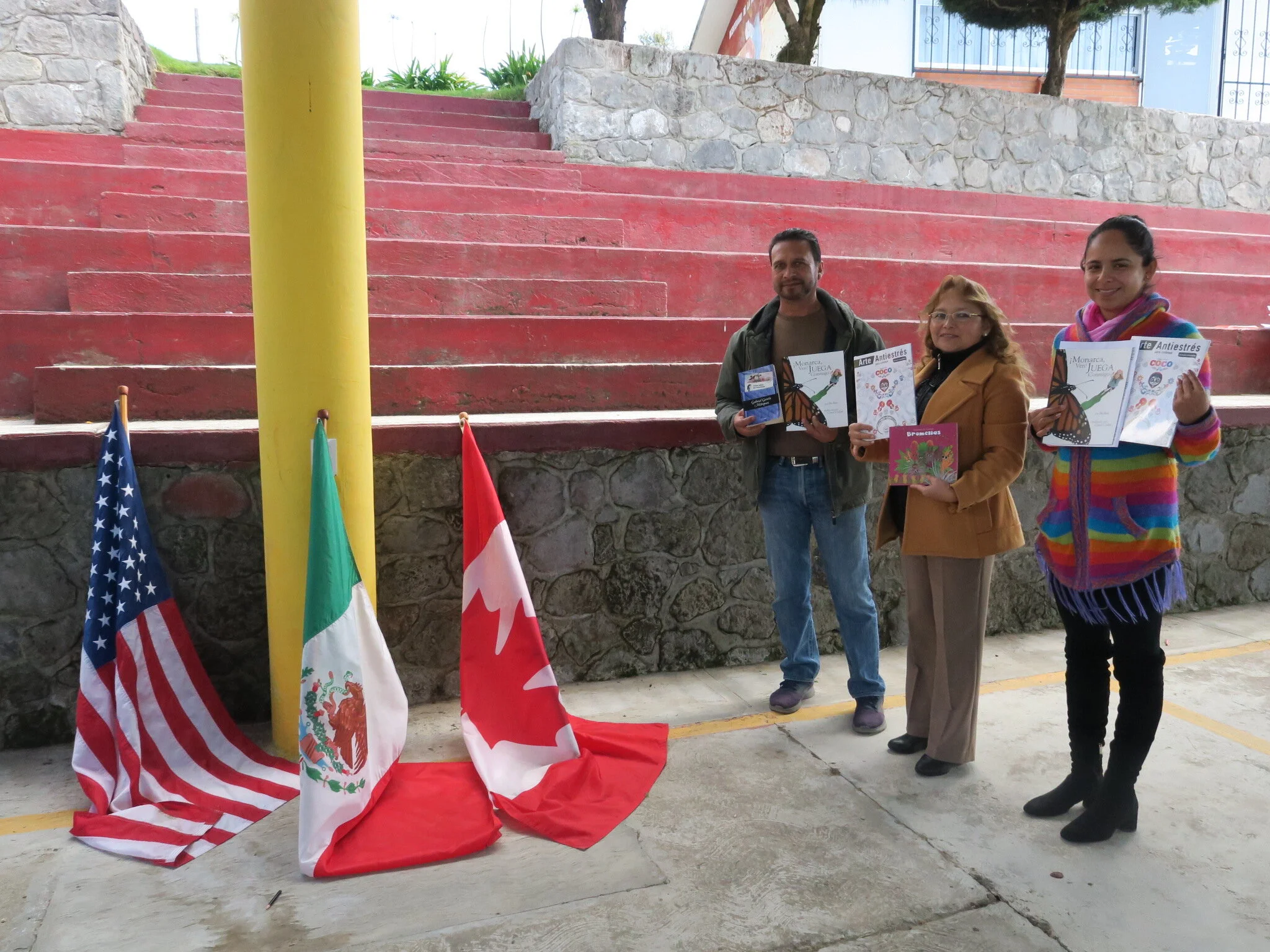
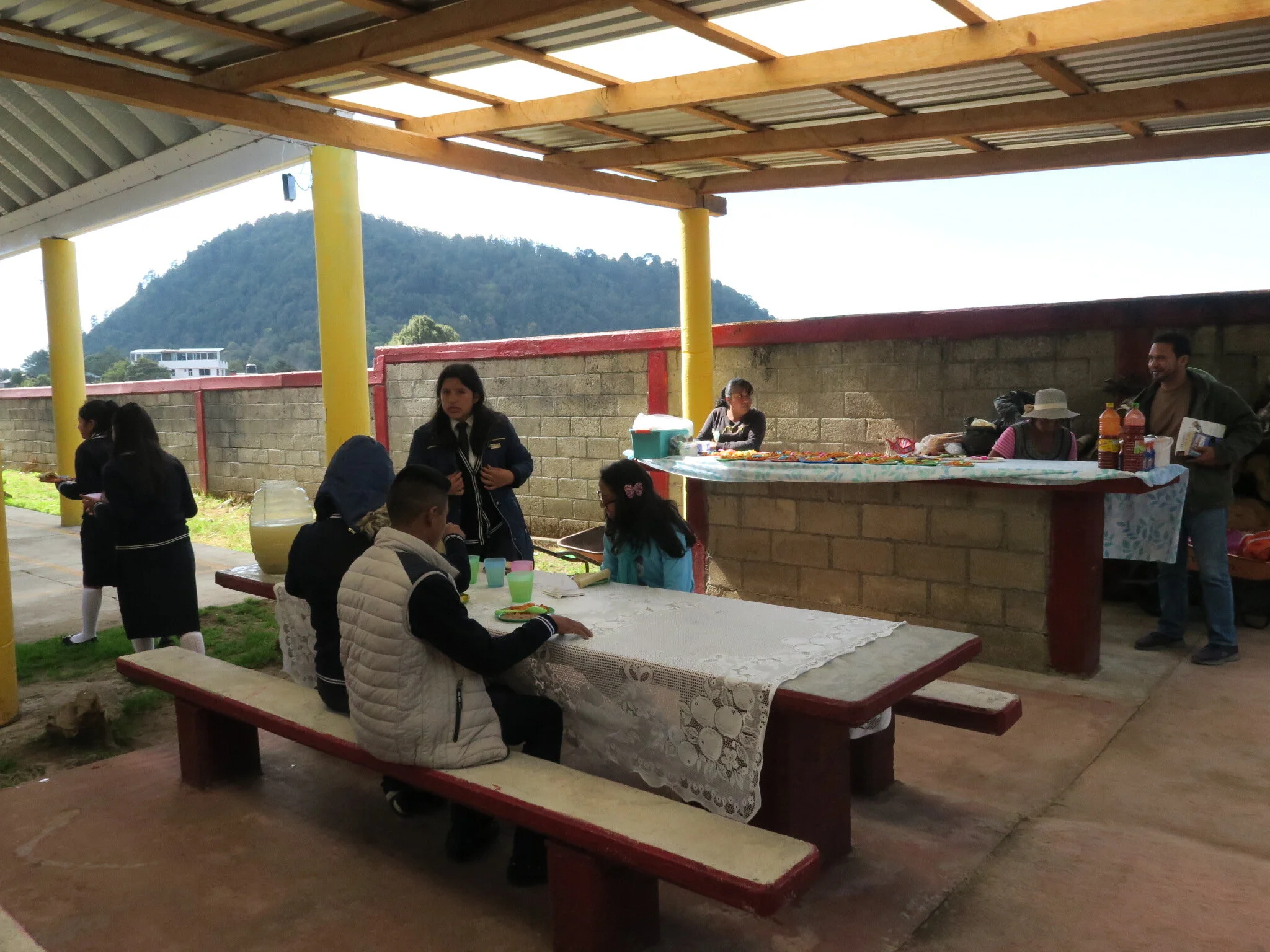
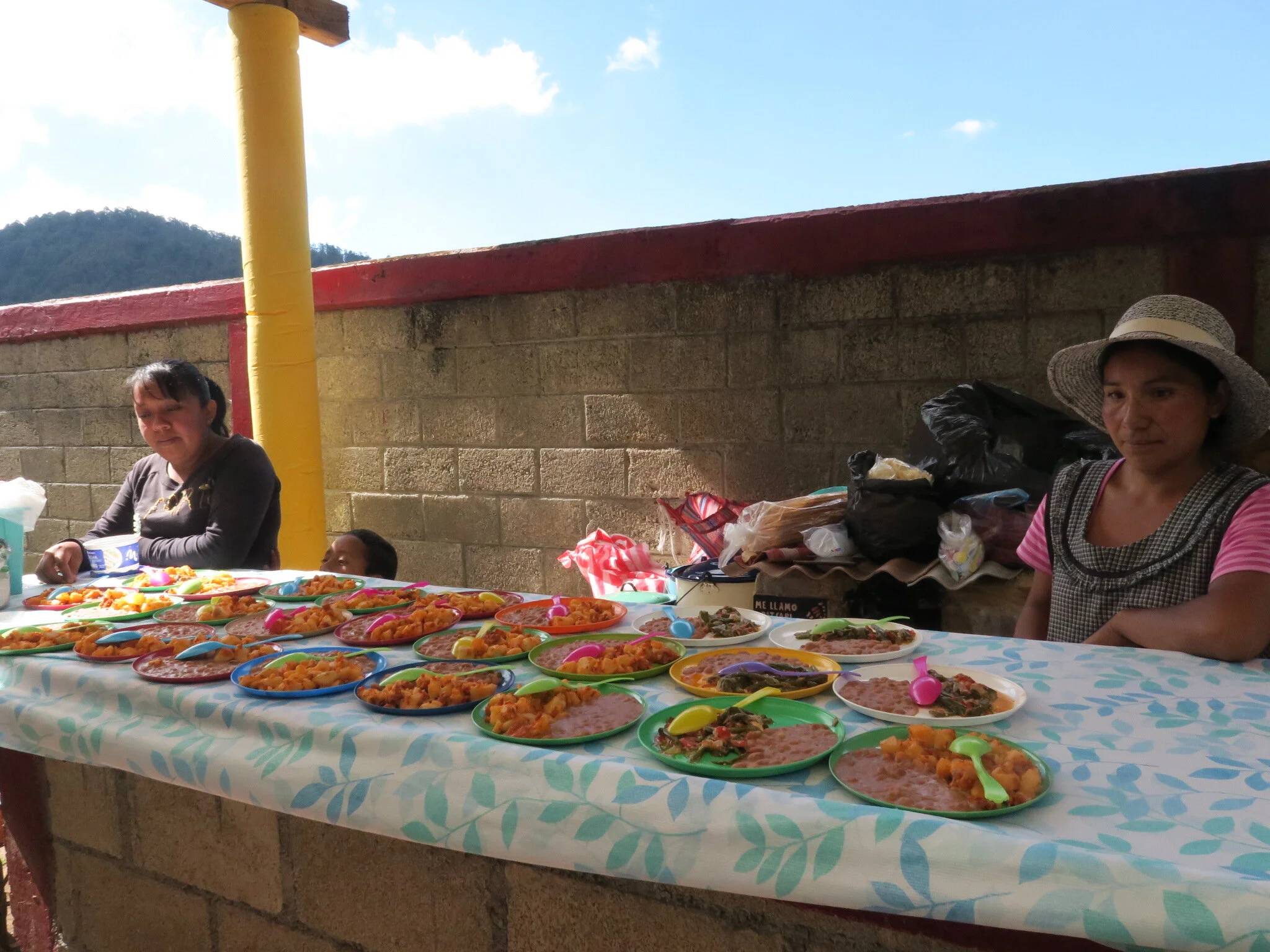
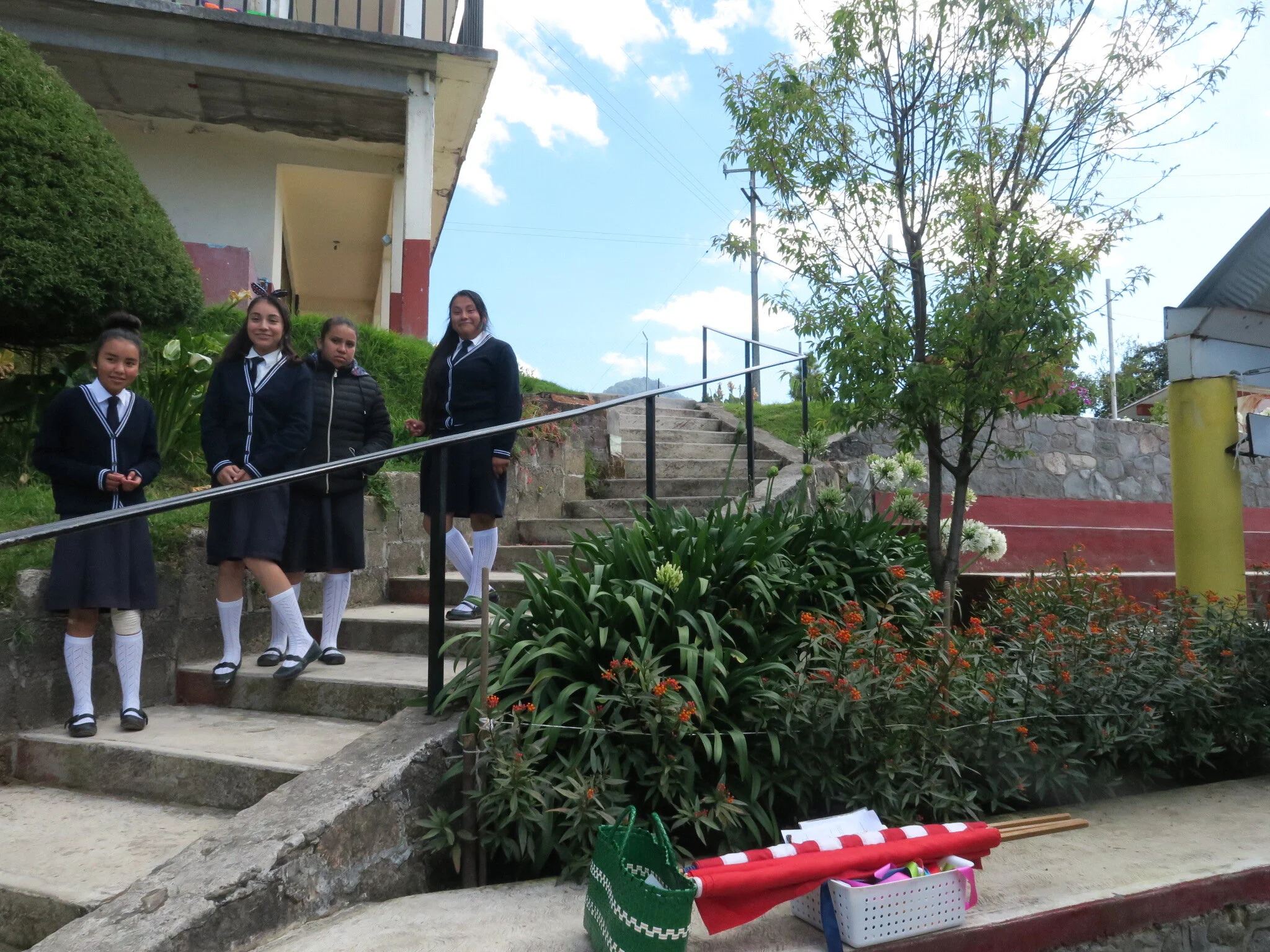
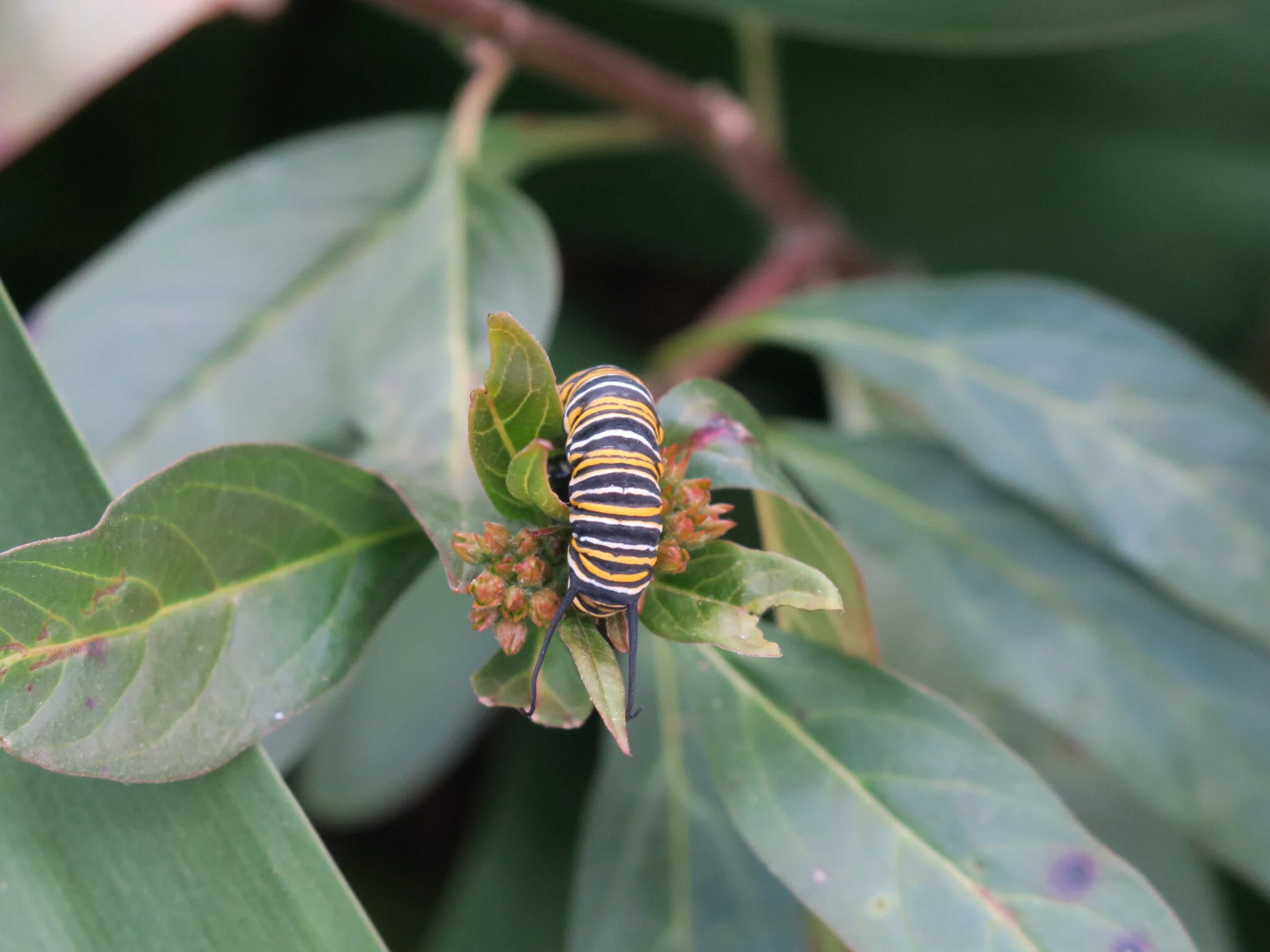
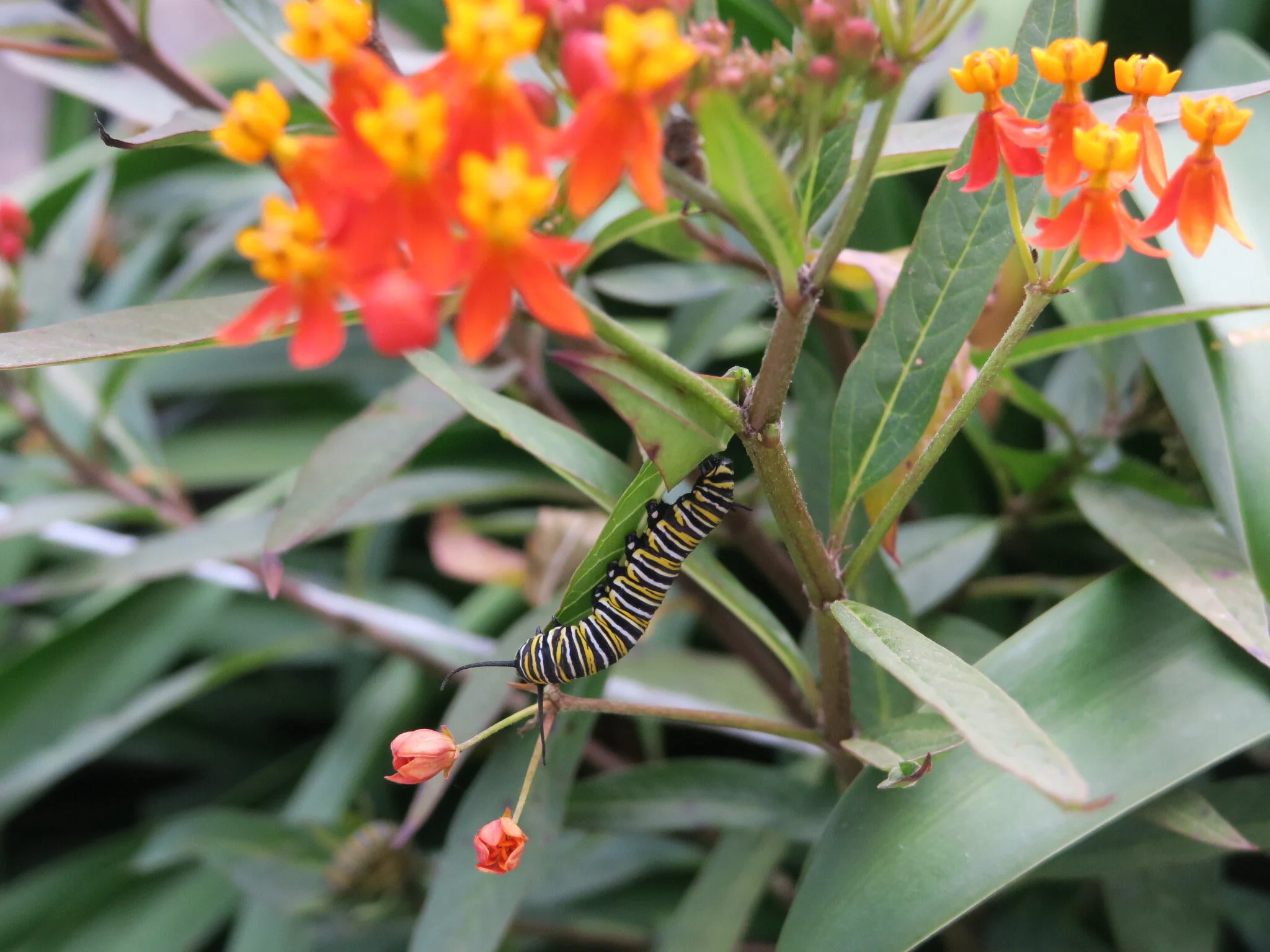
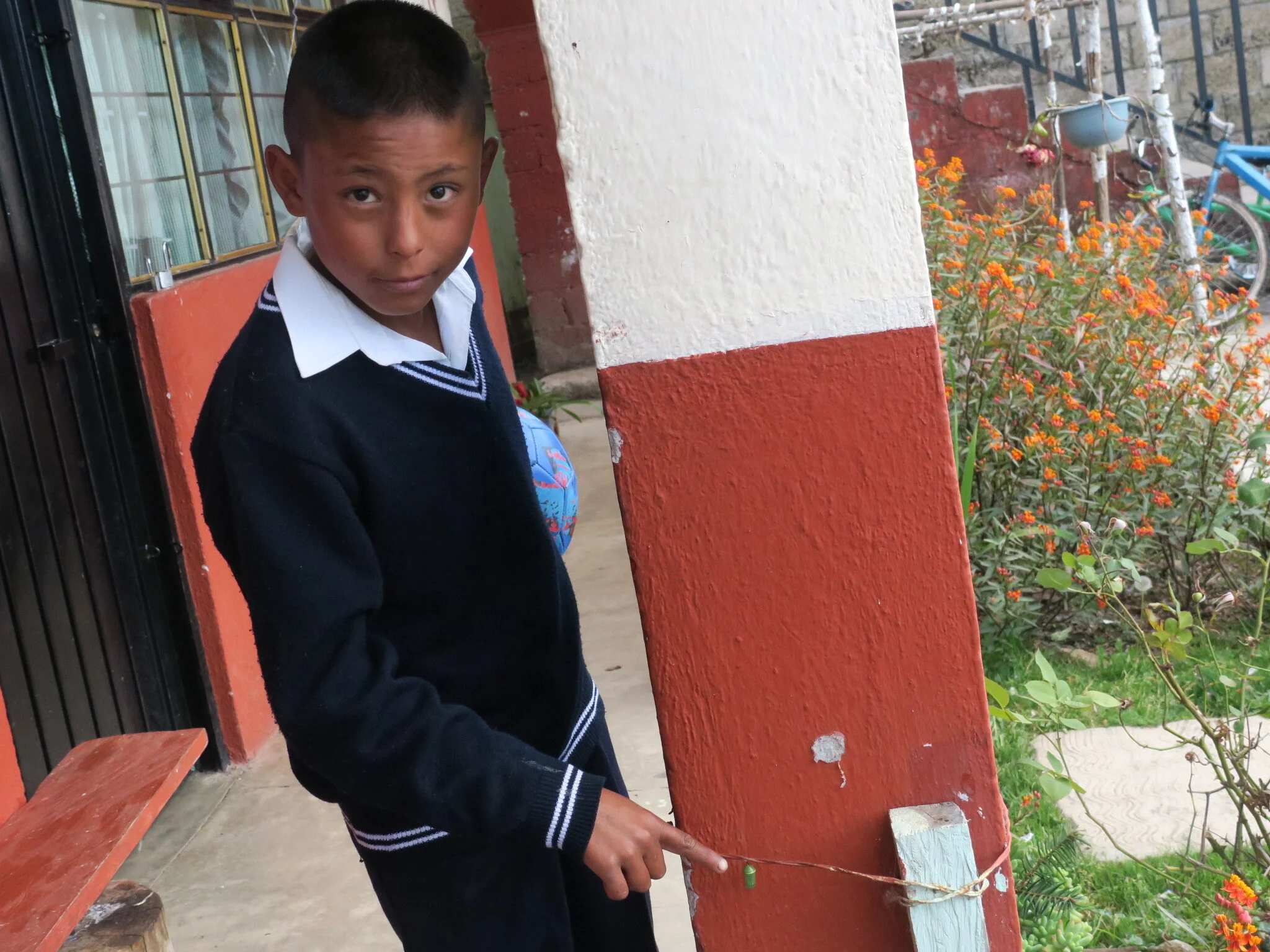
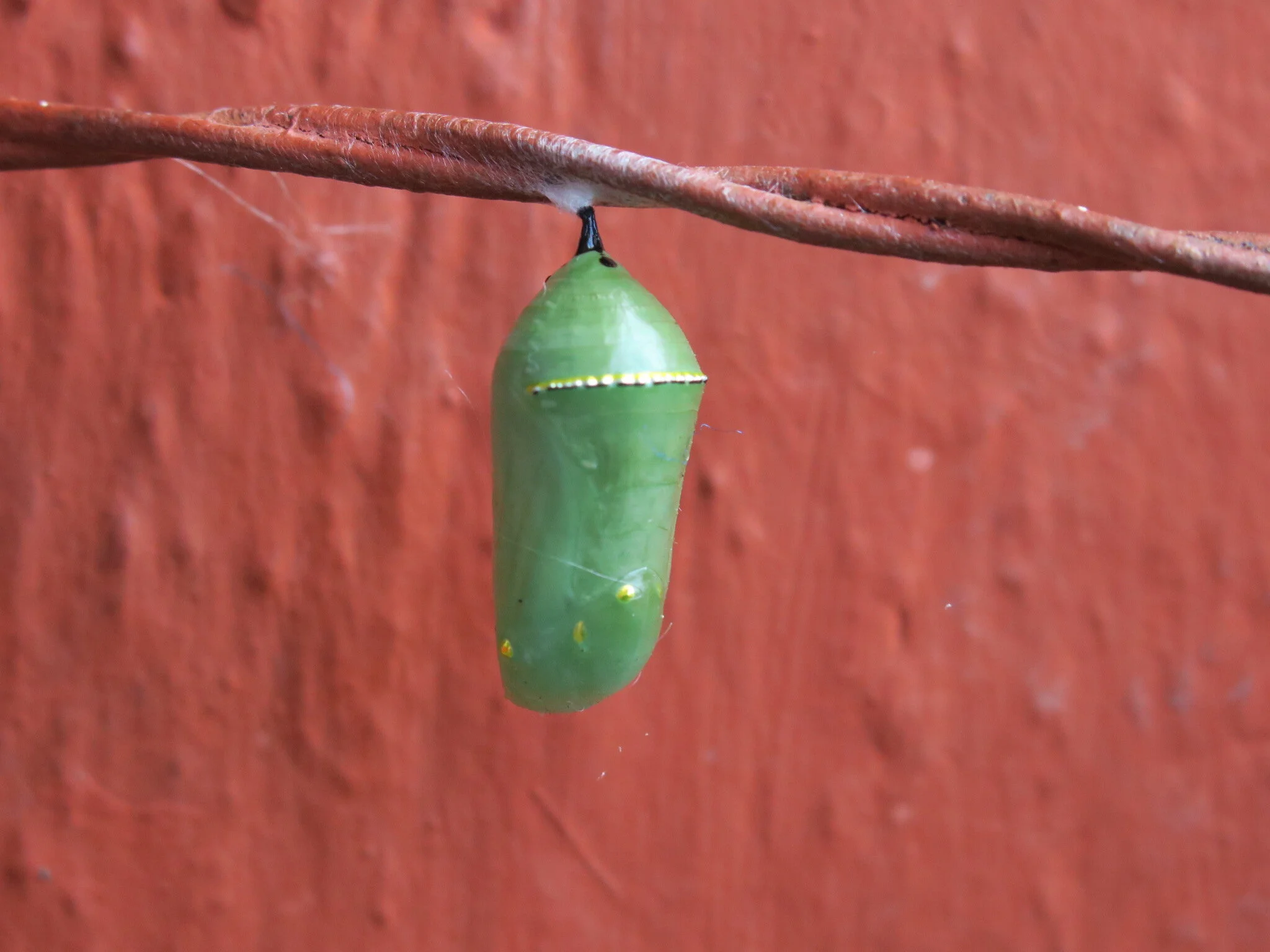
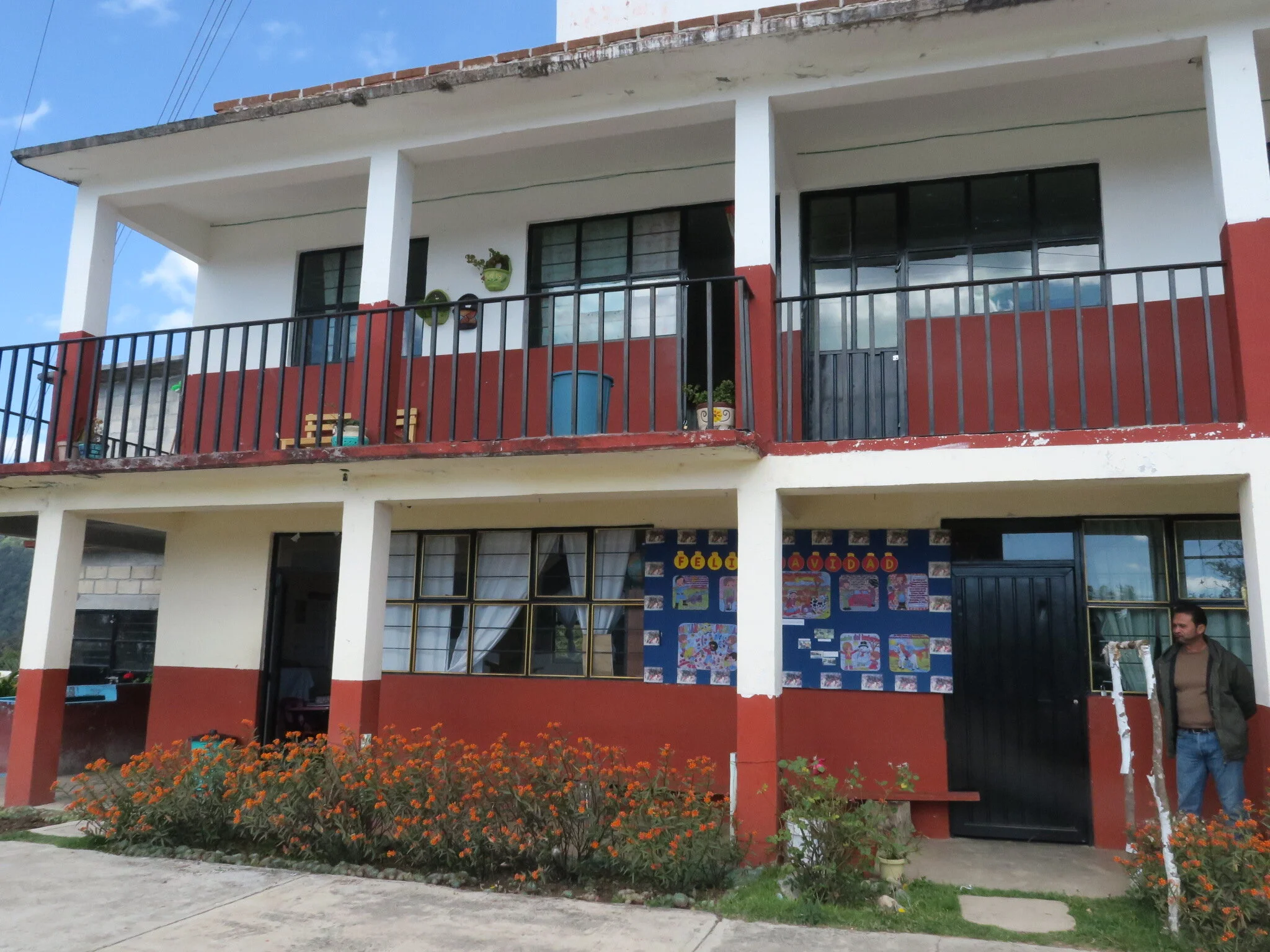
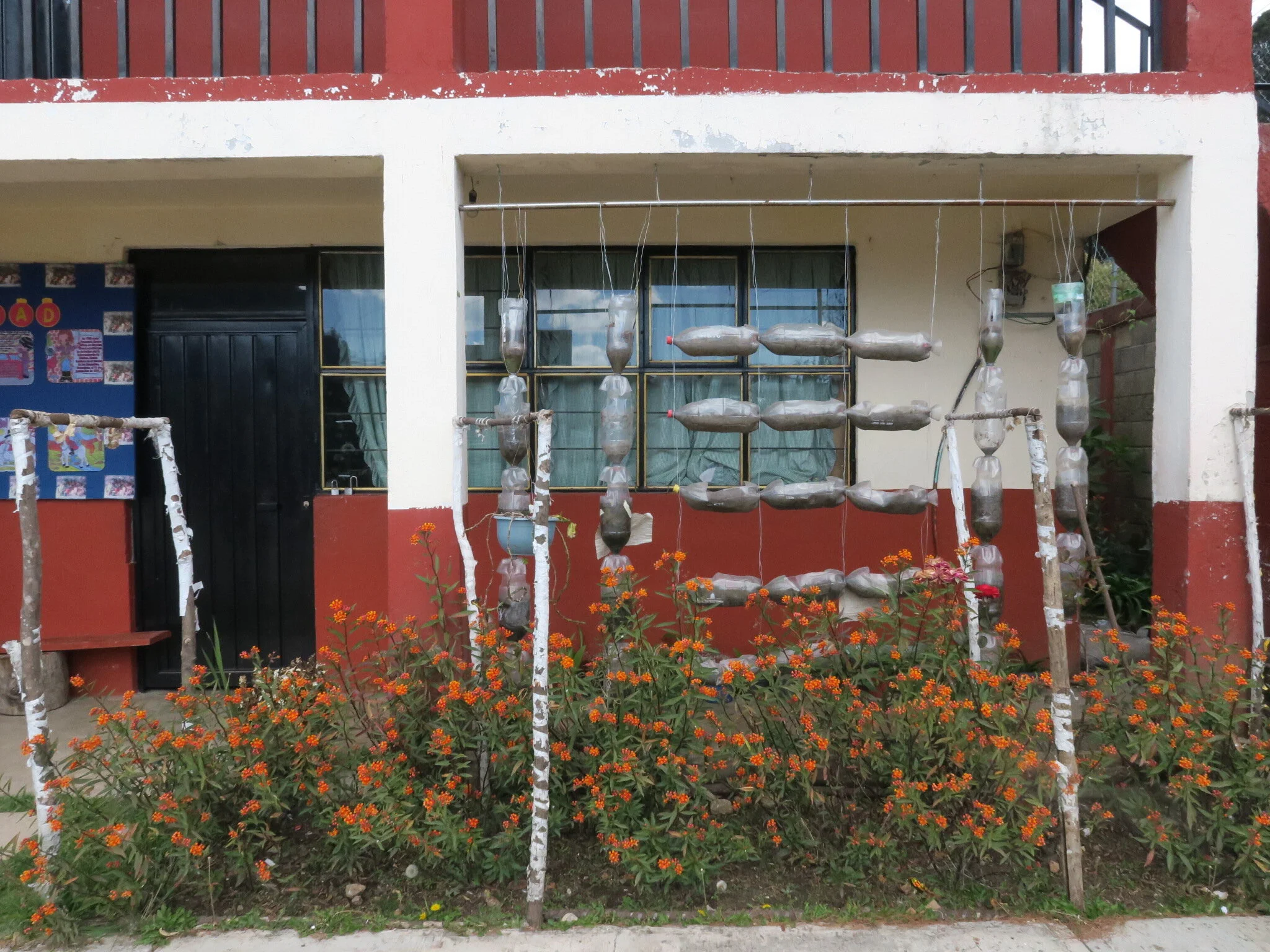
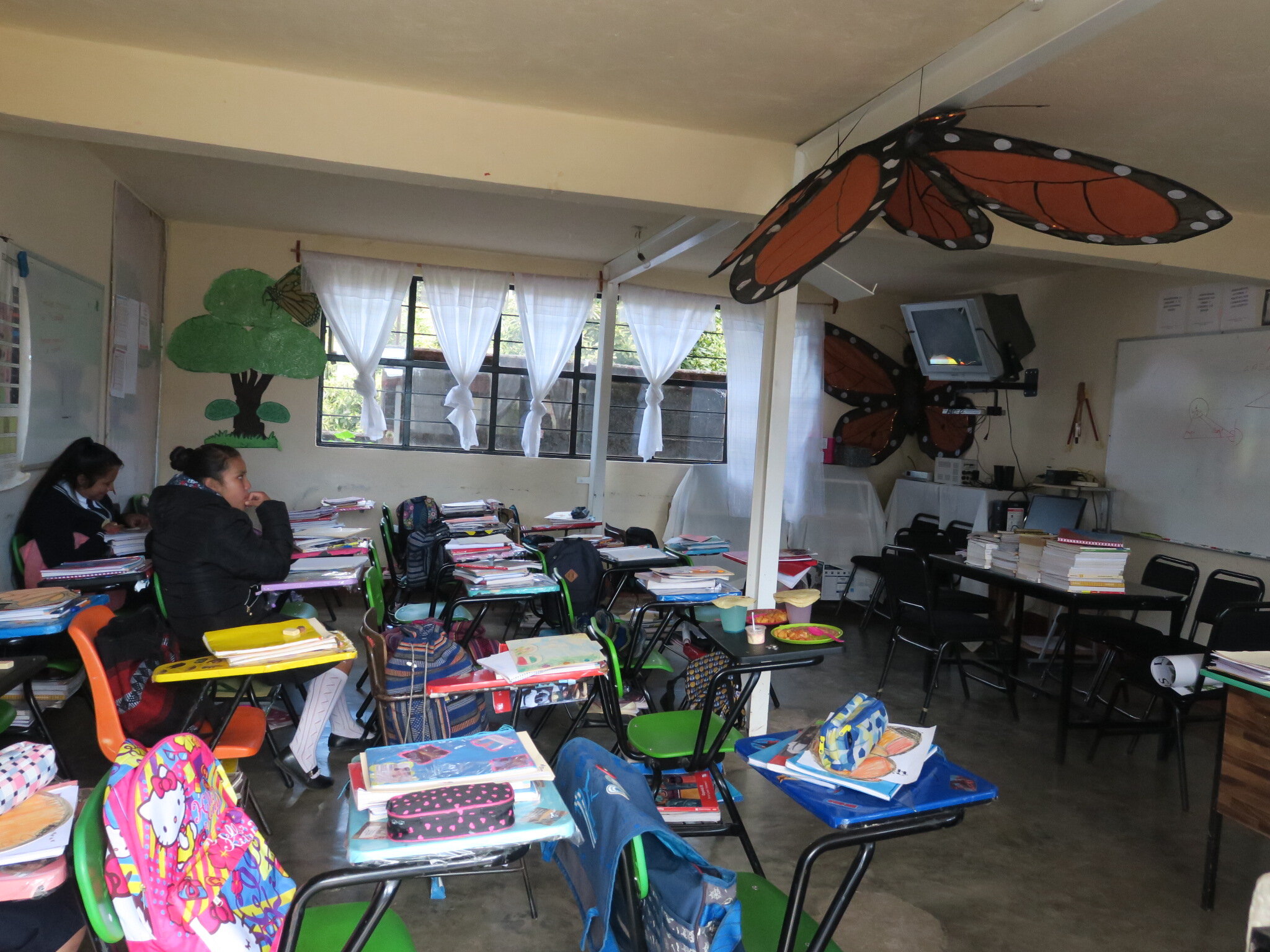
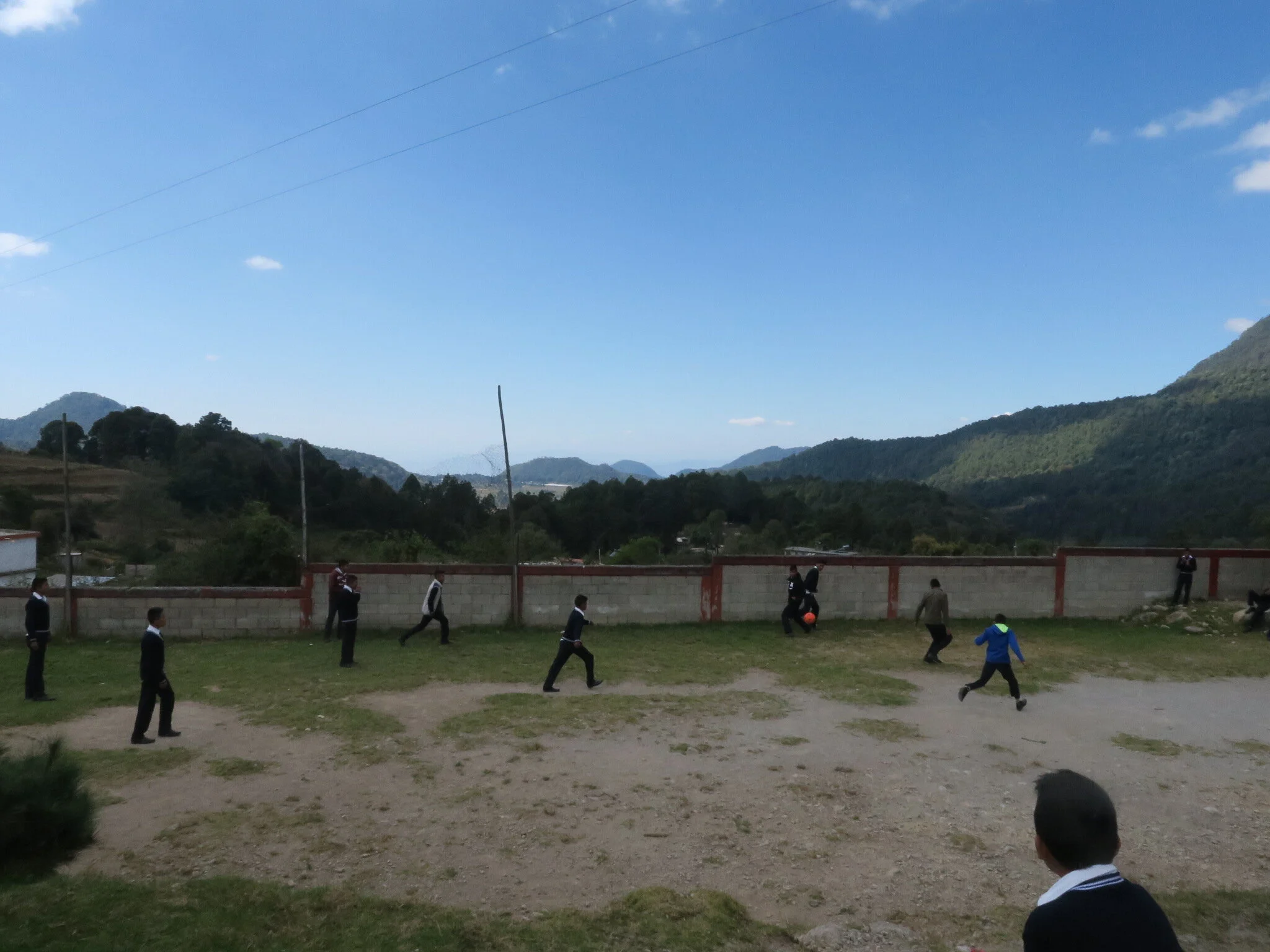
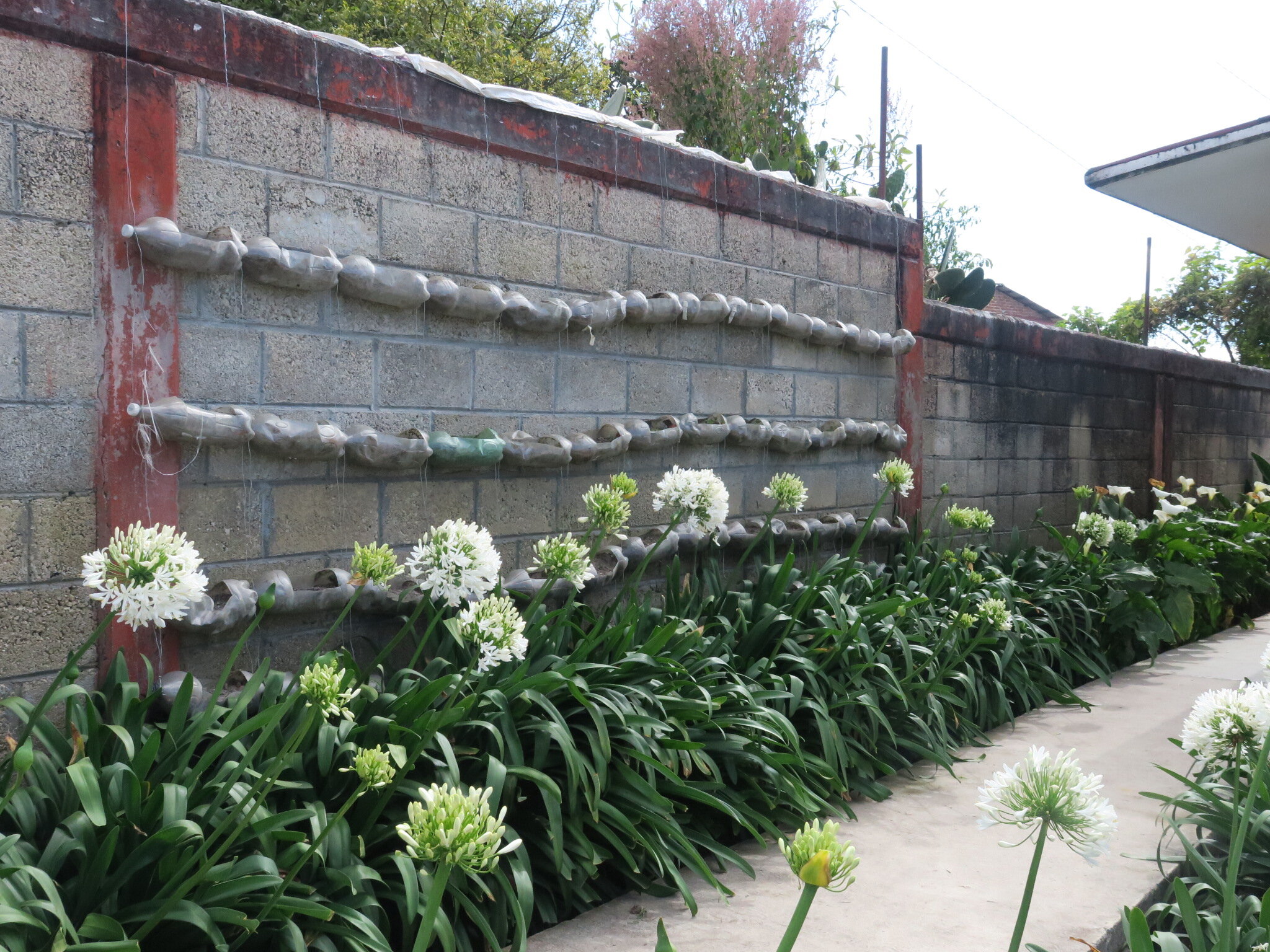
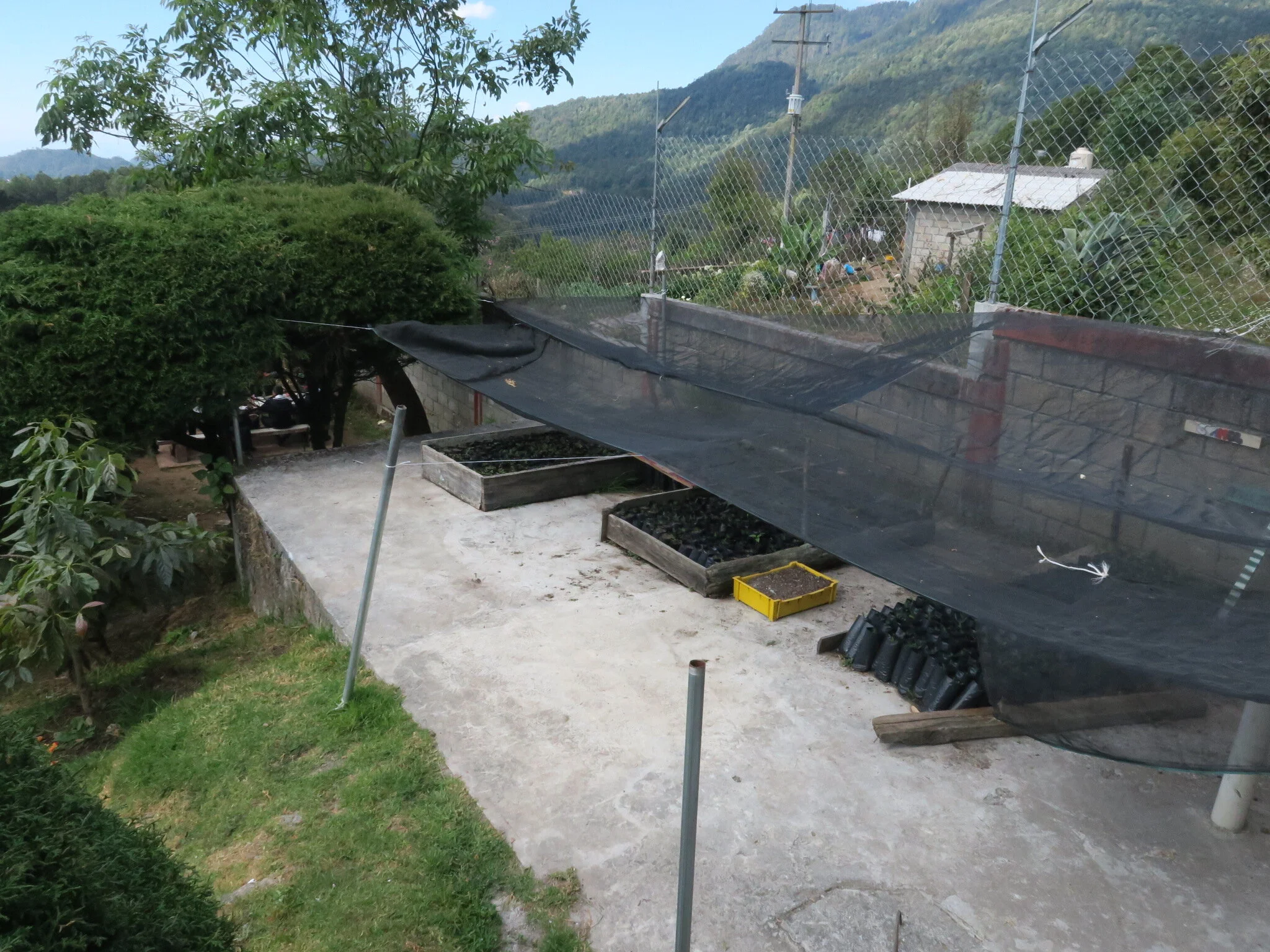
One of the nearest location leading directly to the Sanctuary in the “Cerro Pelón” area, is called “Macheros”, a tiny indigenous Otomí village, where grand-parents and great-grand parents still speak their mother language at home and practice really ancestral customs and traditions in terms of living, socializing, religion, medicine, and ruling many of their practices under the moon’s stages over the year. The younger generations are mostly spanish speakers nowadays and combine their ancestral roots with stepping little by little into modernity using cellphones and very soon indeed getting internet connection. The impressive mountain, bearing the name of “Cerro Pelón”, where this third colony of Monarchs are right now clustering while overwintering at one thousand meters lower than in the other two Sanctuaries (“Rosario” and “Sierra Chincua”), can be contemplated before reaching the tiny village, This little housing area, is located just at the bottom of the large described mountain and right at the border on the side of the State of México bordering with the Michoacàn state on its south-eastern side. Different to years ago, where older people would hardly be provided with a precarious school facilities and a teacher from whom to learn to read and write, children today attend elementary, middle and high school while Monarchs are now opening the possibility to develop little tasks to make an extra living from tourism, agriculture, local commerce and handcrafts; (this whole area including its city —Zitàcuaro— shall be the spot where the part of foreign tourism now decides to stay in a couple of magnificent hotels), and paved roads, and higher level schools in the nearby city allows many students to plan for university level studies. As soon as the Symbolic Migration project knocked at the door to the middle school in the village “Telesecundaria Macheros”, and being this too visited for the first time, they expressed as warm a welcoming greeting as we did yesterday at the elementary. They and their teachers concentrated immediately at the big yard with excitement at hearing that a nice surprise was coming for them from as far away as from where real Monarchs come from. “We know that Monarchs are our symbol and identity and we are really proud of them, but we also know that our whole area demands for conservation if we want to continue preserving such an extraordinary phenomenon; we need to go out from the classrooms with our students and have them to explore, reforest and recognize their whole surrounding”, —the director of the school stated, confessing himself passionate of nature—. As students recognized in the big poster of pollinators donated to the school, their importance and were happy to see that their area still keeps a healthy existence levels in their surrounding due to the good conditions of forest and humidity, they expressed: “we are proud of the flora and fauna we have in our location, however, as shown in the flash-cards, we have several species threatened, others endangered and a few are already extinct", our grandpa’s and great-grandpa’s tell us about many adventures and awesome animals like deer, road-runners, wild cats and beautiful birds and reptiles that we do not see anymore; Monarchs as well as our forefathers should have shared the area with them for a long period of time”; Estela reminded them that amphibians and insects, among other factors, are indicators of how healthy a local ecosystem can be. By writing their letters to be sent to their counterparts in the North, they said: "we are happy to share reflections about our species locally at risk, and immediate actions to take, since the forest provides us with practically all of our living resources, and we wonder if our friends in the North are also having similar problems with other species at risk besides pollinators and the actions they are taking to protect them and to reinforce conservation in general. They showed how abundant Asclepias is growing in their yards, showed me the first chrysalis of the season, —something absolutely normal for them to see during the coming two months—, and showed also how part of their education is growing gardens outside their classrooms with local plants and local forest trees which seeds are directly collected from their own forest to reforest in the summer. “Macheros”, at “Cerro Pelón” is turning indeed, a very productive and active community from the moment Monarchs awakened a totally different view on the local natural resources as the future of their whole local society.
SYMBOLIC MONARCHS RECEIVED HERE
Brigantine Community School, Brigantine, New Jersey
James R Watson Elementary School, Auburn, Indiana
Richmond Elementary School, Wyoming, Rhode Island
Saint Elmo Elementary School, Austin, Texas
Union Elementary STEM, Gallatin, Tennessee
Saint Elmo Elementary School, Austin, Texas
Birchwood School of Hawken, Cleveland, Ohio
Saint Elmo Elementary School, Austin, Texas
Providence Day School, Charlotte, North Carolina
Birch School, Merrick, New York
Rosemont Elementary, Virginia Beach, Virginia
Chatsworth Avenue School, Larchmont, New York
Saint Vrain School District, Longmont, Colorado
Louisa-Muscatine Elementary School, Letts, Iowa
Saint Vrain School District, Longmont, Colorado
Saint Vrain School District, Longmont, Colorado
Saint Peter School, Danbury, Connecticut
Chatsworth School, Larchmont , New York
Bridgehampton Child Care and Recreational Center, Bridgehampton, New York
Chatsworth Avenue School, Larchmont, New York
Eagle Valley Elementary School, Eagle, Colorado
Longfellow Elemntary School, Oak Park, Illinois
Greenwood Leflore Consolidated School District, Greenwood, Mississippi
Parkway Elementary, Virginia Beach, Virginia
Brigantine Community School, Brigantine, New Jersey
Rawson Saunders School, Austin, Texas
Bright Horizons at Harrison Park, Cary, North Carolina
Moyer Elementary School, Fort Thomas, Kentucky
Moyer Elementary School, Fort Thomas, Kentucky
Moyer Elementary School, Fort Thomas, Kentucky
Eminence Elementary, Eminence, Kentucky
Schaffner Traditional Elementary, Louisville, Kentucky
Gill Saint Bernard's School, Gladstone, New Jersey
Cambridge Elementary, San Antonio, Texas
Lamar Elementary, San Antonio, Texas
Parkway Elementary, Virginia Beach, Virginia
Hudson Montessori School - Laurie Householder, Hudson , Ohio
Lorenzo Elementary, Lorenzo, Texas
Deerfield Elementary School, South Deerfield, Massachusetts
All Saints Episcopal School, Lubbock, Texas
Lorenzo Elementary, Lorenzo, Texas
Washington Grove Elementary School, Gaithersburg , Maryland
Lamar Elementary, San Antonio, Texas
South Elementary School, Madison, Ohio
Kuentz Elementary School, Helotes, Texas
Anna C Scott Elementary School, Leonia, New Jersey
Saint Elmo Elementary School, Austin, Texas
Union Elementary STEM, Gallatin, Tennessee
Sand Hill Elementary, Dallas, West Virginia
Sand Hill Elementary, Dallas, West Virginia
Billingsley School, Billingsley, Alabama
Covenant Day School, Matthews, North Carolina
Covenant Day School, Matthews, North Carolina
Greenwood Leflore Consolidated School District, Greenwood, Mississippi
Parkway Elementary, Virginia Beach, Virginia
Parkview Center School, Roseville, Minnesota
Ford Elementary, Acworth, Georgia
Greenbrier Community School, Lewisburg, West Virginia
Ford Elementary, Acworth, Georgia
Birch School, Merrick, New York
Birch School, Merrick, New York
Birch School, Merrick, New York
Ford Elementary, Acworth, Georgia
Ford Elementary, Acworth, Georgia
Ford Elementary, Acworth, Georgia
Marvell Academy, Marvell, Arkansas
Haine Middle School, Cranberry Township, Pennsylvania
The New School, Fayetteville, Arkansas
Haine Middle School, Cranberry Township, Pennsylvania
Saint Lorenz Lutheran School, Frankenmuth, Michigan