
"Cerro Pelón" Sanctuary II
SCHOOL VISIT
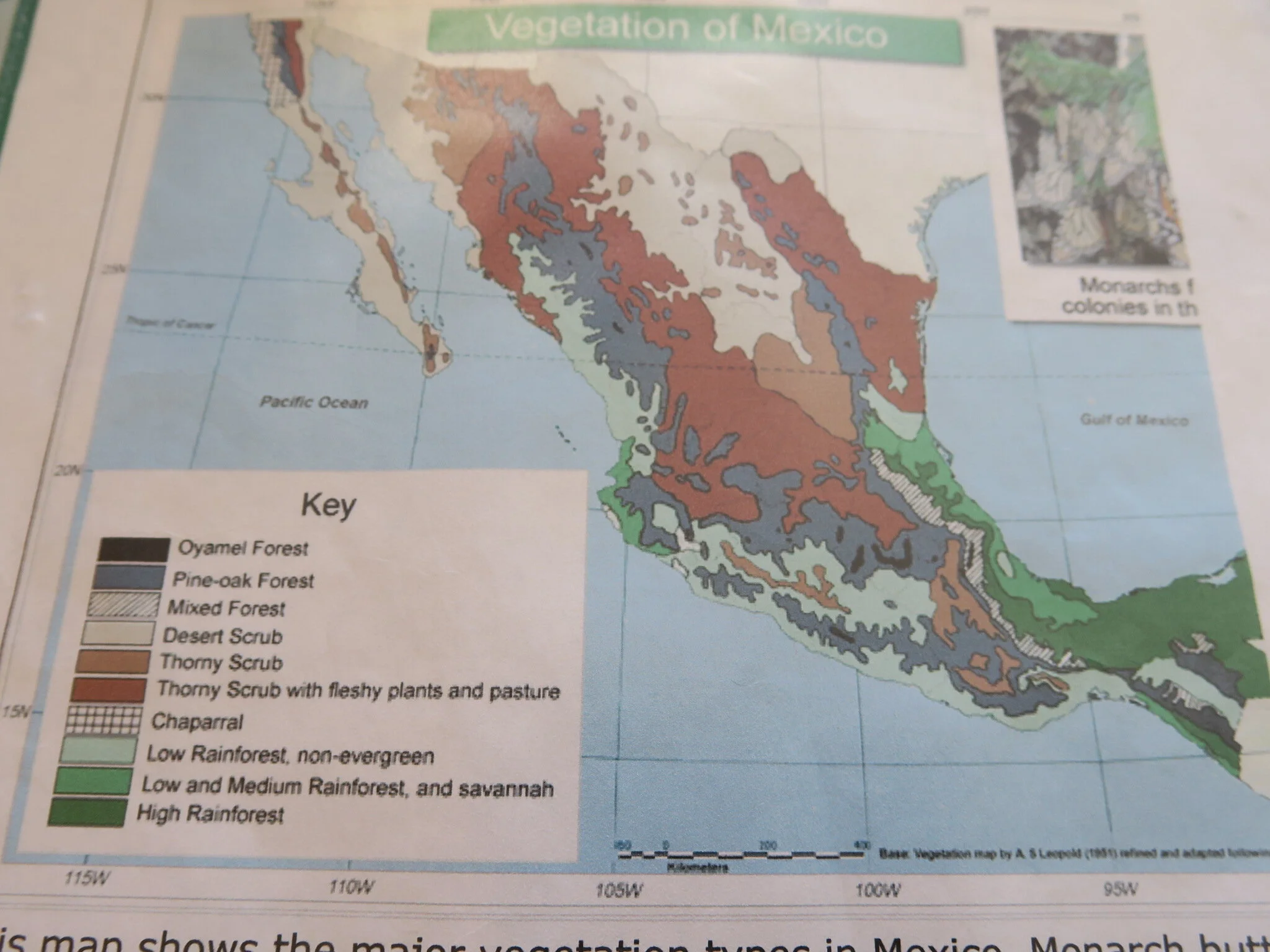
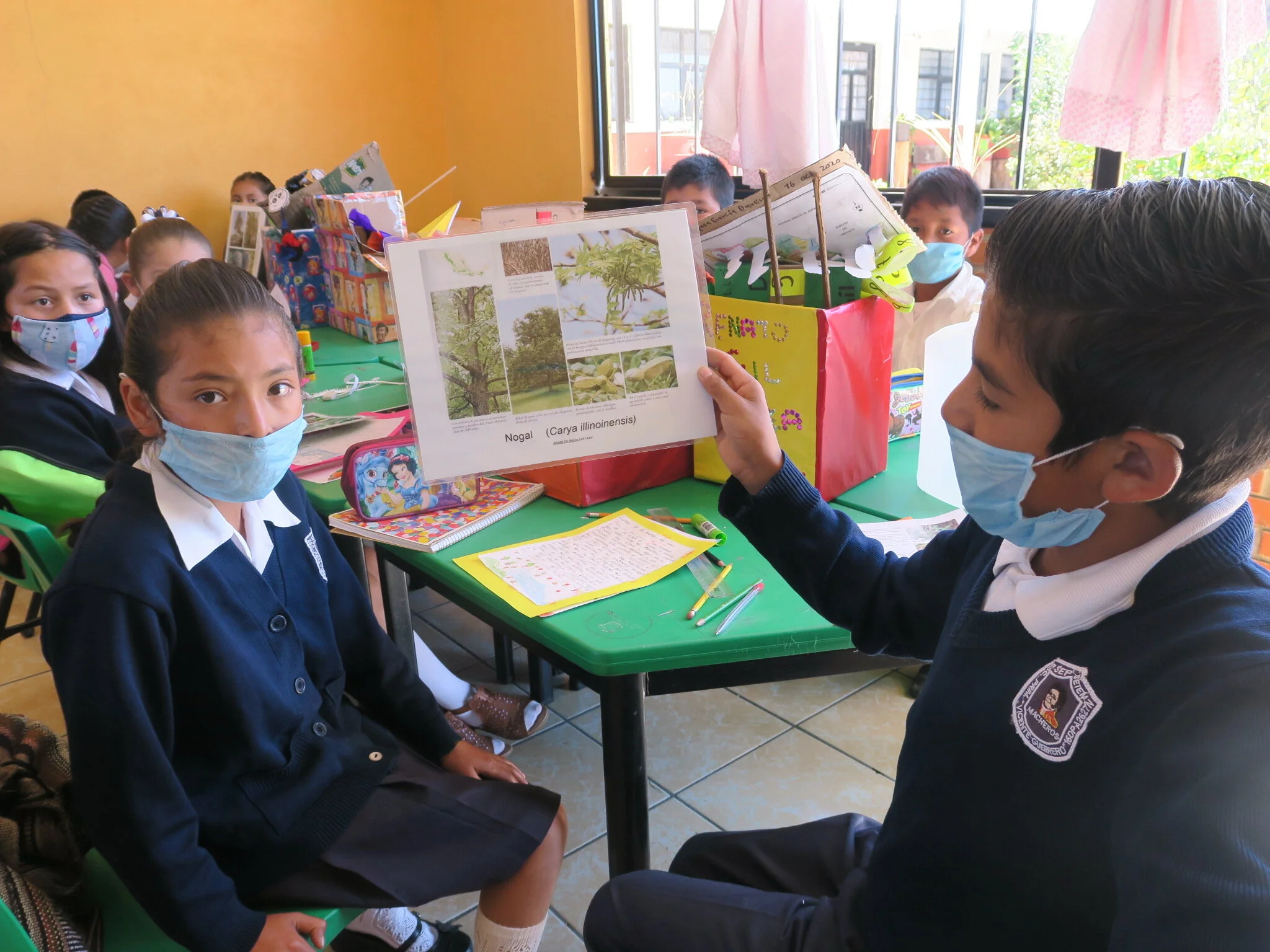
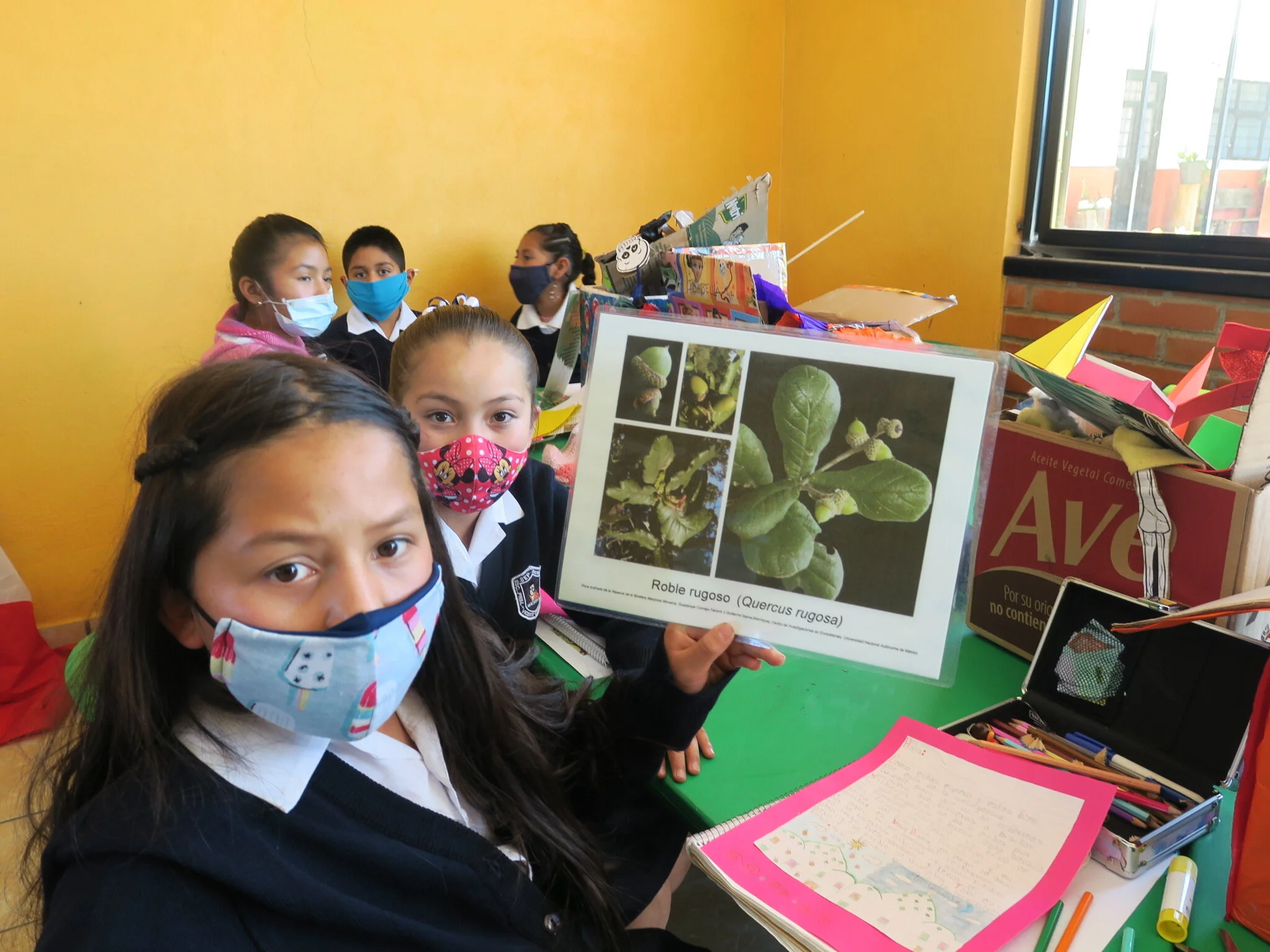
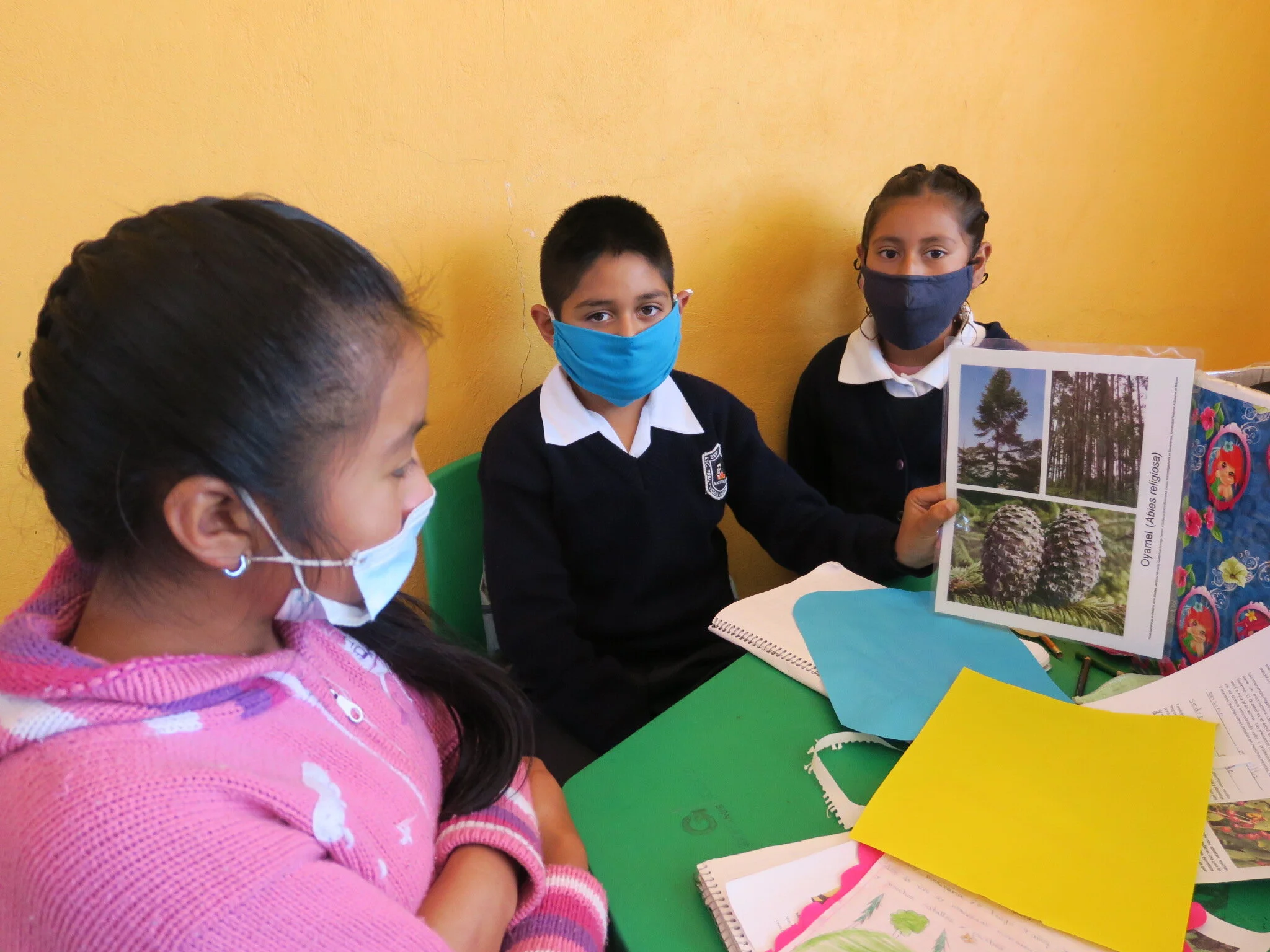
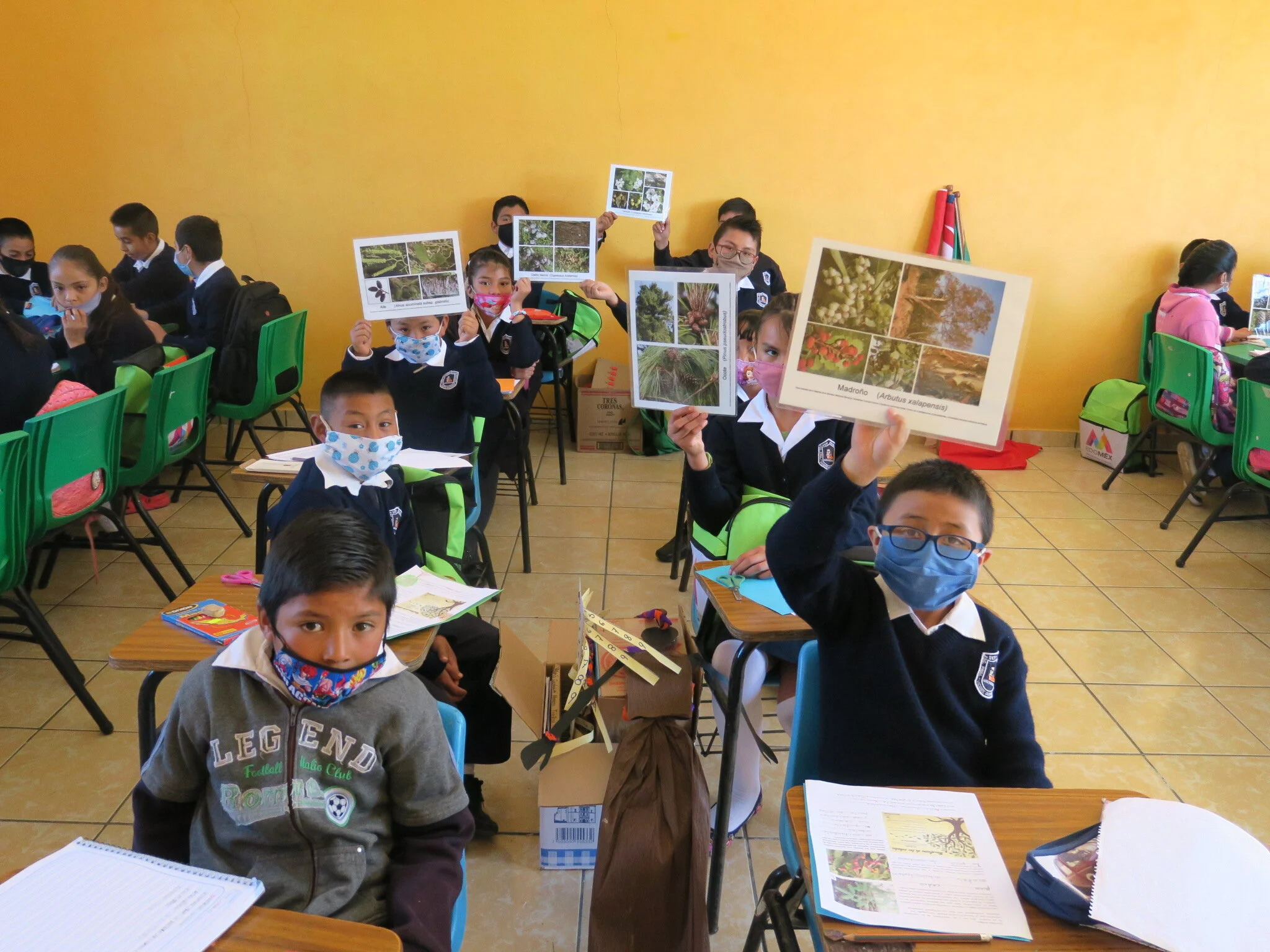
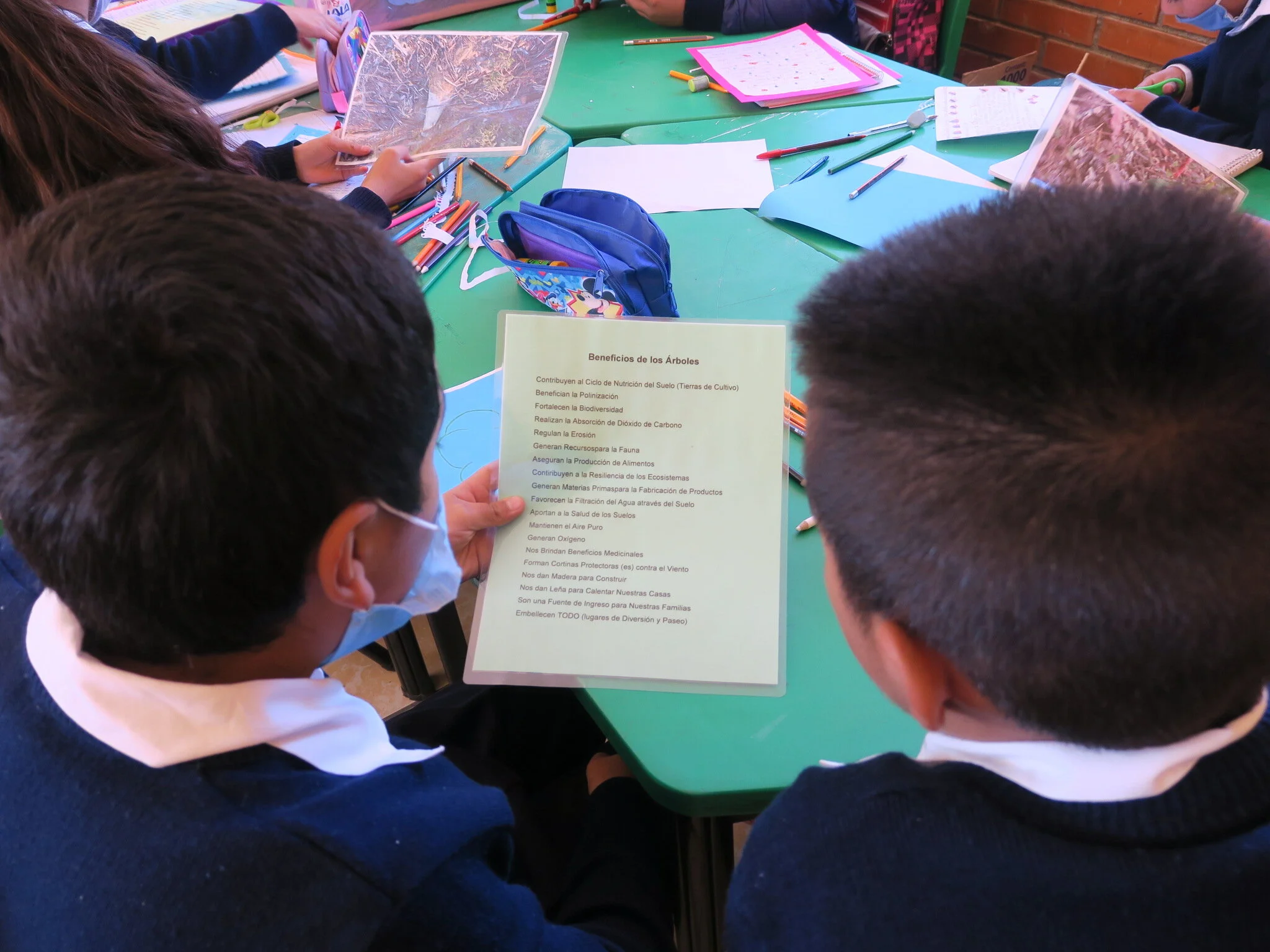
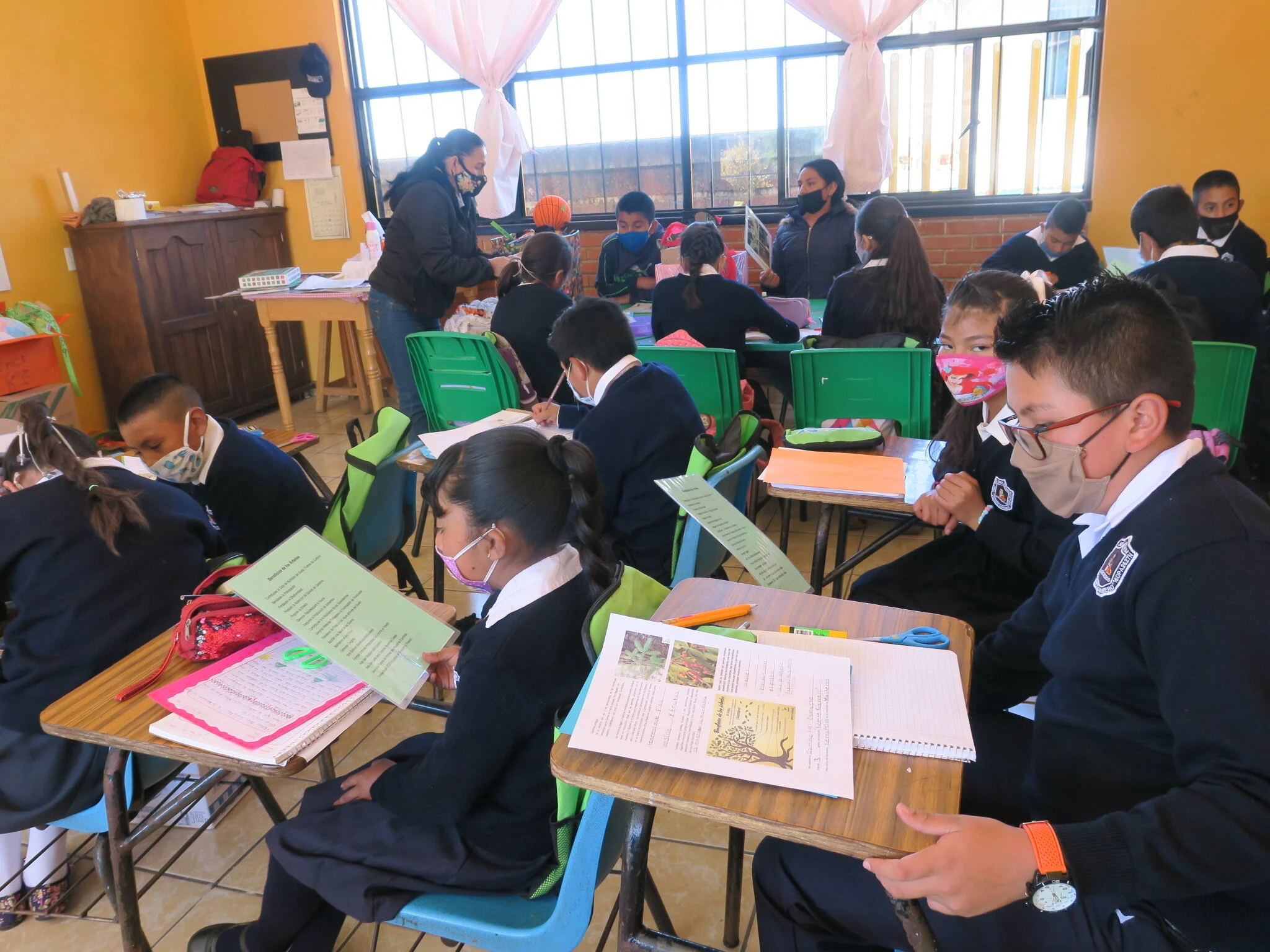
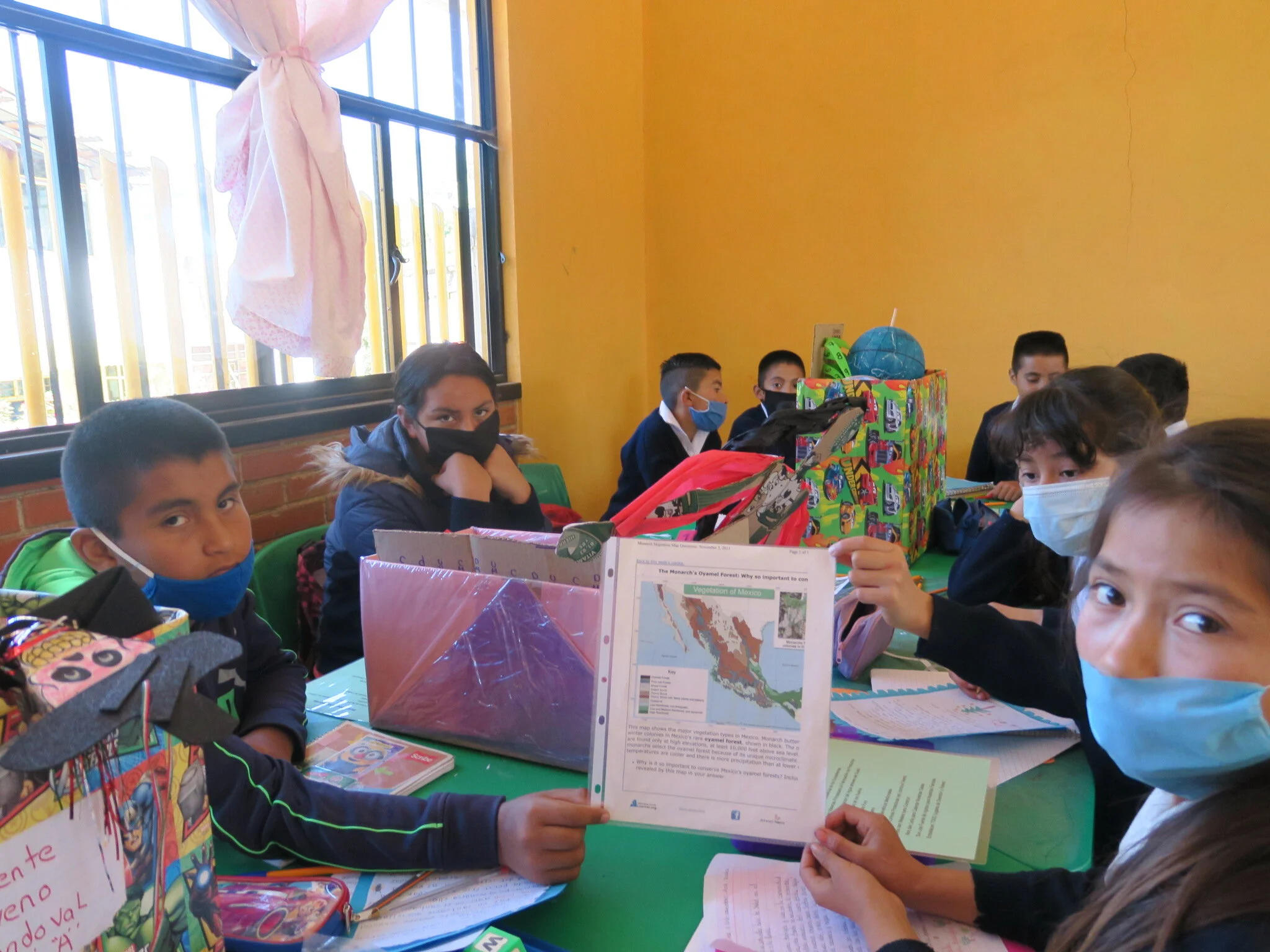
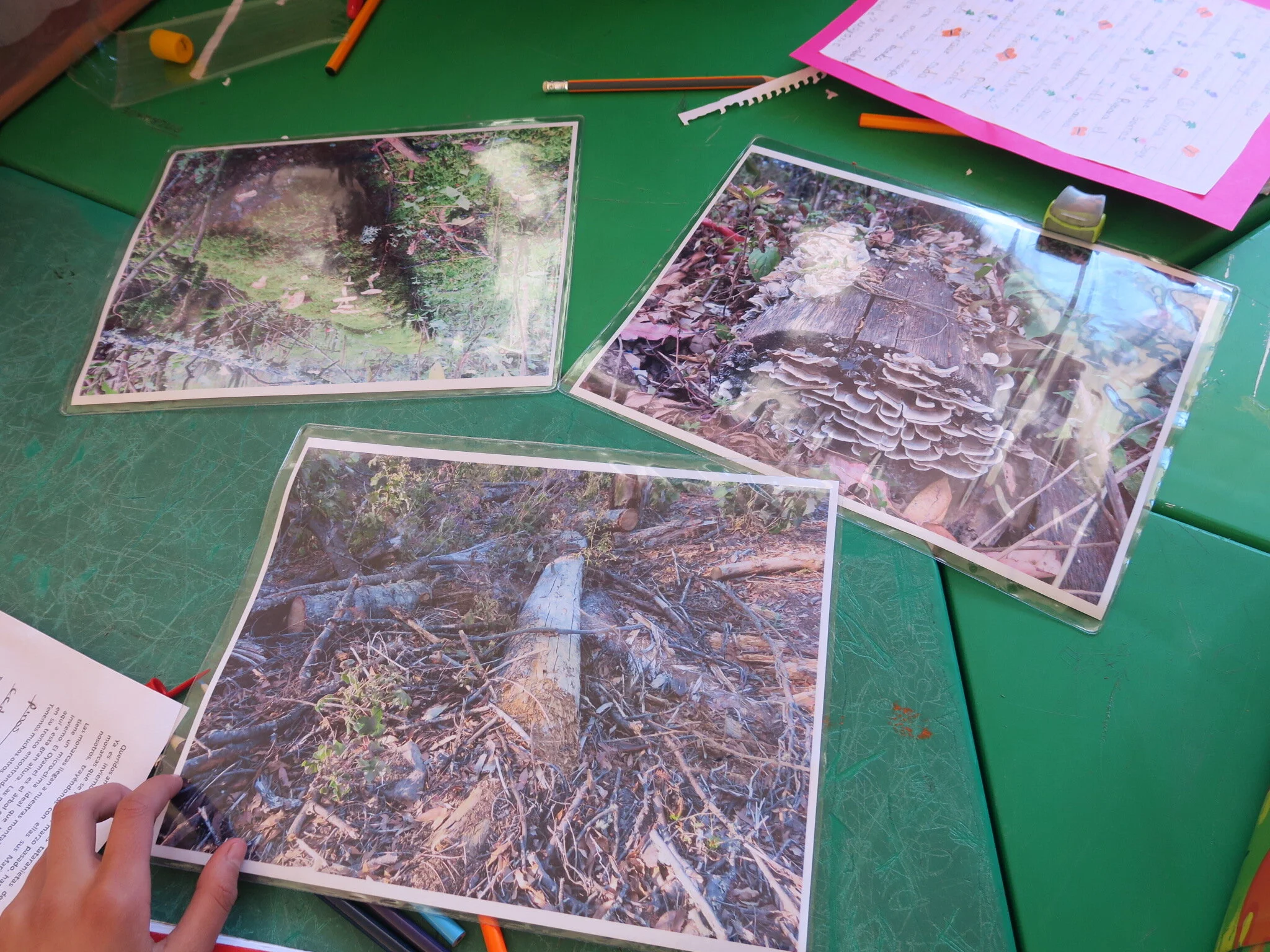
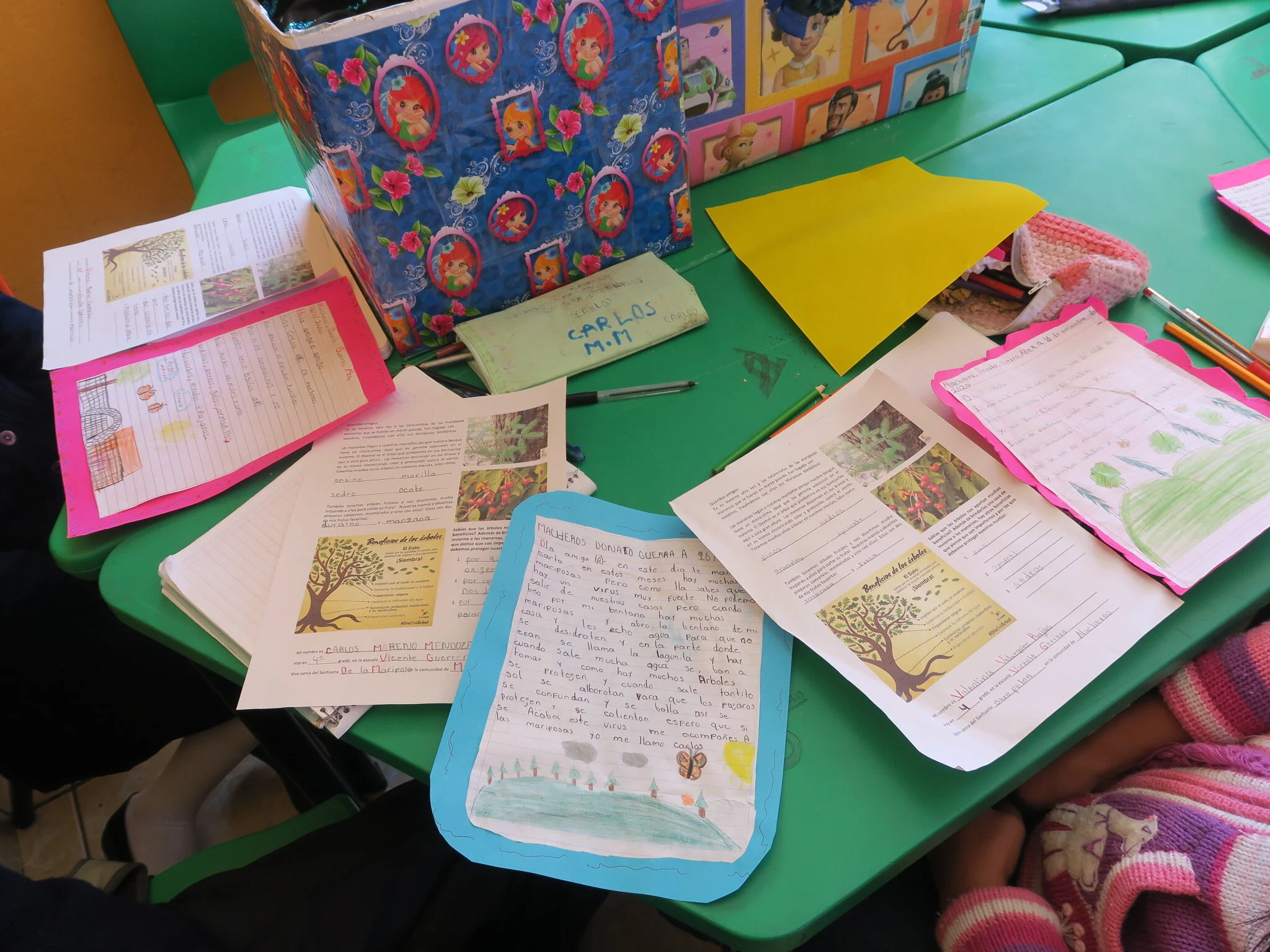
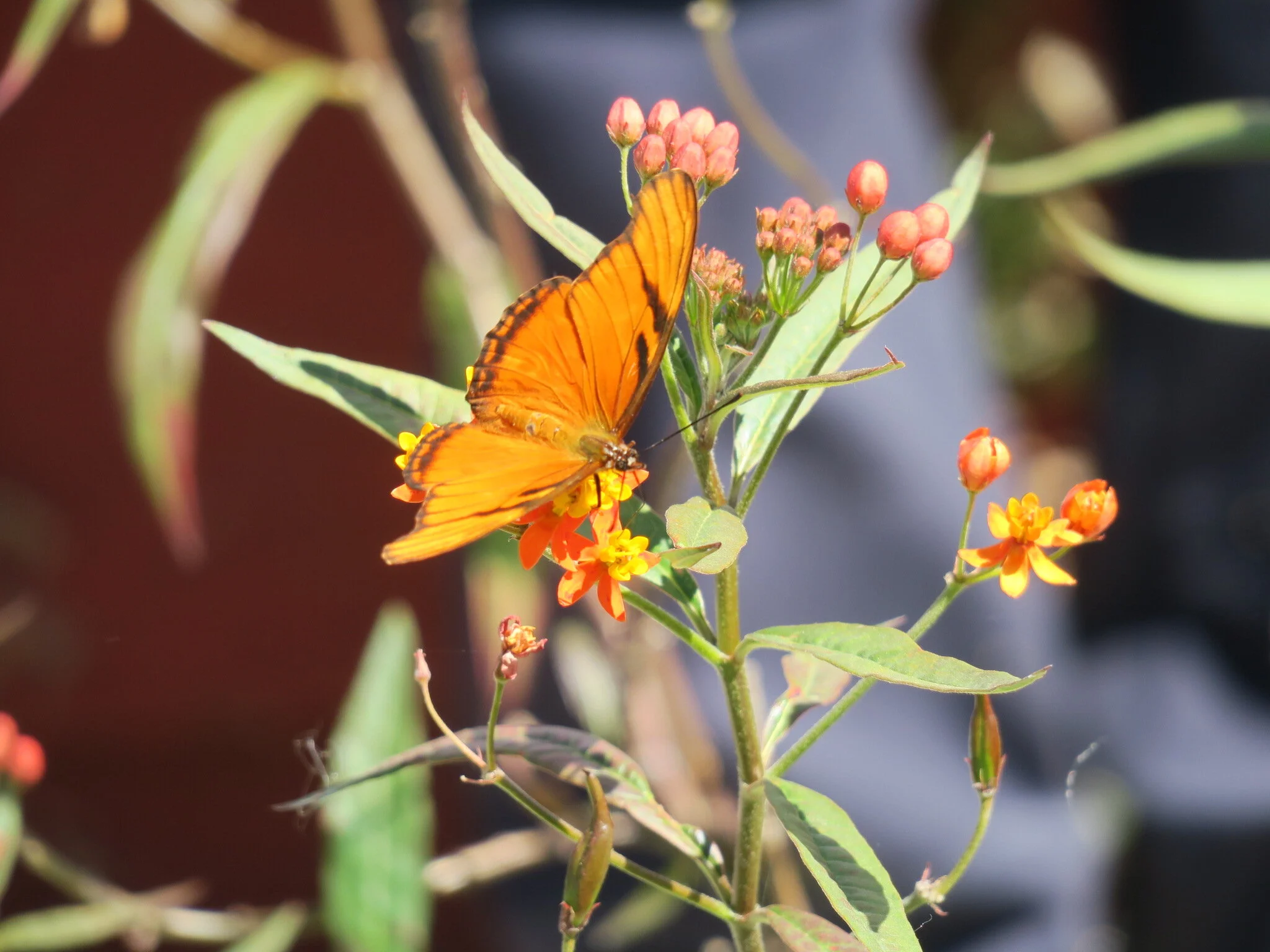
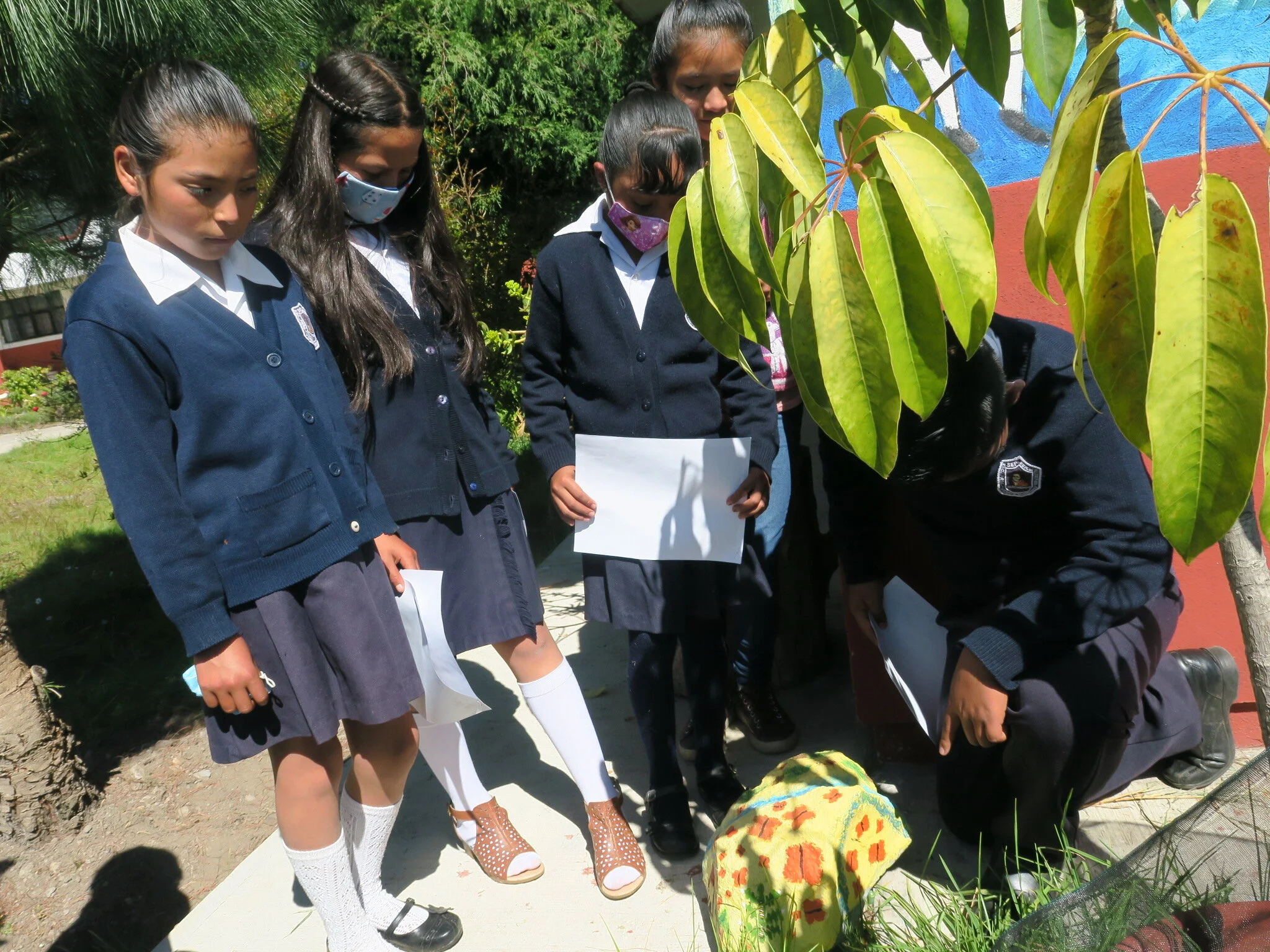
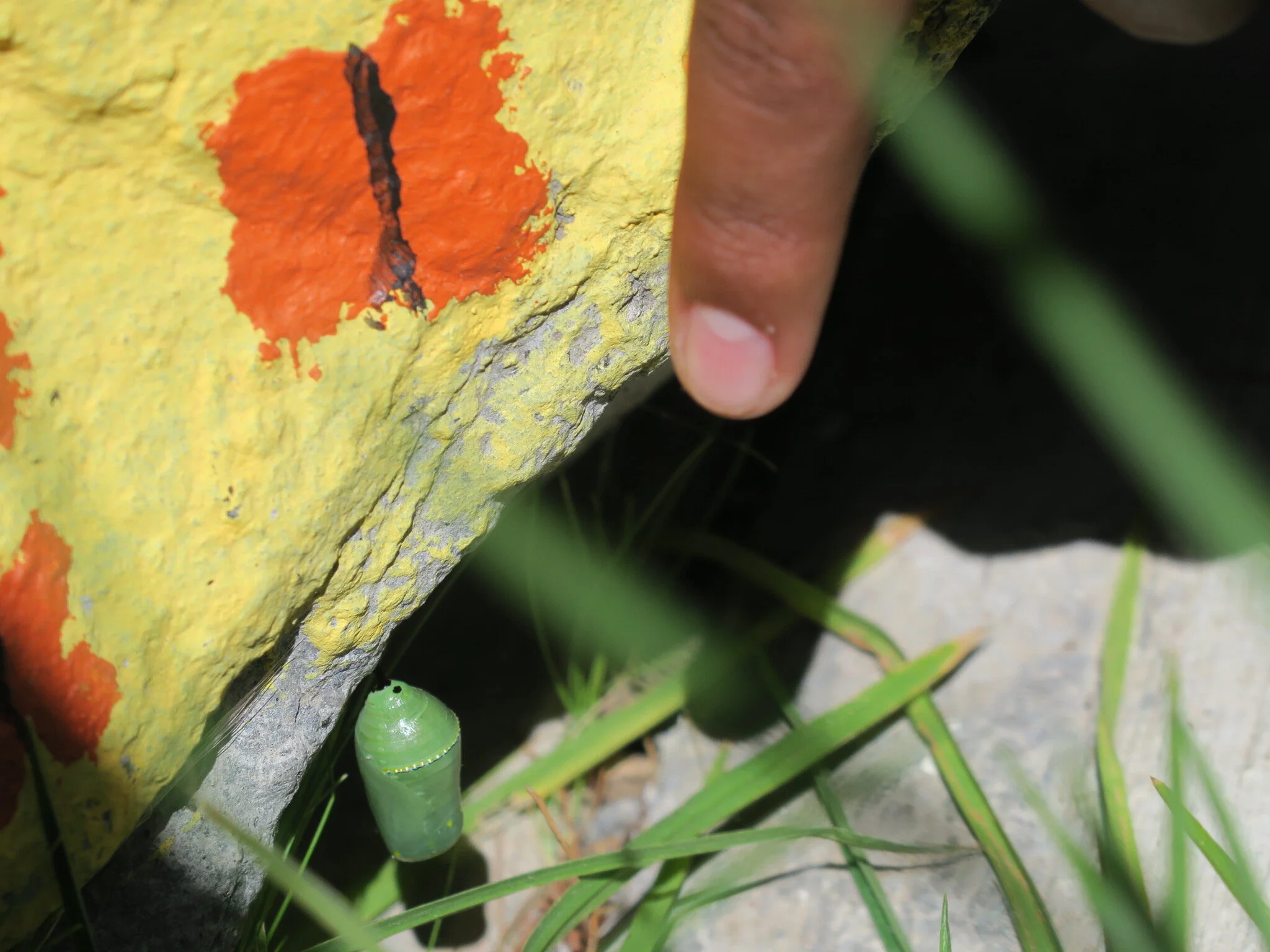
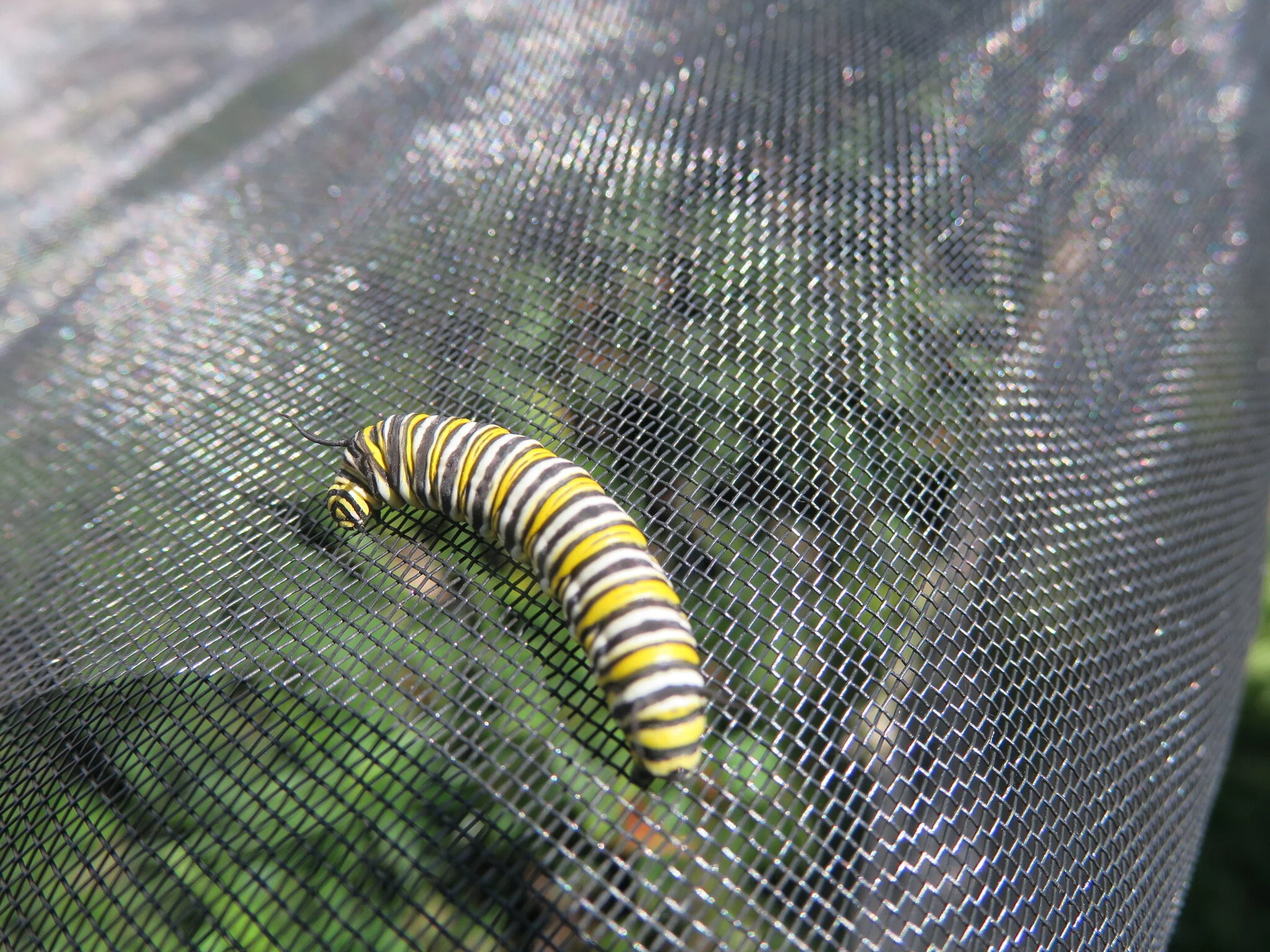
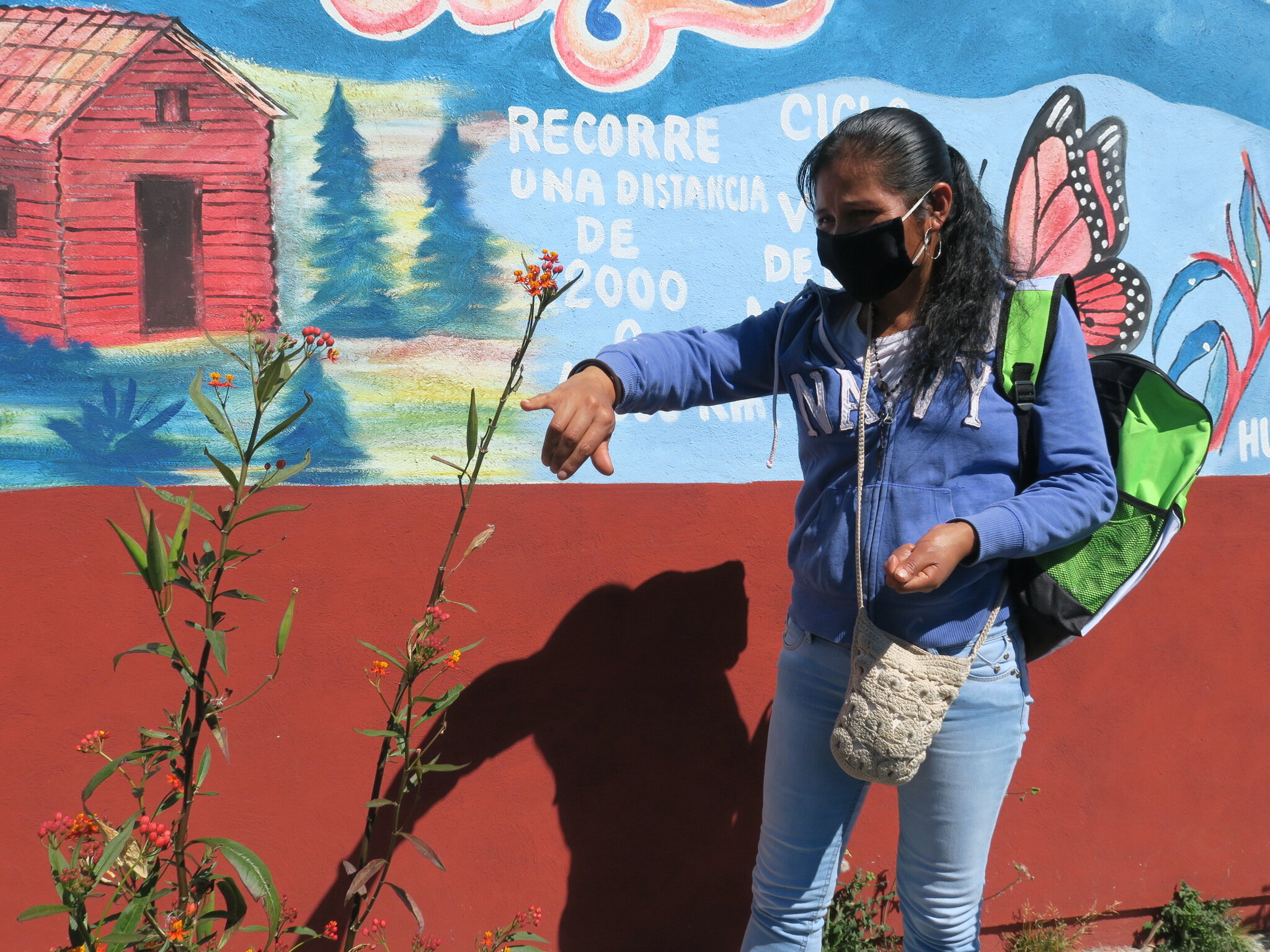
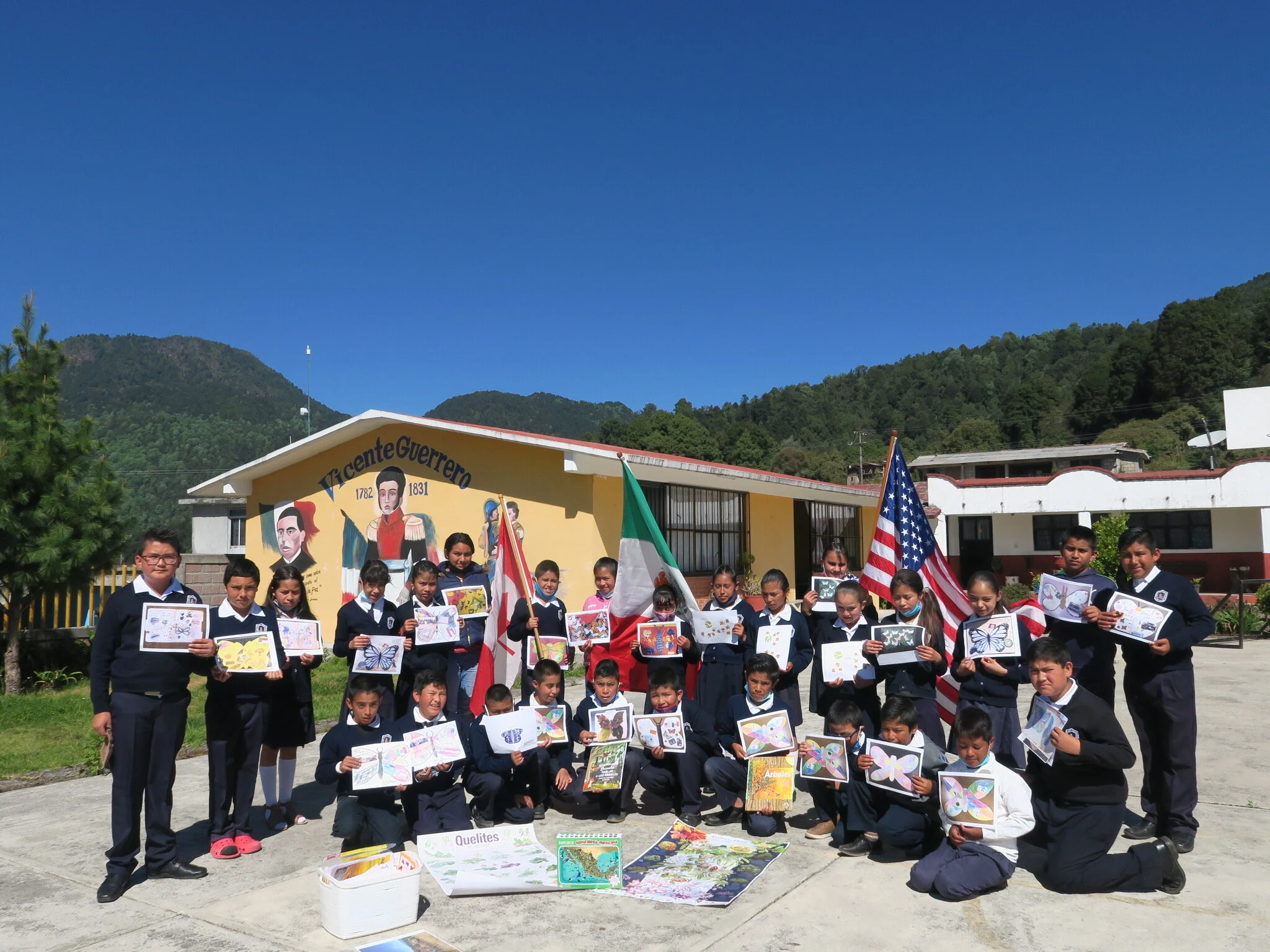
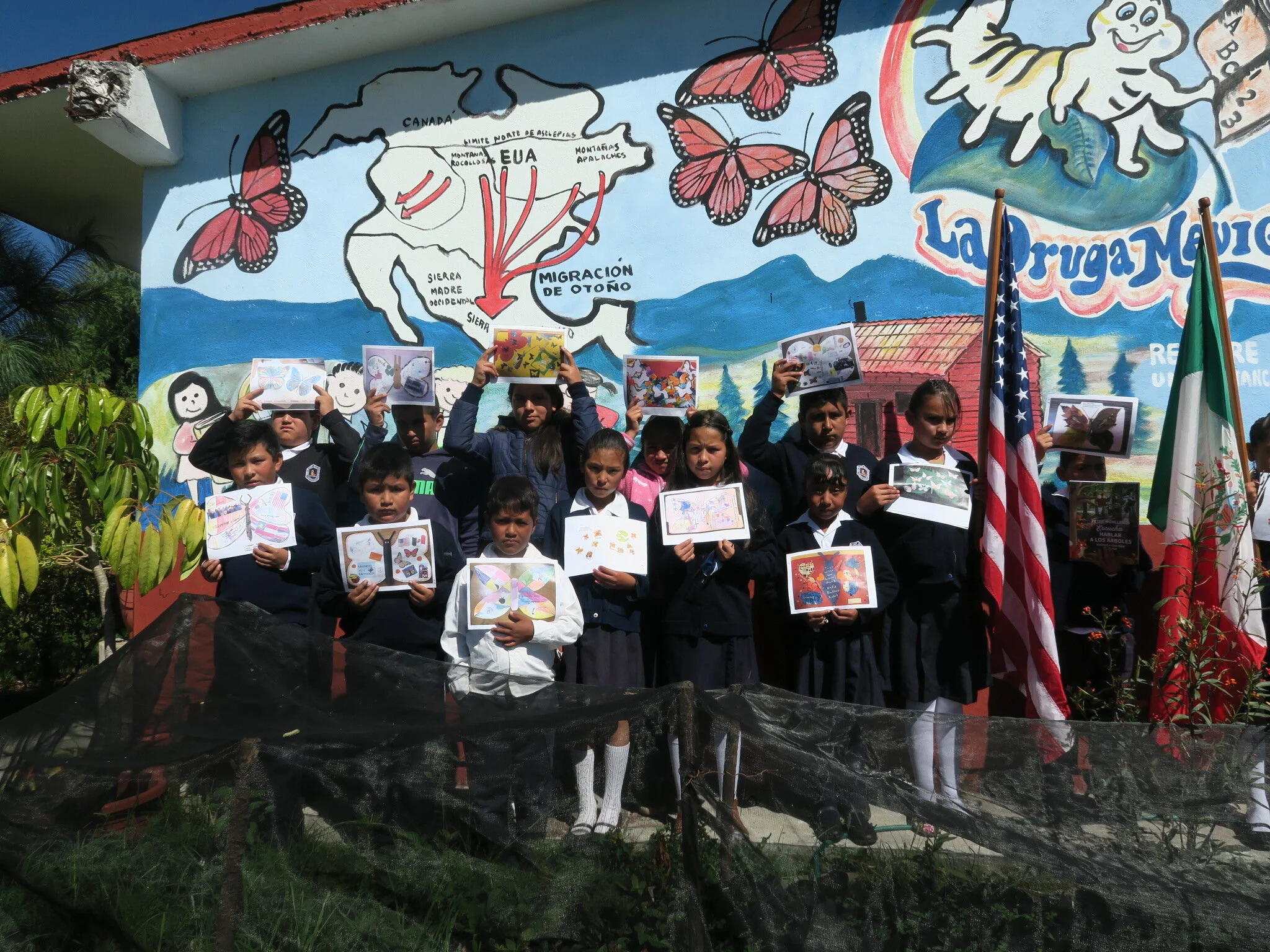
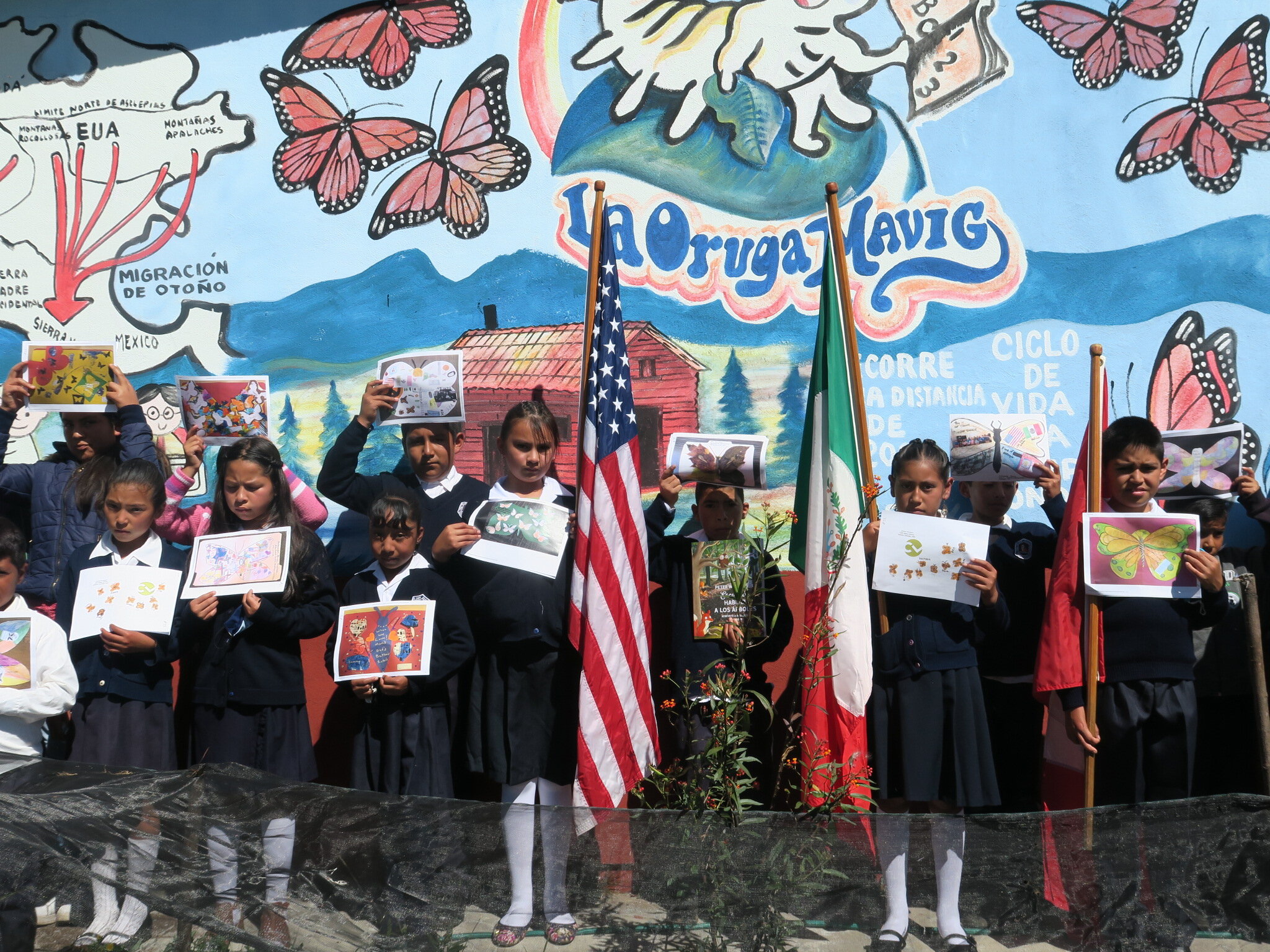
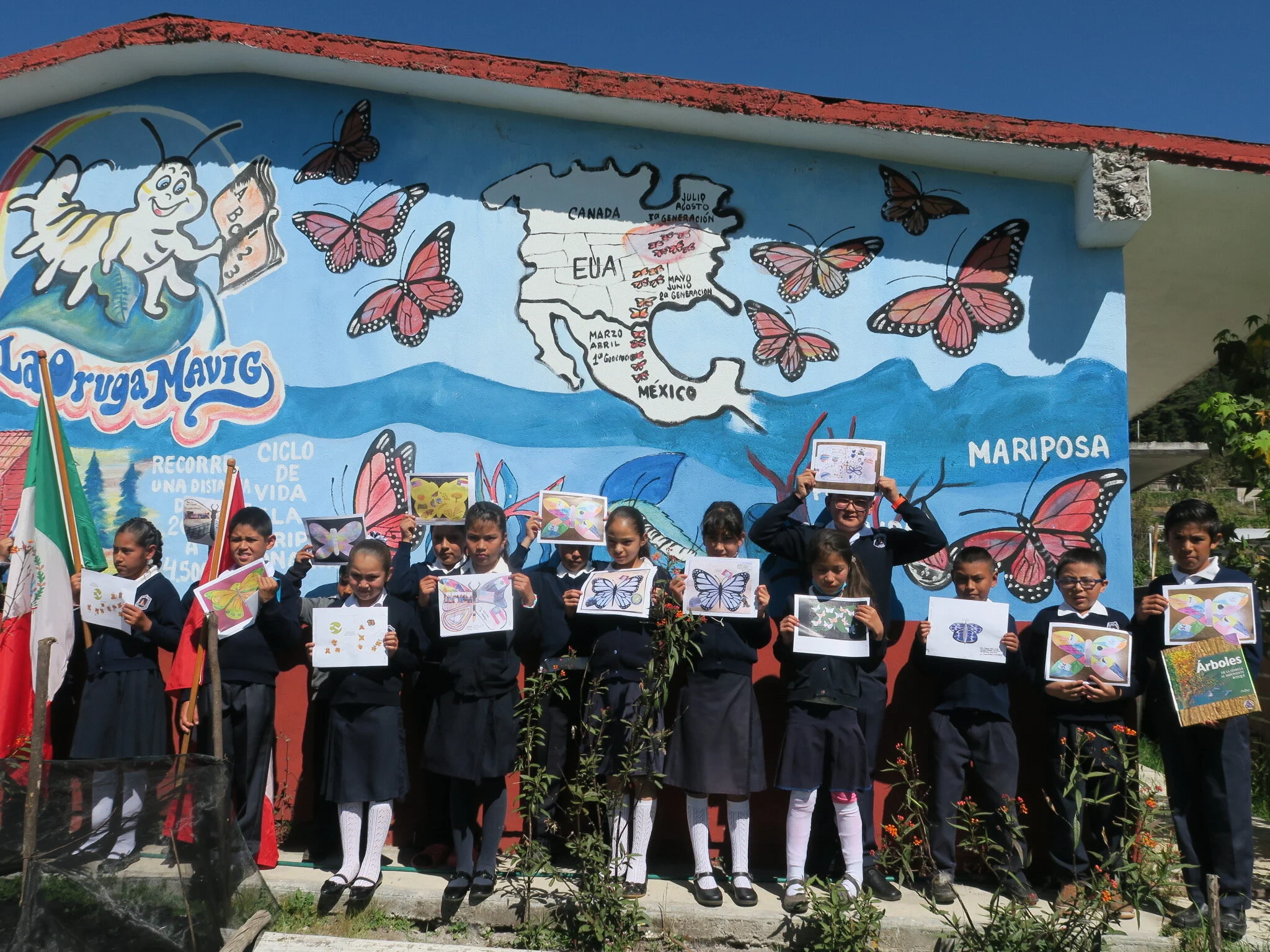
4th, 5th and 6th elementary graders were much more knowledgeable about their own forest and aware on the importance of its conservation. They could name every tree in our laminated slides, and could mostly recognize them by the shape of their leaves. “Do forests of Monarchs have Trompillo, Mamuyo and Alamo trees, in the other two Sanctuaries, as we have here, Estelita?”, --they asked me--. “No, I had never seen these trees until I came for the first time to this third Sanctuary of Monarch butterflies”!, --I responded--.“What is very impressive, is that trees absorb carbon dioxide and process it so as not to leave it in the air!. They absorb and transform poison, in a few words!”, a boy commented while all the class went over the “benefit of trees” list at the back of their images. “Can it be that fallen trees decomposing in the forest turn into a rich deposit of material, fungi and else components enriching forest properties?. This we had not heard before”!. –another classmate participated--. These students were impressed at seeing our country’s map on types of forests and went dumb and kept still when they could see how few and small and at the same time unique and at risk the only left nucleus of Oyamel trees are in our country and understood much more why we are such a special region, favorite overwintering spots to Monarchs. One of the most exciting parts of the visit came when we went out to the yard in search of Monarch breeding cycles, since climate conditions at this altitude allows for a species of milkweed to grow here!. It did not take us long to discover a huge Caterpillar at the vegetable nursery’s roofing net! “she wants to go to the “J” form now!; it is the time for him!”! Two children shouted really knowing of the important moment for this large, strong Caterpillar! Then a Chrysalis hanging at the bottom part of a rock!, indescribable experience!. We people in my hometown, at the other two Sanctuaries, have only seen Monarchs roofing but in the forest, but never breeding!. “Oh, we have had them the whole year this time with us!; many just never migrate north and stay here; we saw them breeding all year round”, --A mom assured to me, just taken the great event for granted--! All students at this location assure they are already seeing eggs, a few caterpillars and even chrysalis at this time of the year, only mid November!*. Could the extreme warm weather we are having now be accelerating their life-cycle timing in this location?. *Shall this have negative consequences for the whole overwintering and later migration event north later in March when they have to leave? This is how we concluded our exciting science visit to the beautiful village of Macheros.
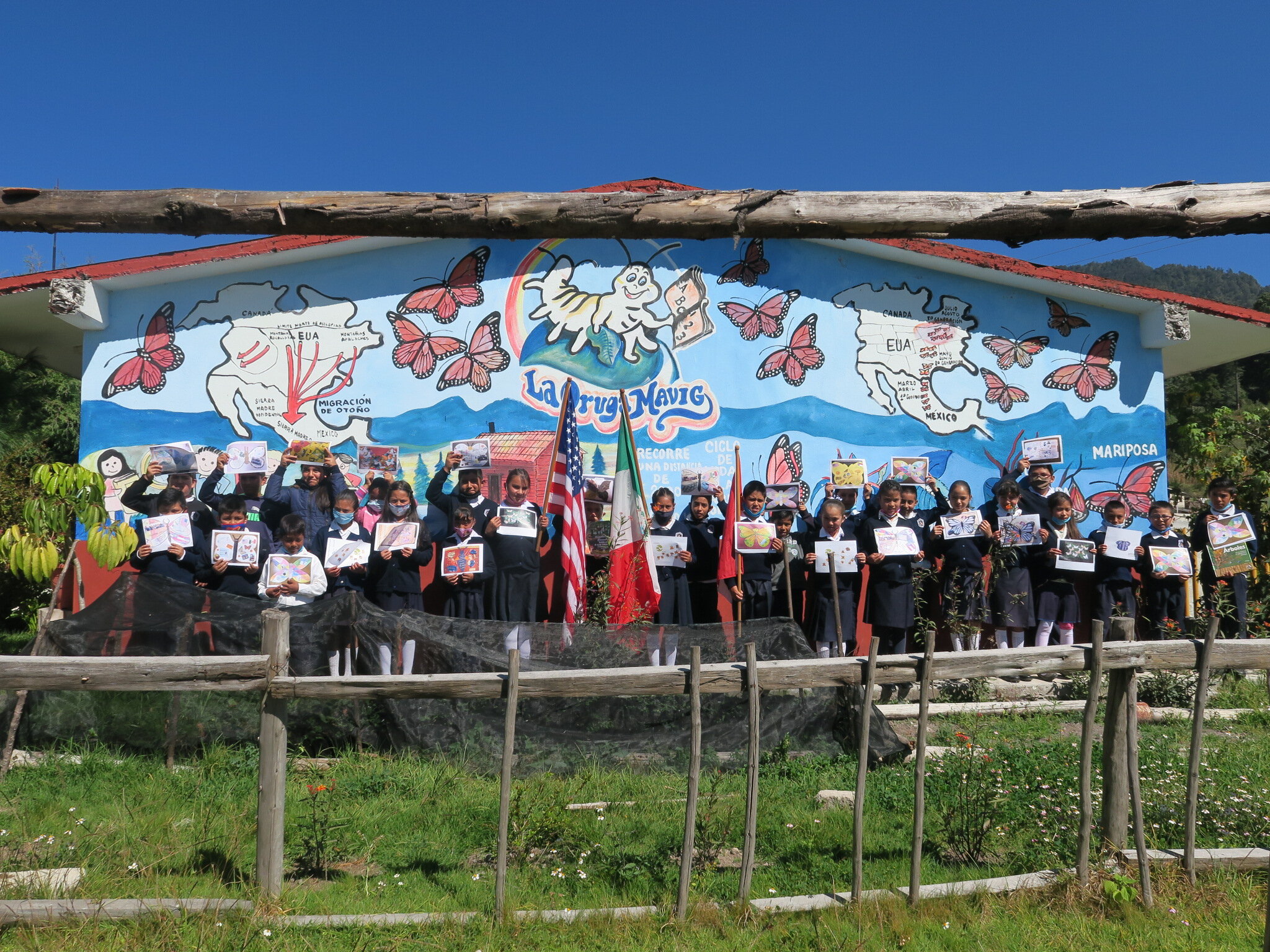
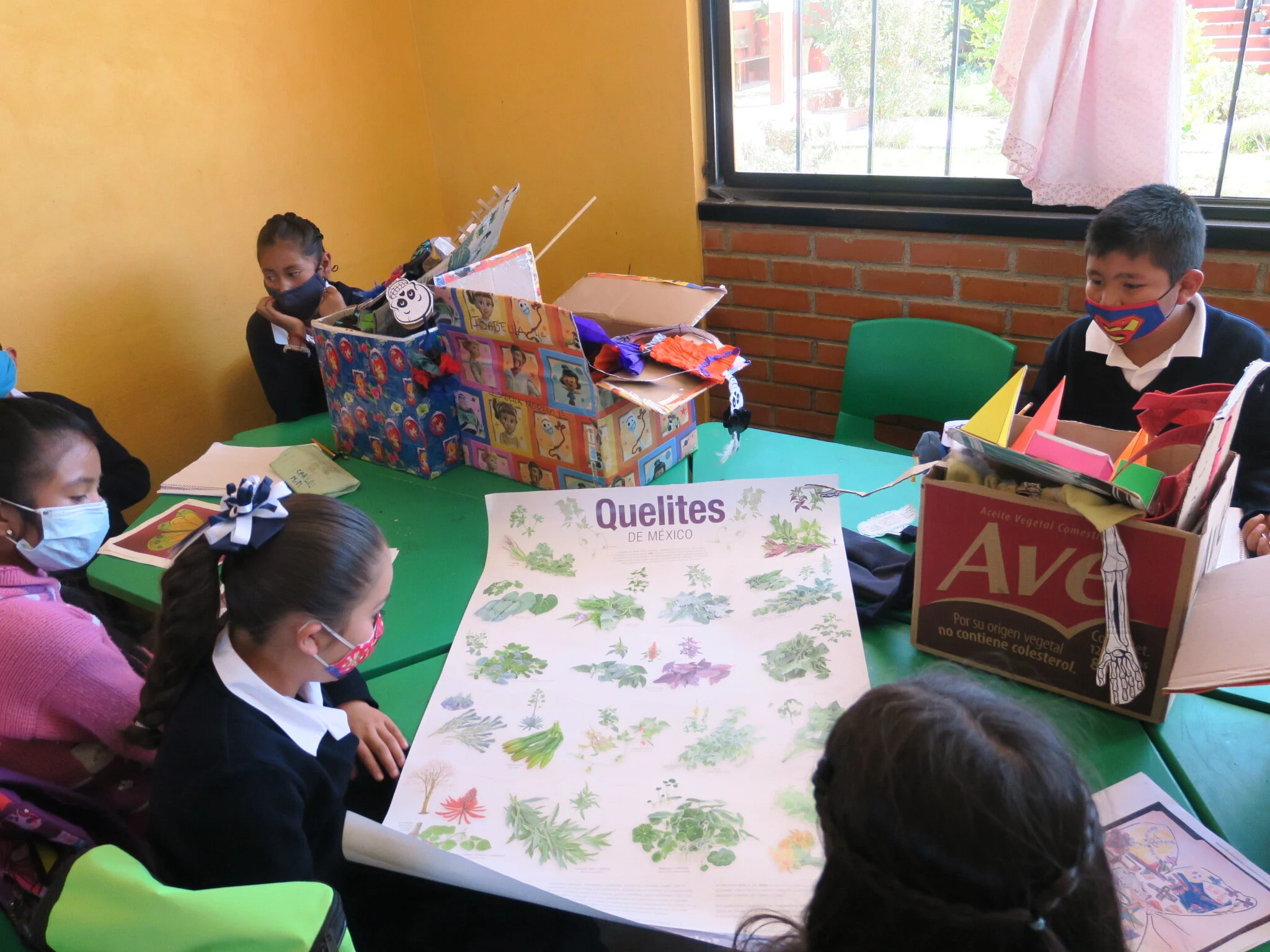
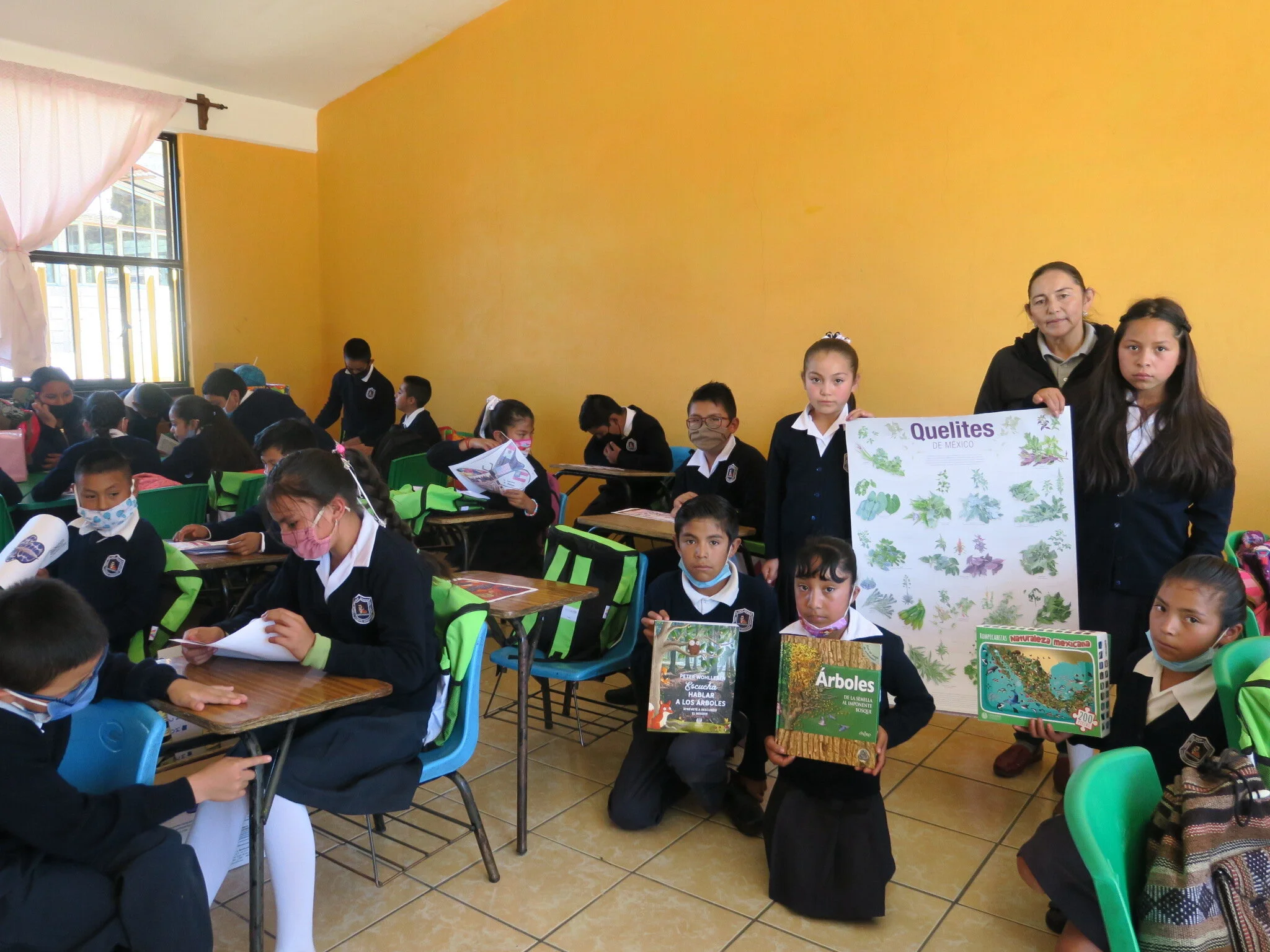
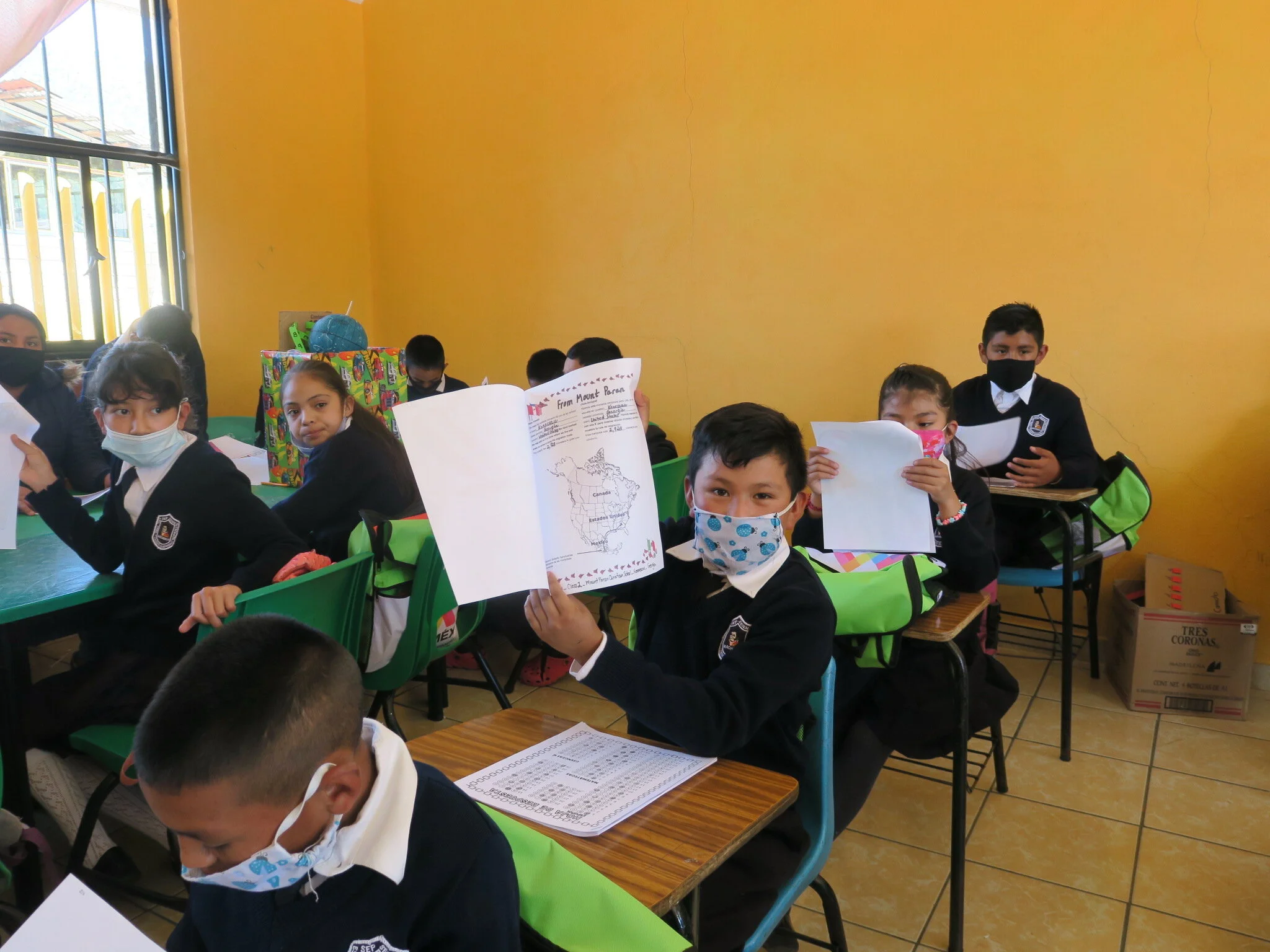
AMBASSADORS MONARCHS RECEIVED HERE
Sheboygan Christian School, Sheboygan, Wisconsin
The Mountain Community School, Hendersonville, North Carolina
Arborbrook Christian Academy, Matthews, North Carolina
Etowah Elementary, Etowah, North Carolina
Mount Paran Christian School, Kennesaw, Georgia
Mount Paran Christian School, Kennesaw, Georgia
Mount Paran Christian School, Kennesaw, Georgia
Birch School, Merrick, New York
Chatterton School, Merrick, New York
Mount Vernon Preschool, Atlanta, Georgia
Mount Vernon Preschool, Atlanta, Georgia
Mount Vernon Preschool, Atlanta, Georgia
Mount Vernon Preschool, Atlanta, Georgia
Cliff Valley School, Atlanta, Georgia
Cliff Valley School, Atlanta, Georgia
Cliff Valley School, Atlanta, Georgia
Saint Nicholas School, Chattanooga, Tennessee
Saint Nicholas School, Chattanooga, Tennessee
Groveton High School, Groveton, New Hampshire
Wittenberg Elementary, Wittenberg, Wisconsin
Norman J Levy Lakeside School, Merrick, New York
Tolland Intermediate School, Tolland, Connecticut
Tolland Intermediate School, Tolland, Connecticut
Tolland Intermediate School, Tolland, Connecticut
Tolland Intermediate School, Tolland, Connecticut
Tolland Intermediate School, Tolland, Connecticut
Annuciation Day School, Atlanta, Georgia
Saint Pius X Catholic School, Indianapolis, Indiana