
Perennial and Seasonal trees at Monarchs' Overwintering Region
THE VISIT.
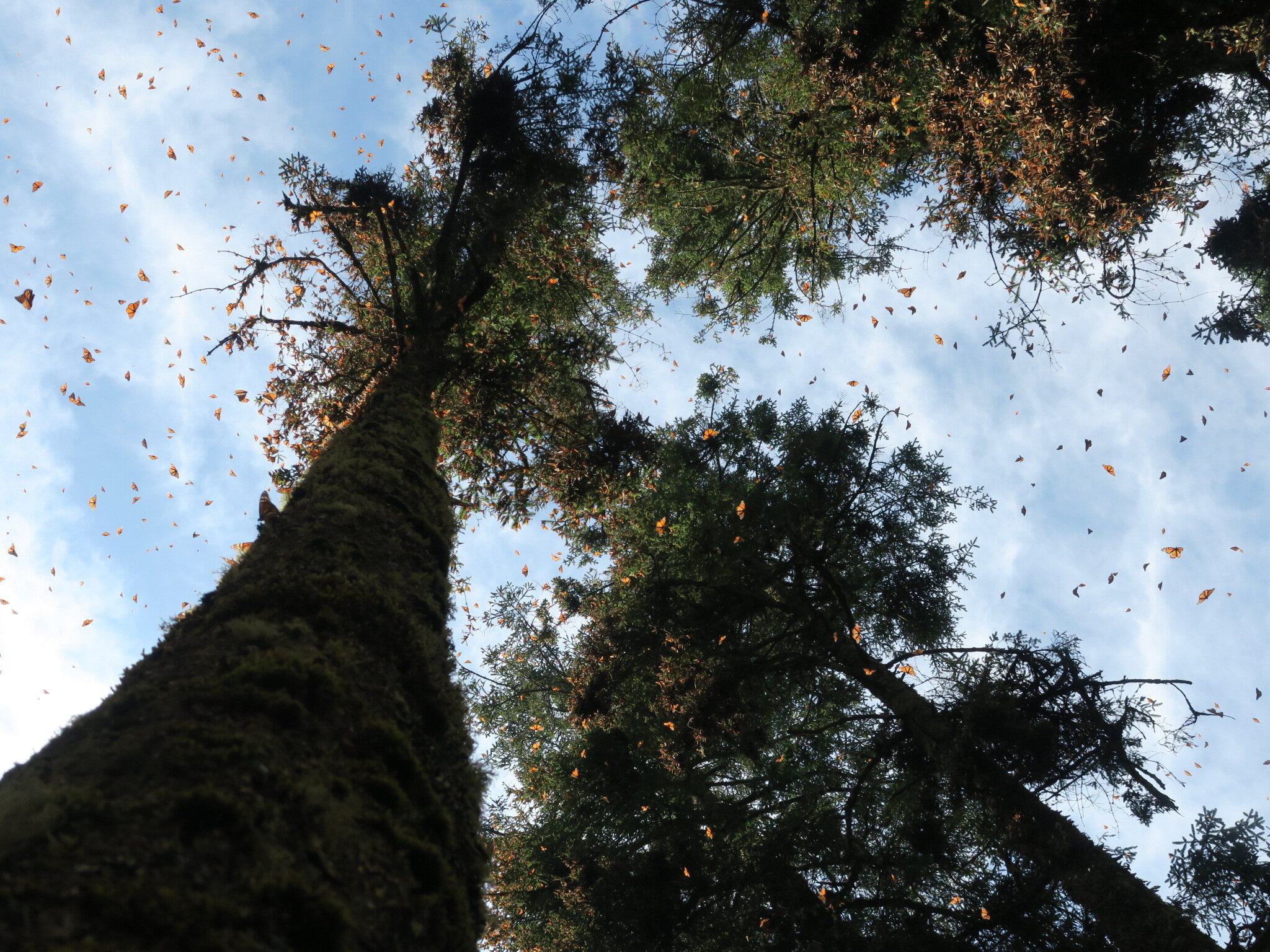
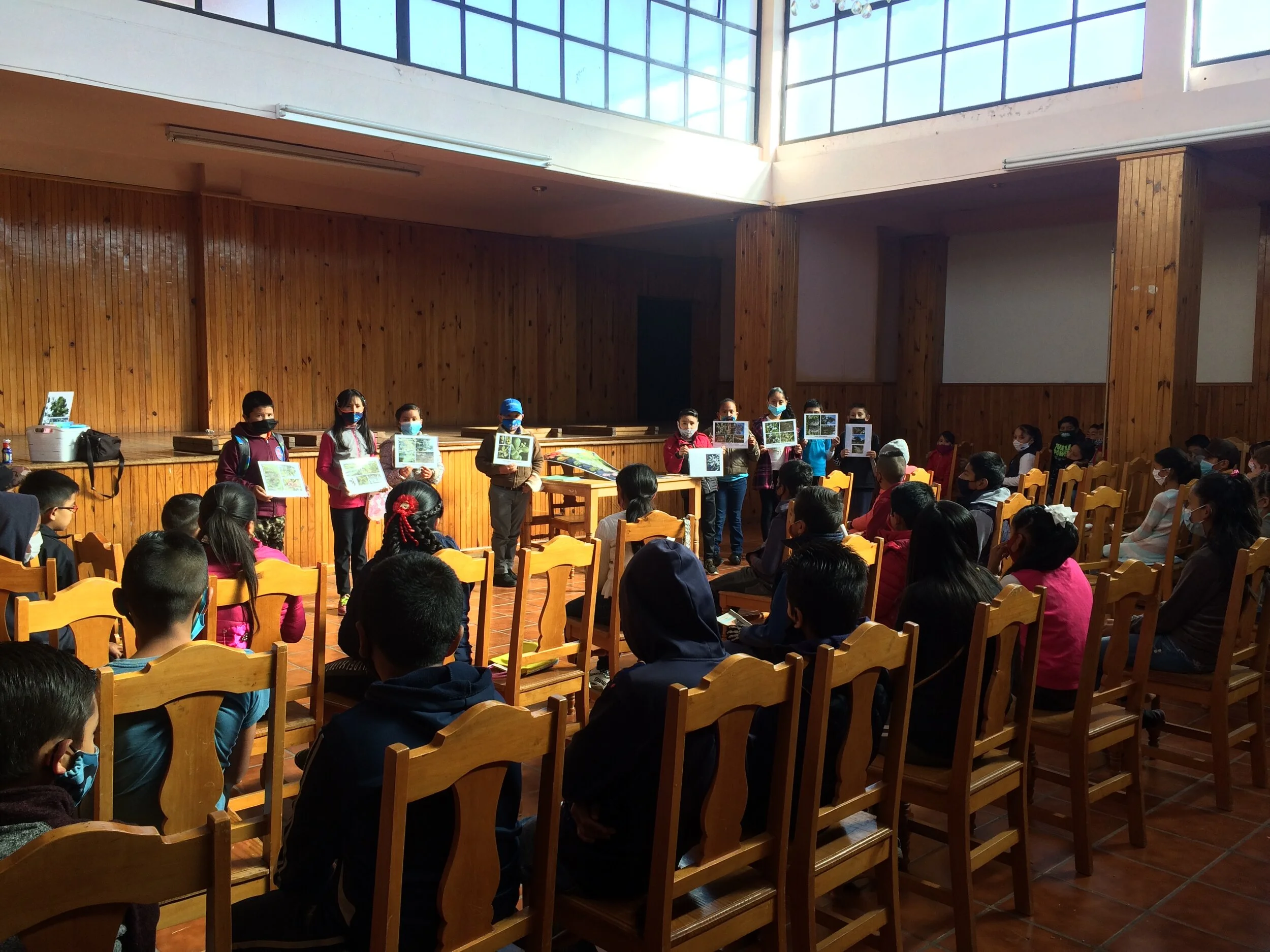
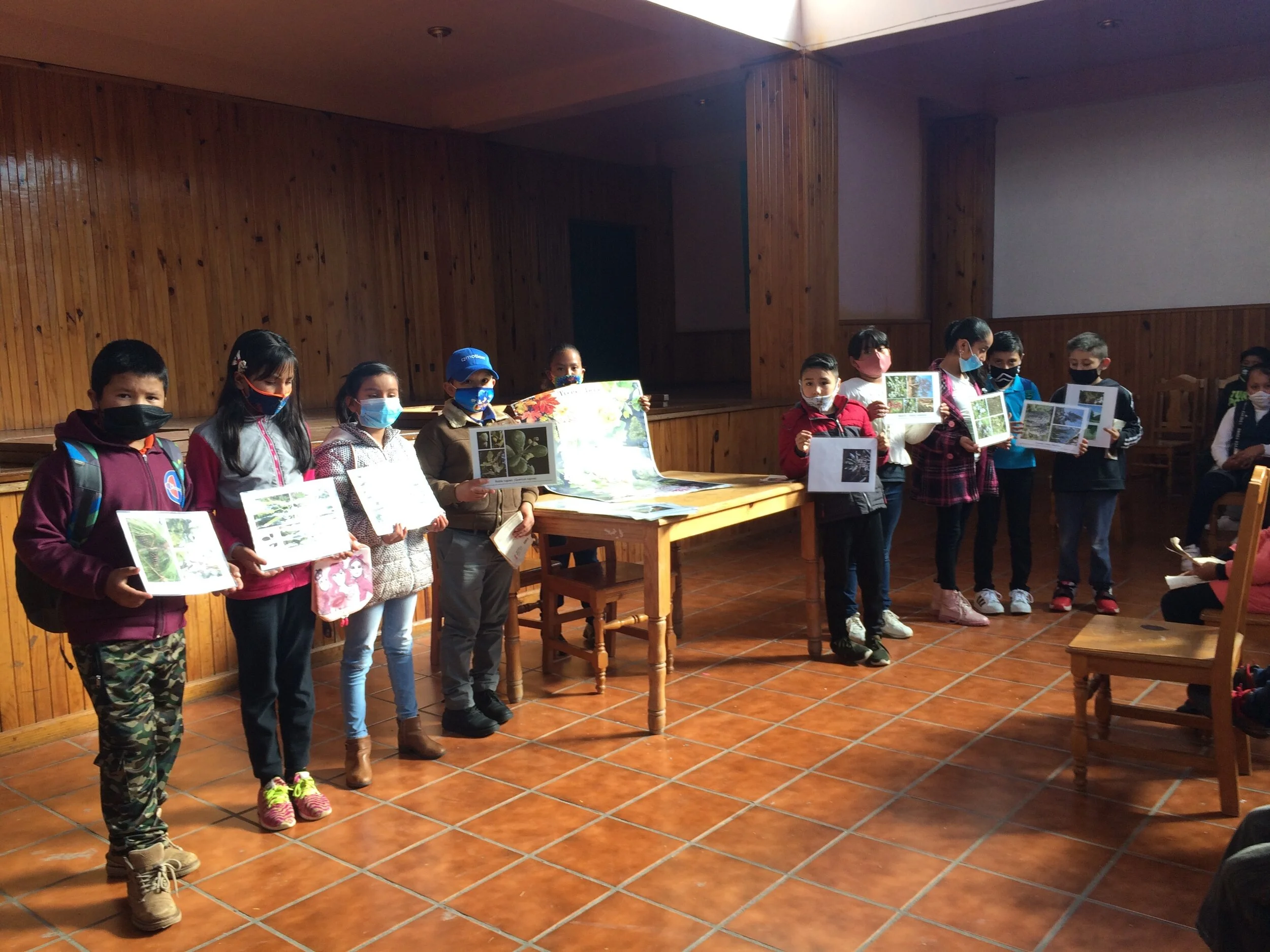
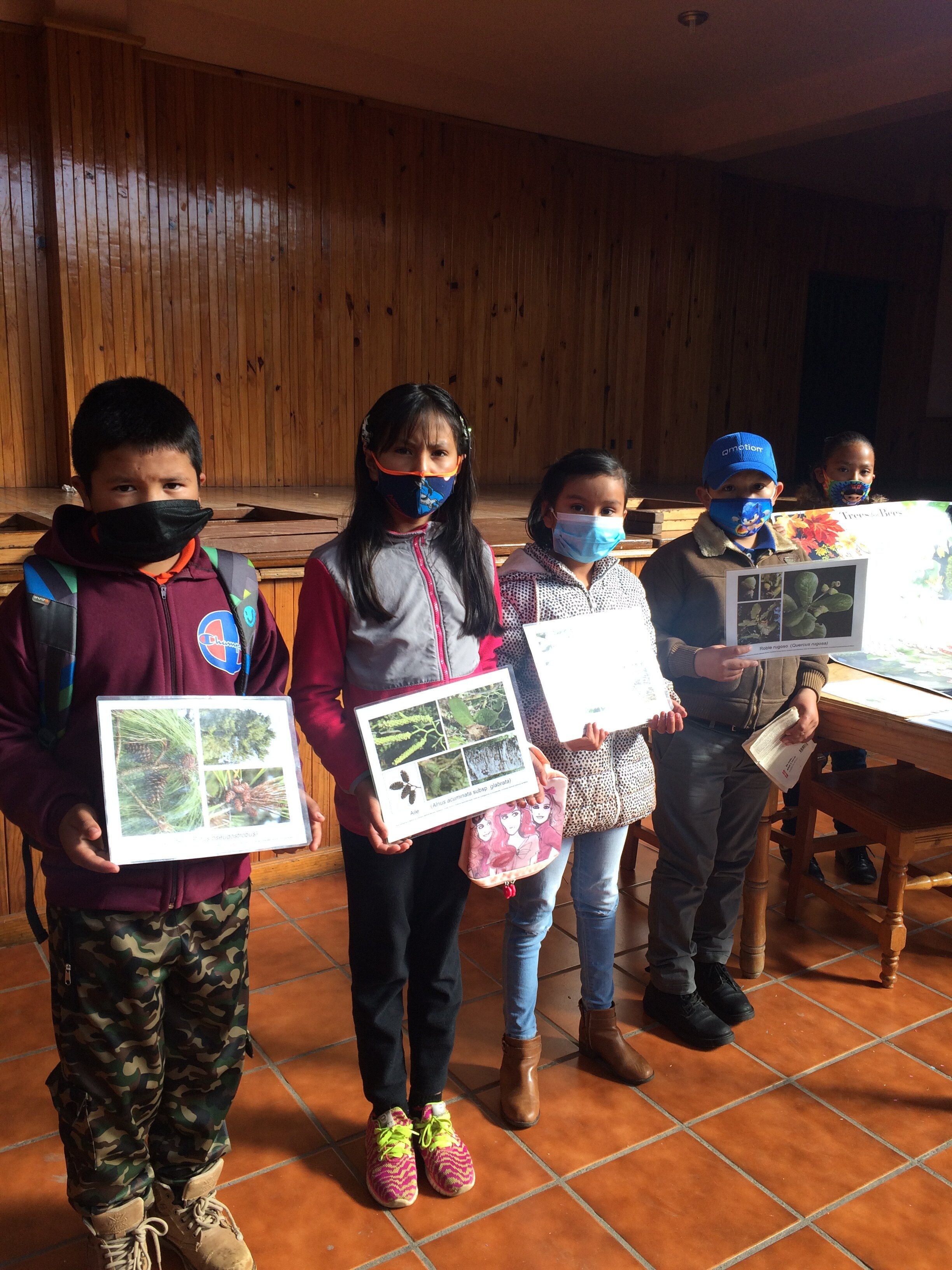
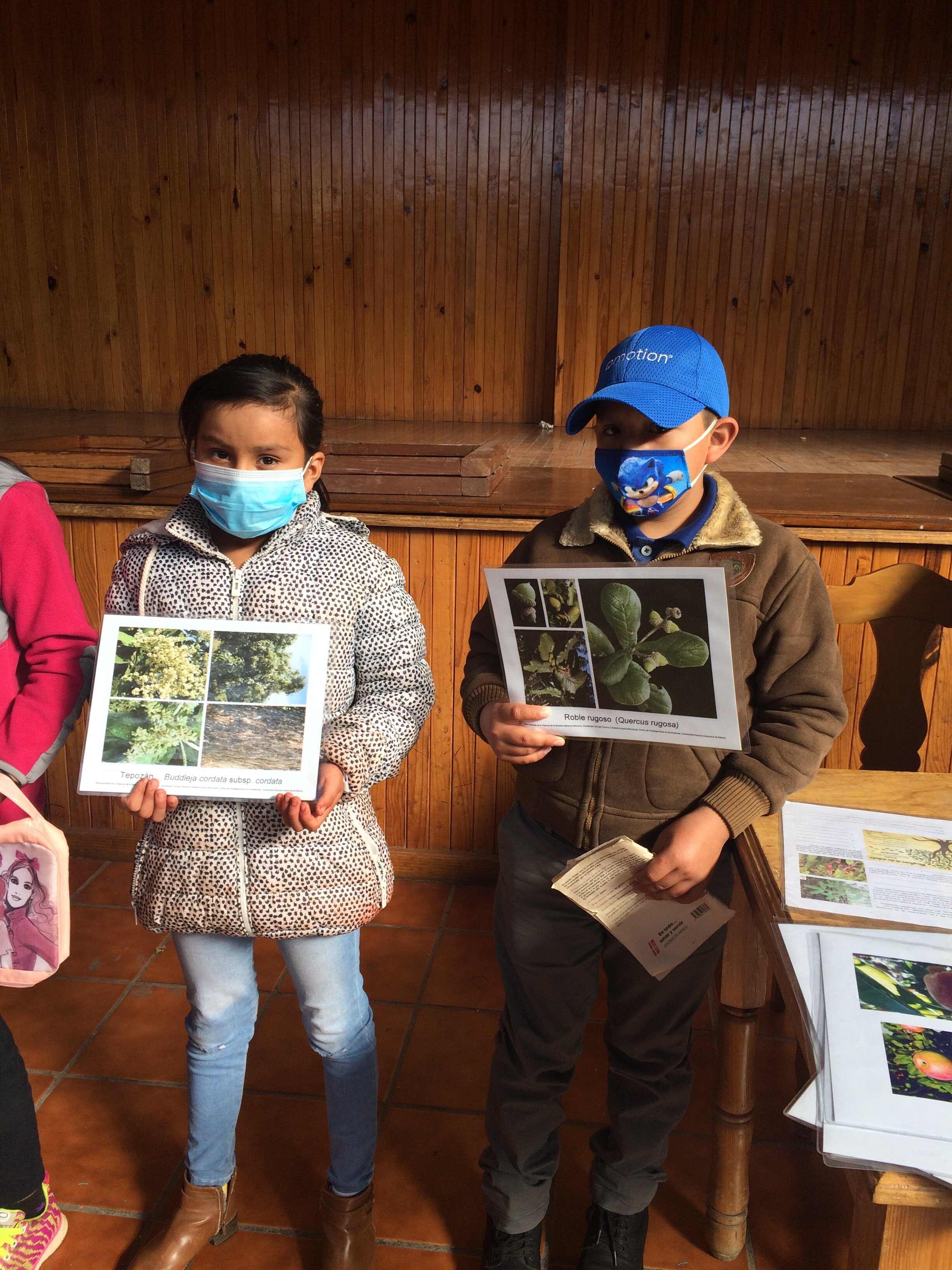
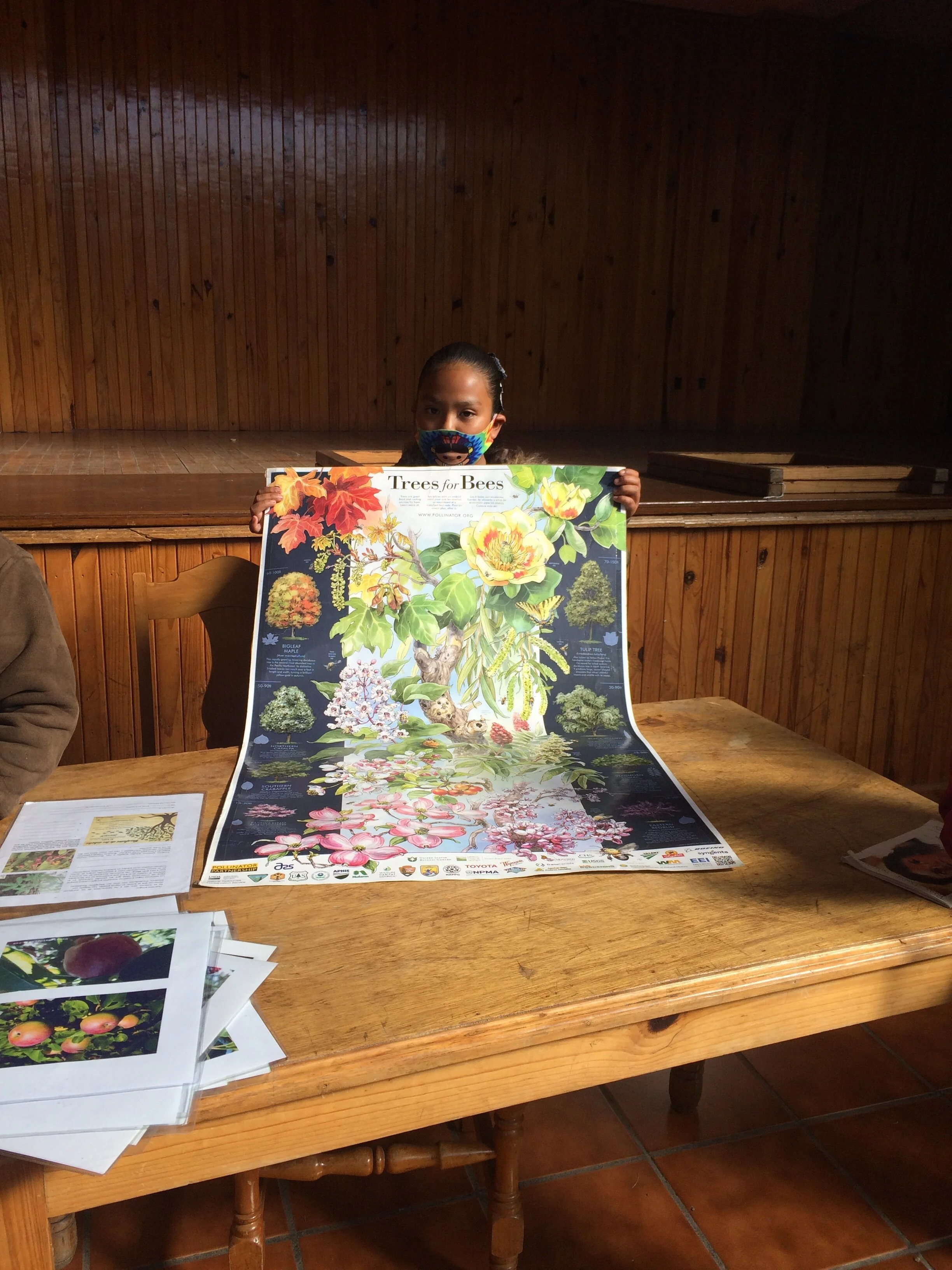
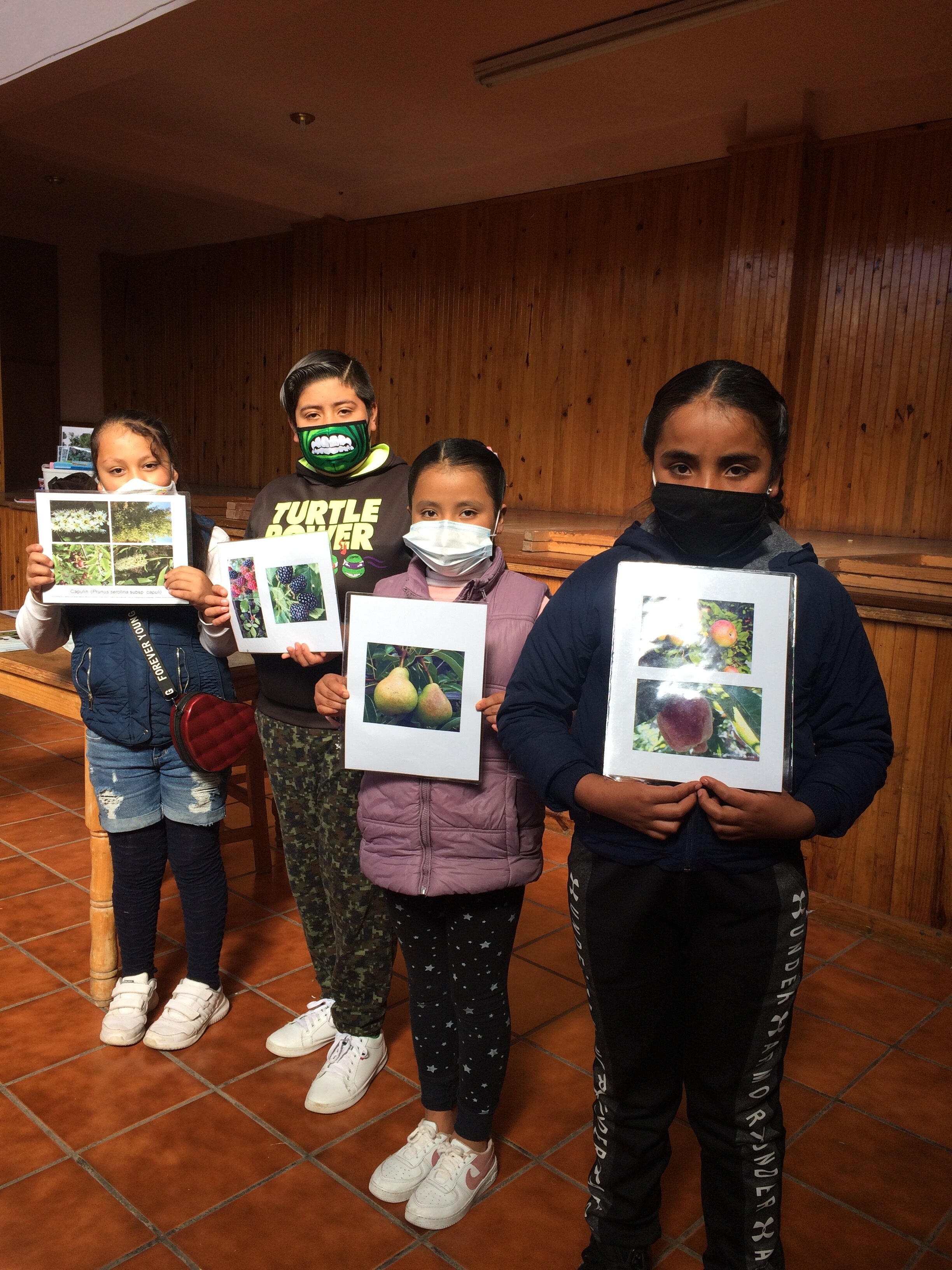
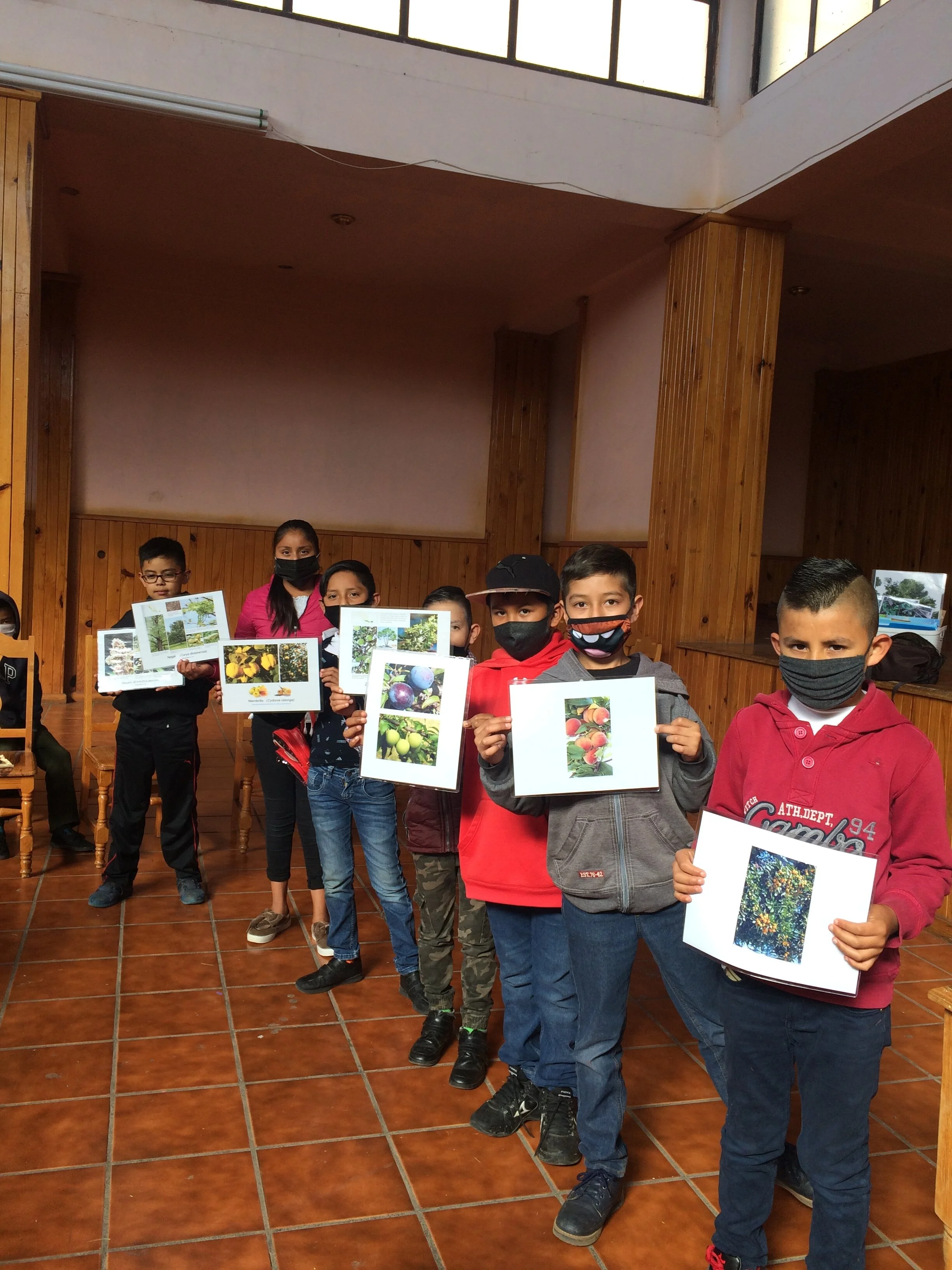
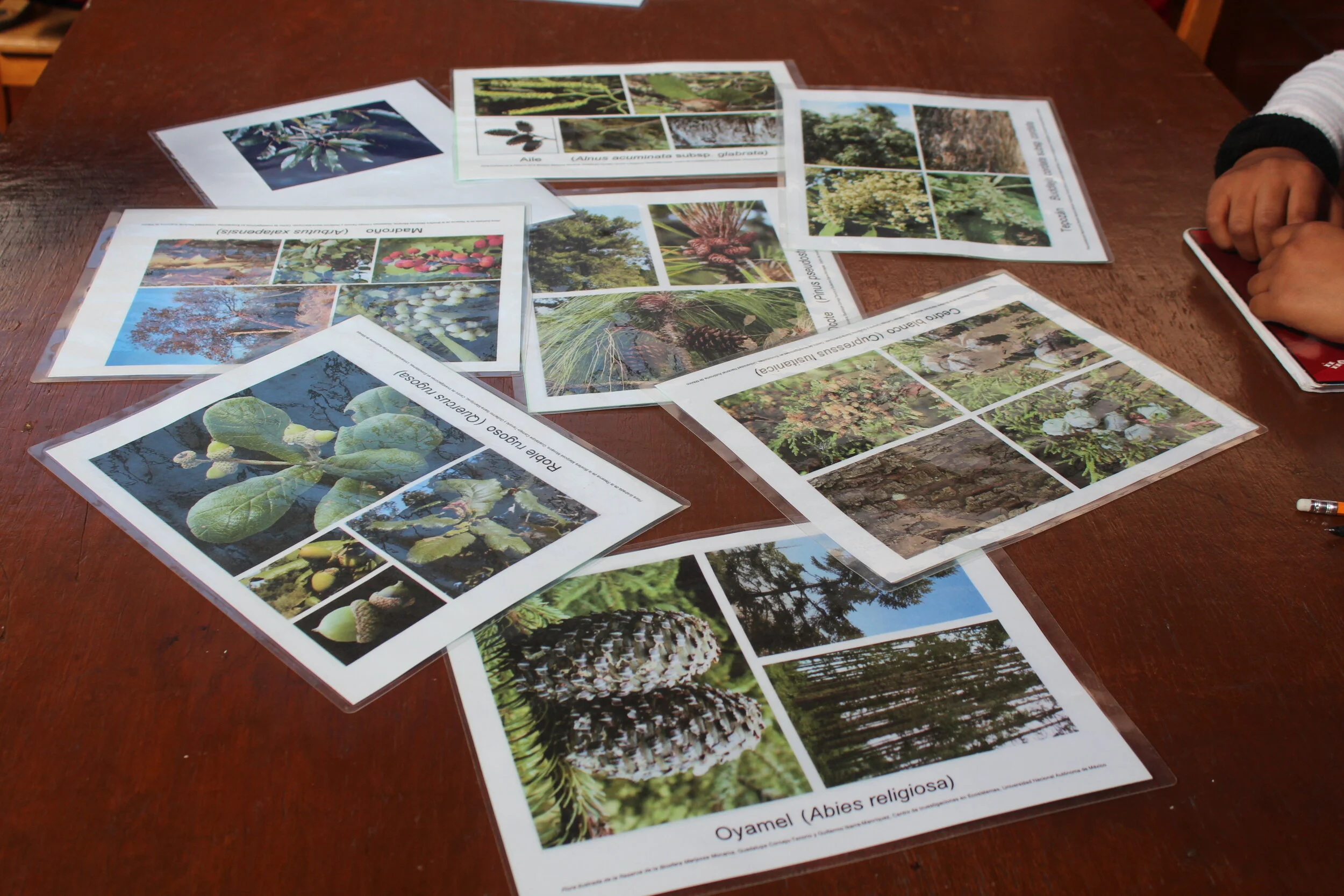
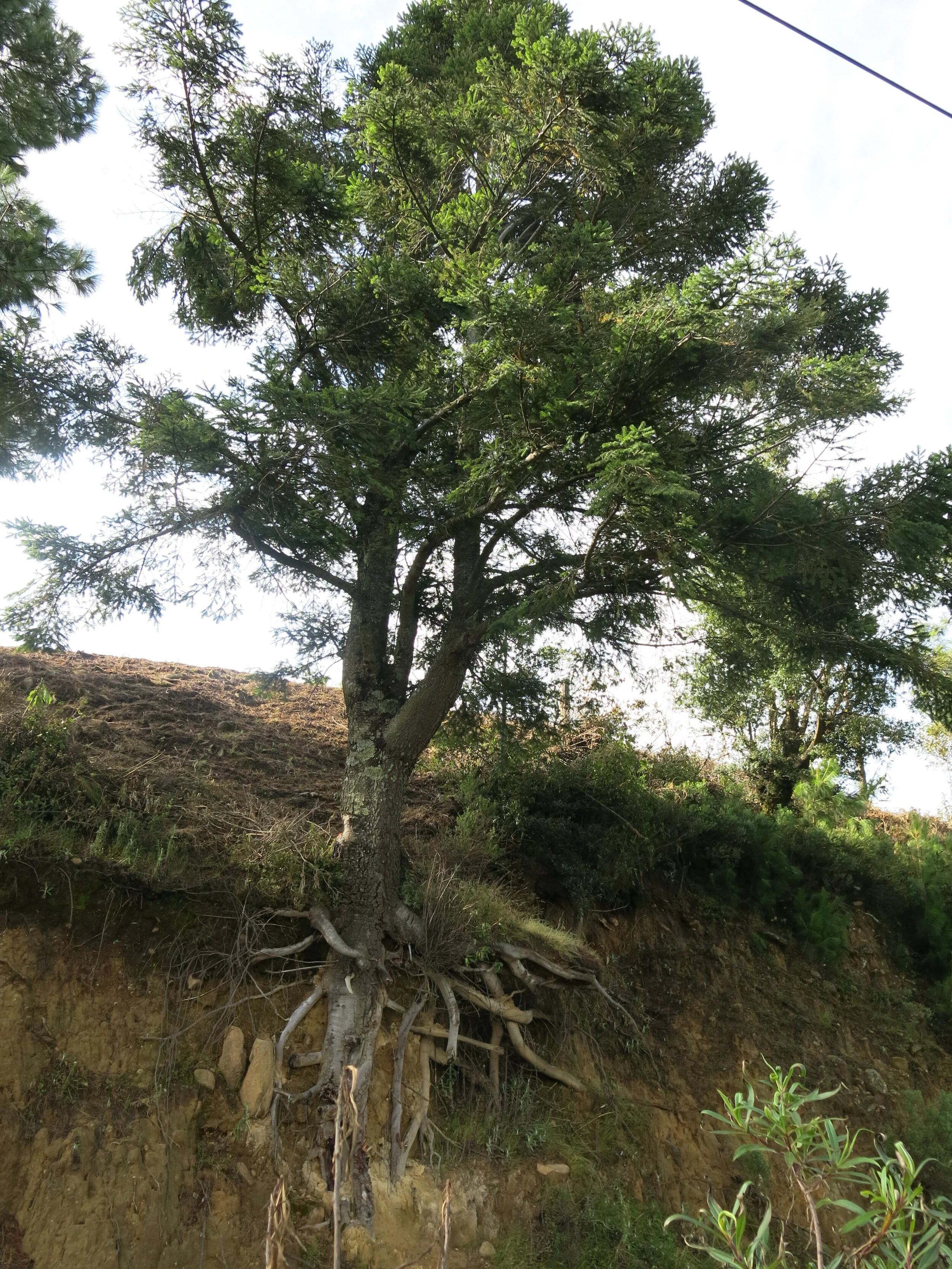
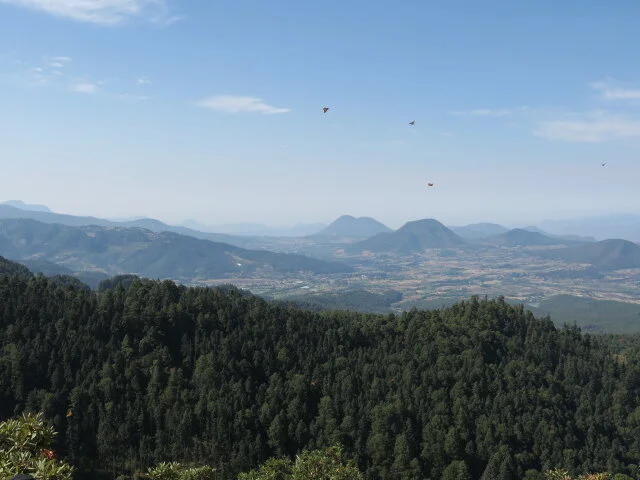
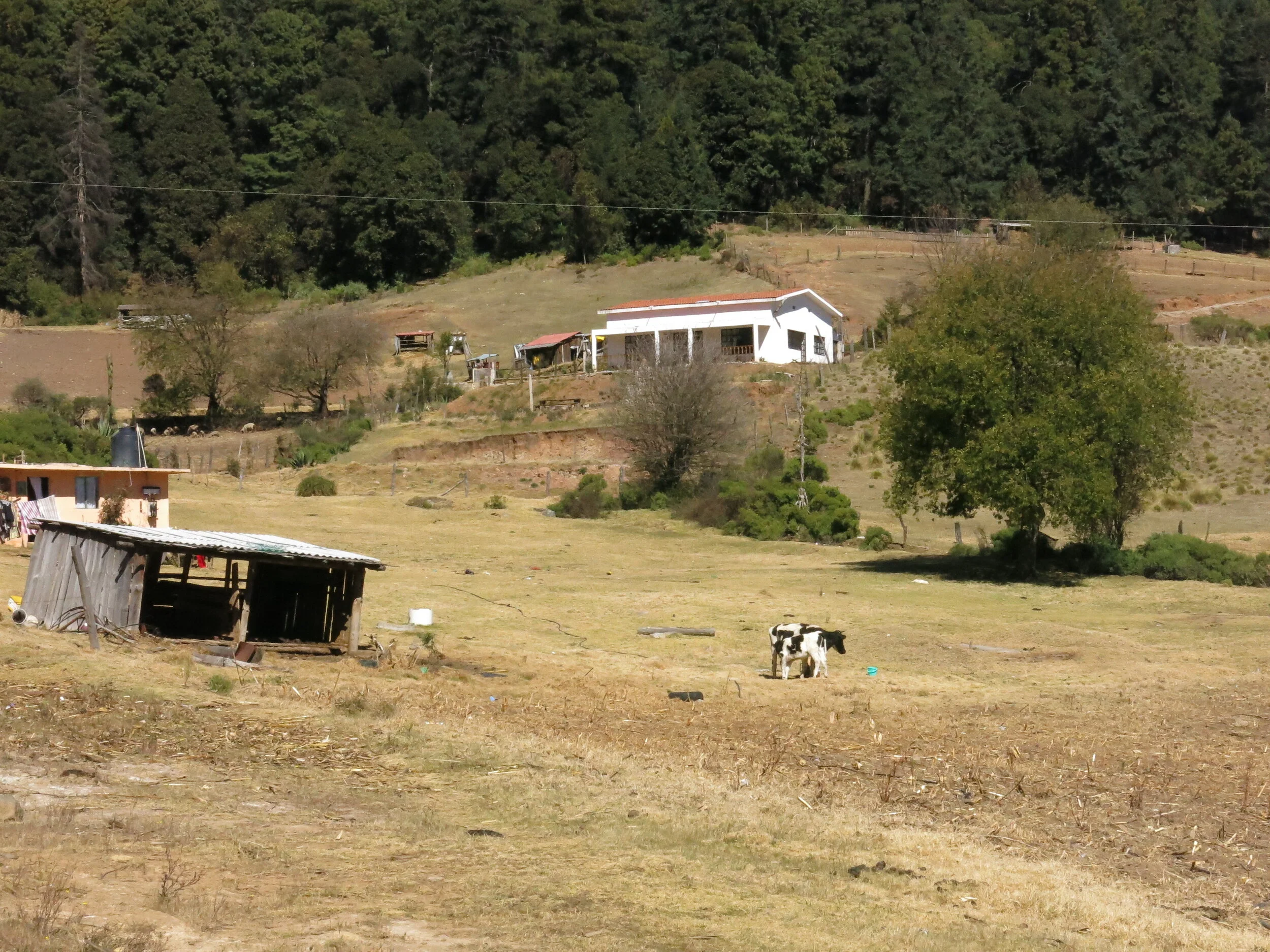
Here the next group of children living at the low valley- surroundings of “Sierra Chincua” Monarch Sanctuary and forest areas; we mostly conform big populations from area to area around the Monarch’s Sanctuaries and we can be families of 6 members at least, but we can also be as large as 10-15-20 members in a family, each living in their our own private little homes around our common yard where 1-2 kitchens remain on purpose as the family meeting point everyday with our grandpa’s. Every presentation the Symbolic Migration brings, starts mostly with short reflections among children on the benefits we get from our local forest trees and fruit trees. Children then should try to go over the names of both types of trees and Estela will support when needed doing a little of a guess game to push them to recall. At each visit, the lesson of the day tries to go into at least one more specific topic –among the so many topics to approach--, as deep as each group allows on the importance of our forests and the benefits of our local forest trees. Today for example, the difference between Perennifolios trees (those which keep their green leaves all year round) and Caducifolios trees (those which lose their leaves in the fall), was necessary to stress: “It seems that all of our forest trees are Perennes, except Willows which grow in rather low valley areas and loose their leaves in the winter; then, all of our fruit trees, except Avocado trees, are Caducos; right now, they look as if they were dead. Two of the most important tree species in our forests, Oyamels and Pine trees are Coníferas, strong and evergreen trees; they never loose their leaves at all; Coniferas forests are classified as Perennial.”, Estela explained. “Oyamel trees are the favorite to Monarchs and they are the ones growing largest of all trees in our forests” --“A girl in the group said to the others”--. “This is the time when Oyamel trees release their seed cones and the time for our parents and grand-parents to collect seeds for reforestation in the summer”, --a boy replied--. Now, what about our “Seasonal trees”, that is, our fruit trees? “It is winter now and they appear to be dead, but they are only sleeping!; they harden their twigs and close their root-ends to stand freezing temperatures during the winter; then, they will open their twig and root ends in the spring again for the whole tree to awaken and new leaves to emerge; they will bloom in the summer so that pollinators have abundant nectar and pollen and animals and humans have abundant fruits; later, at the start of the fall, the cycle will start to close again and they will only go to sleep over the winter, which will make them look just as we see them now. Fortunately, Monarchs need their giant Oyamel trees, nectar of our wild flowers, pure-water creeks and ponds, and as abundant canopy as possible to keep humidity levels on; that is enough for their overwintering time with us; they can enjoy an important part of the blooming of the spring here, since our winters are rather very short and get over by end-January!. There was time to mention in the group, that in the Monarch forests, over 300 species of mushrooms grow and that they are extremely important to keep our forests healthy! This would be the topic for the next visit!
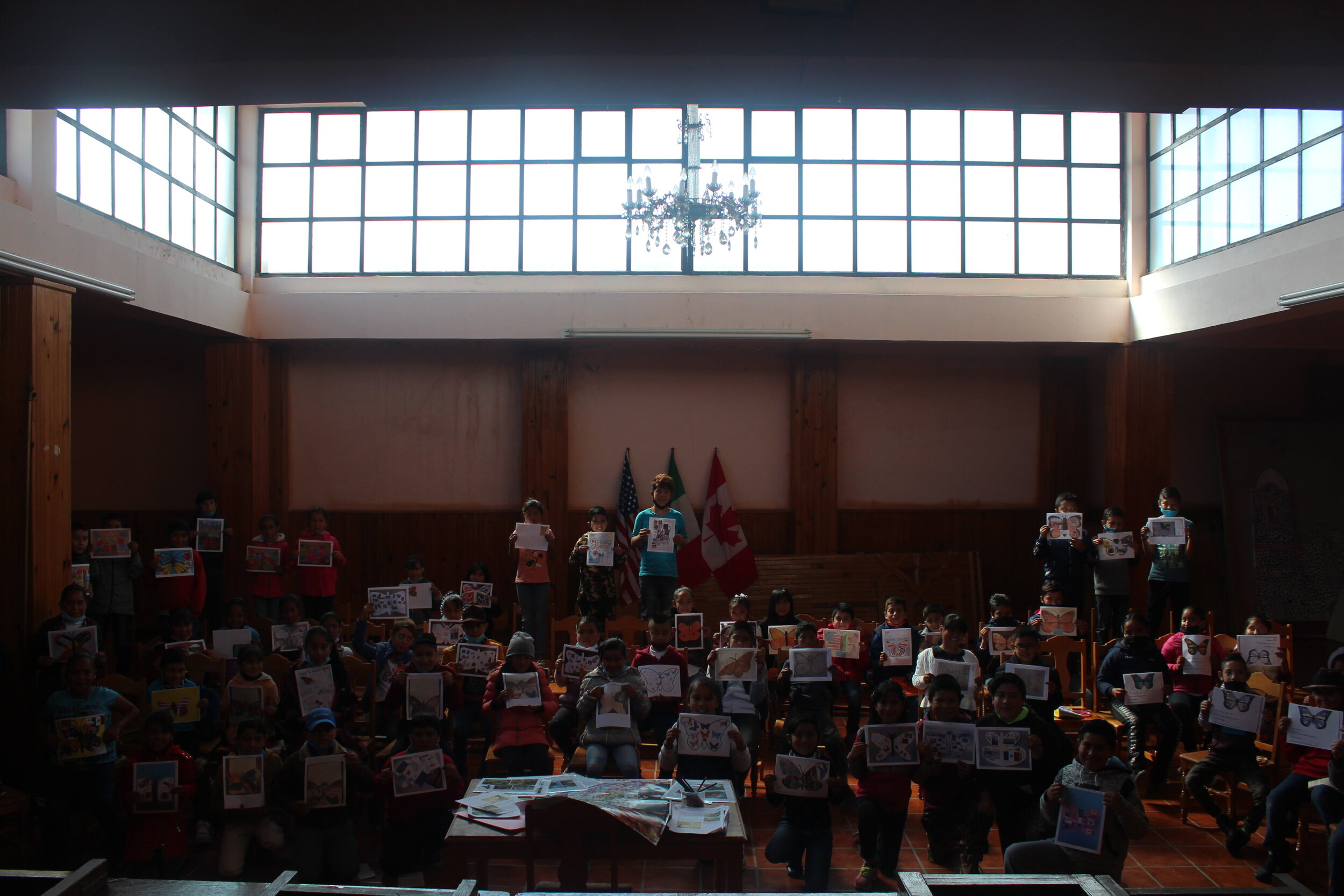
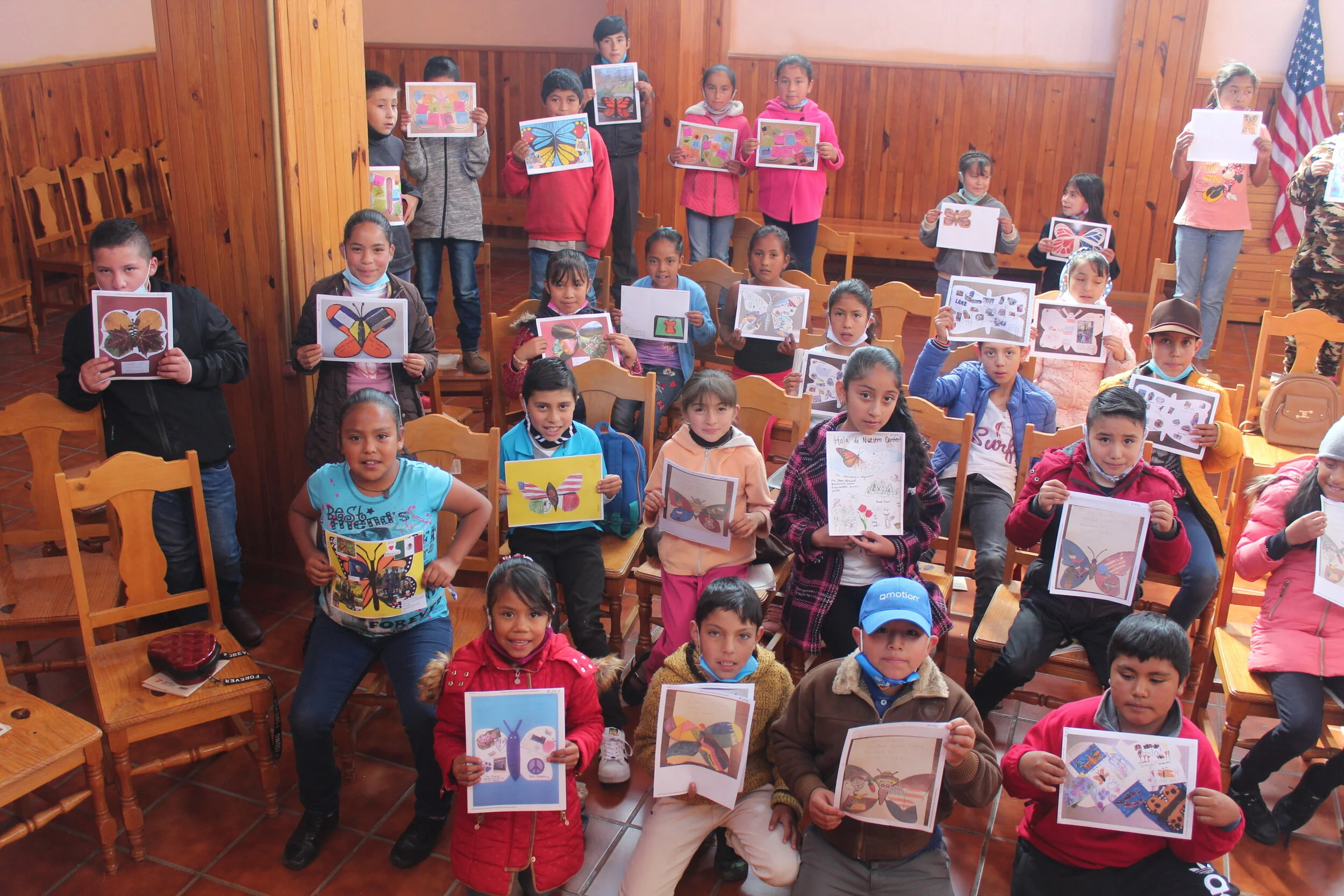
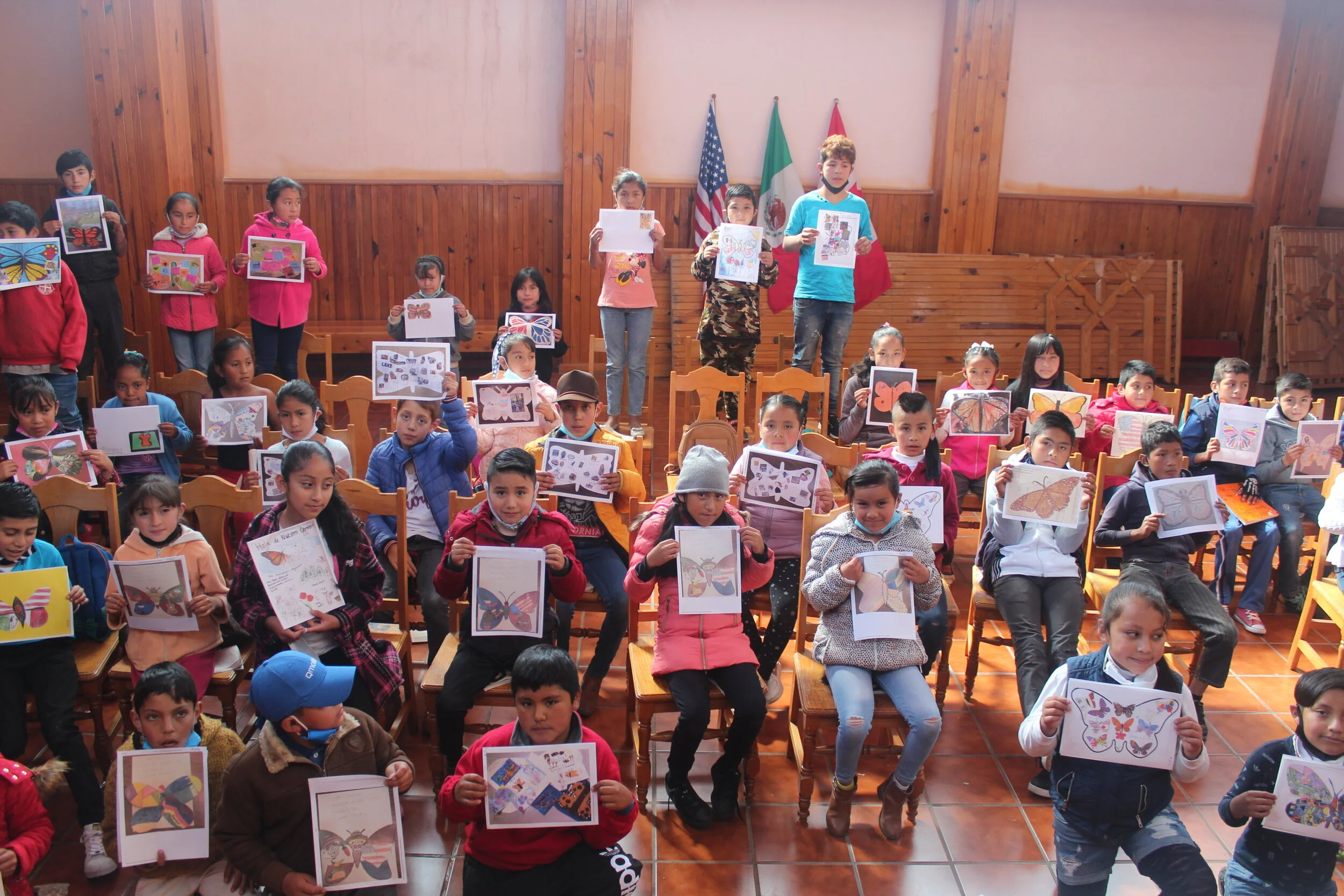
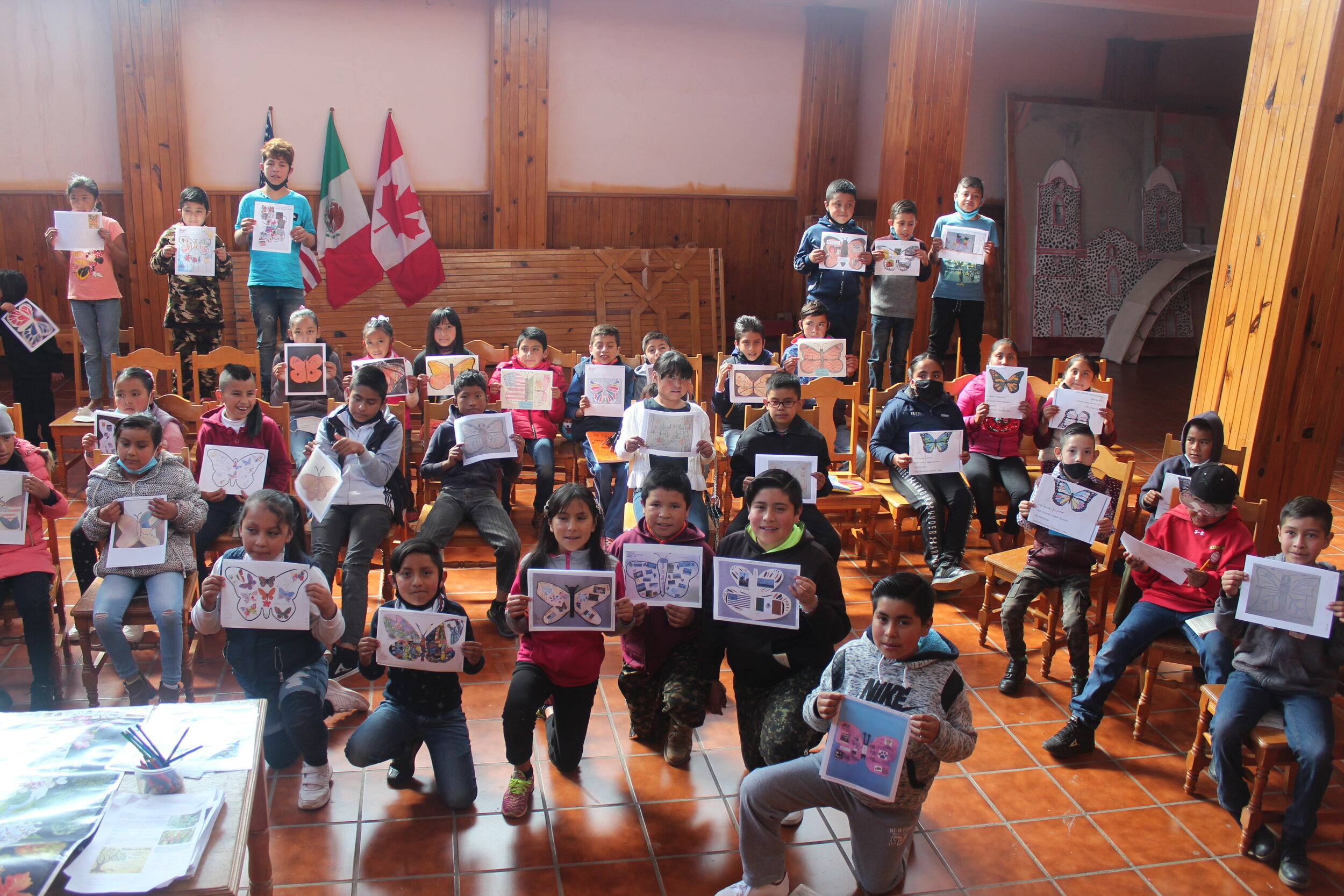
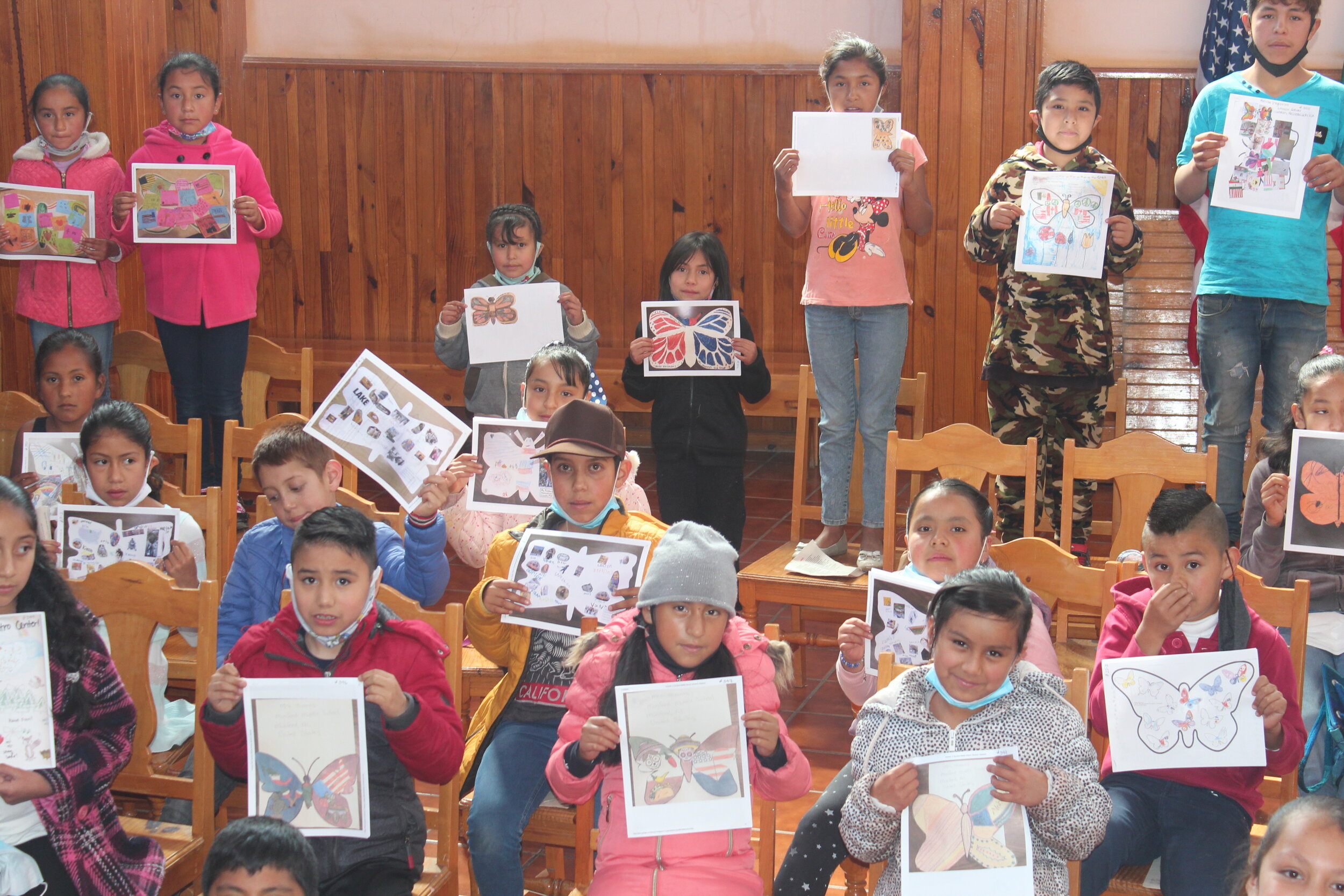
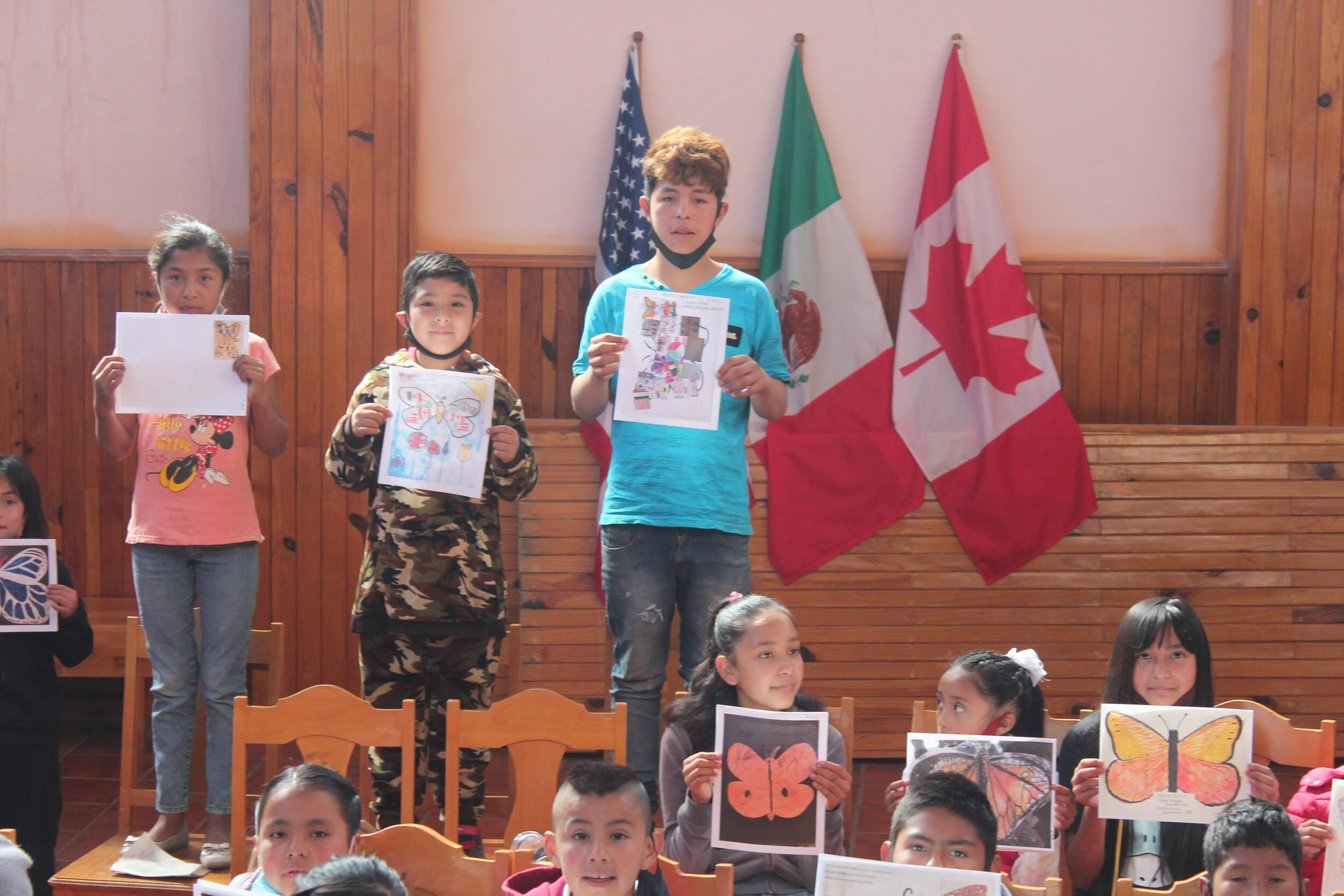
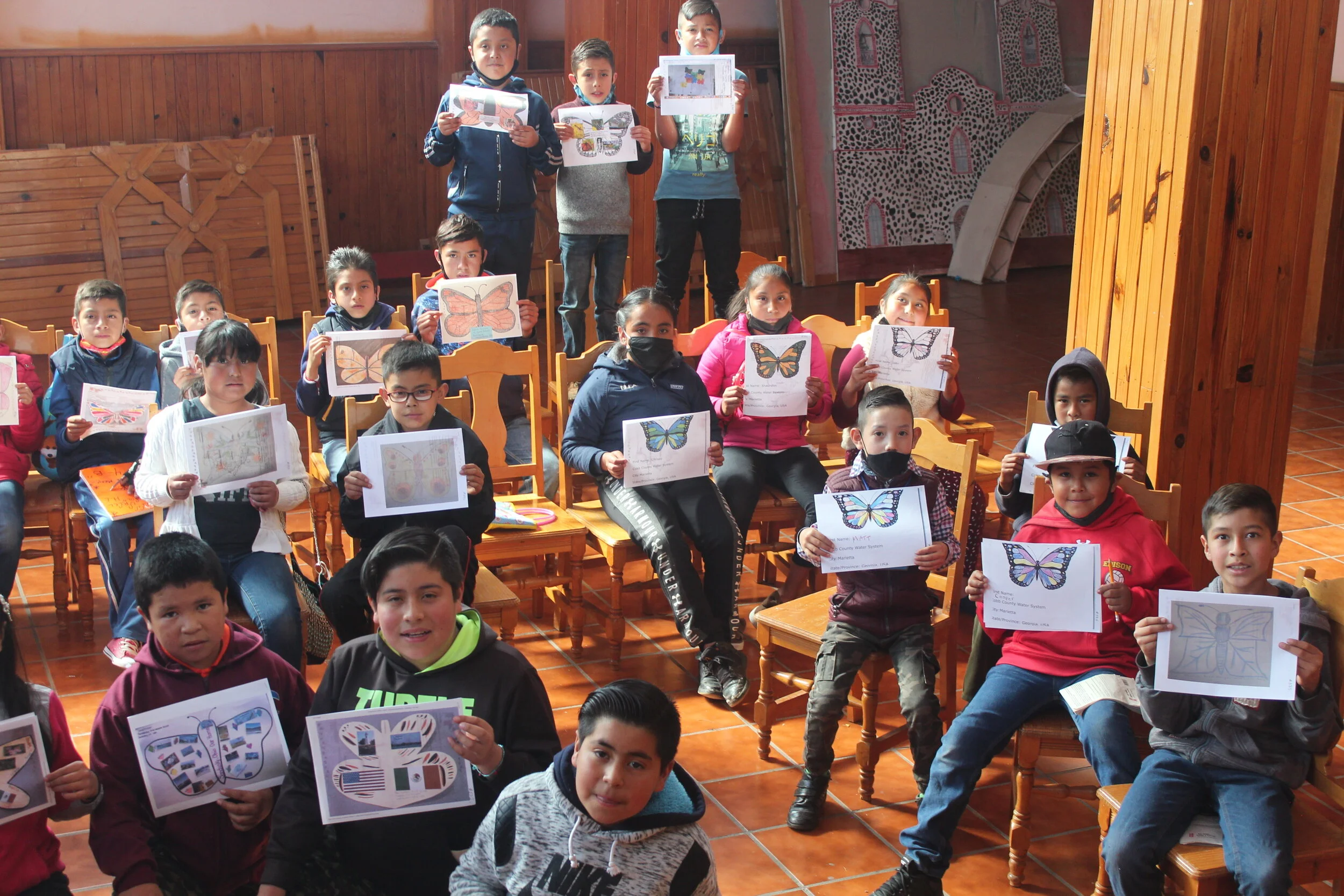
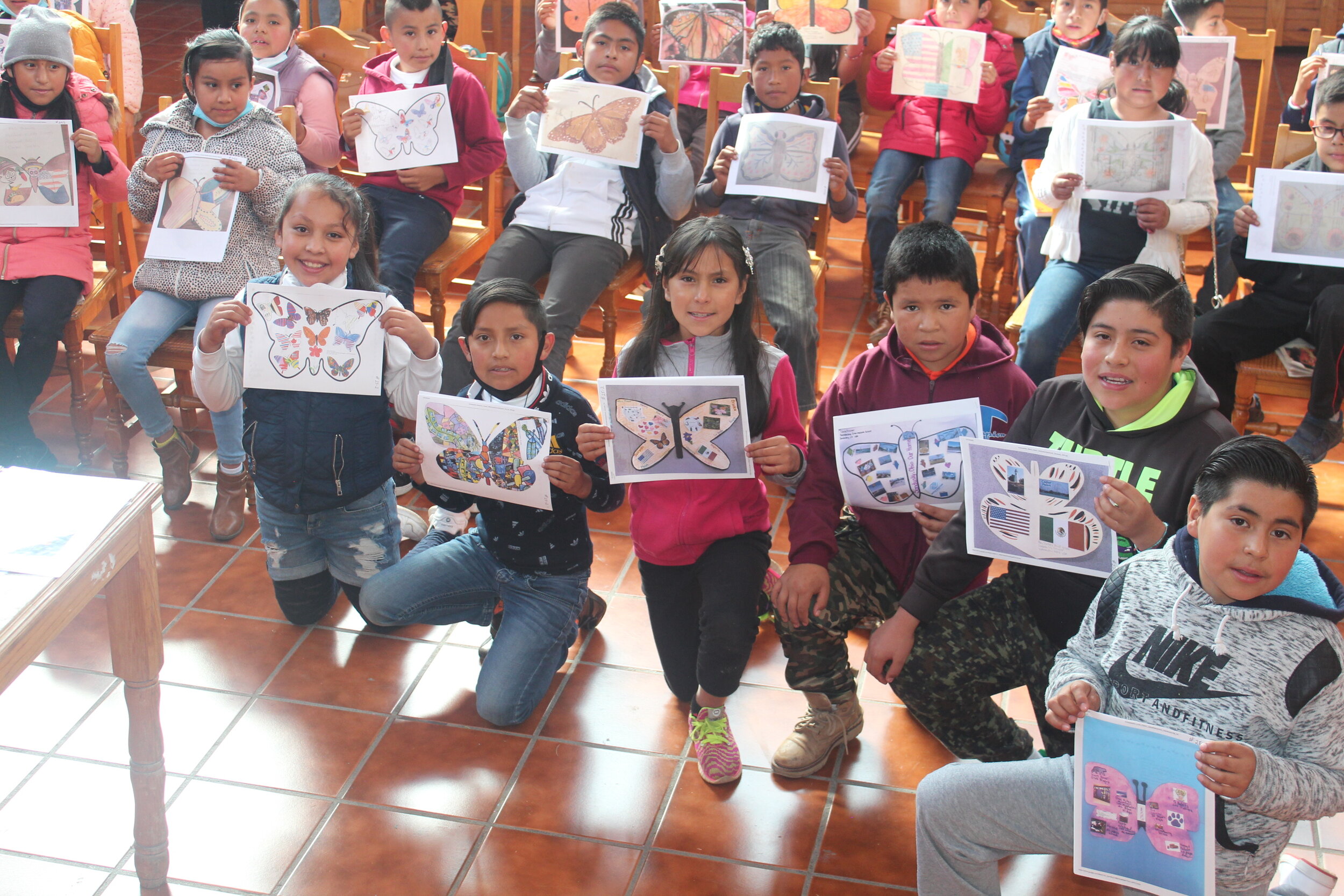
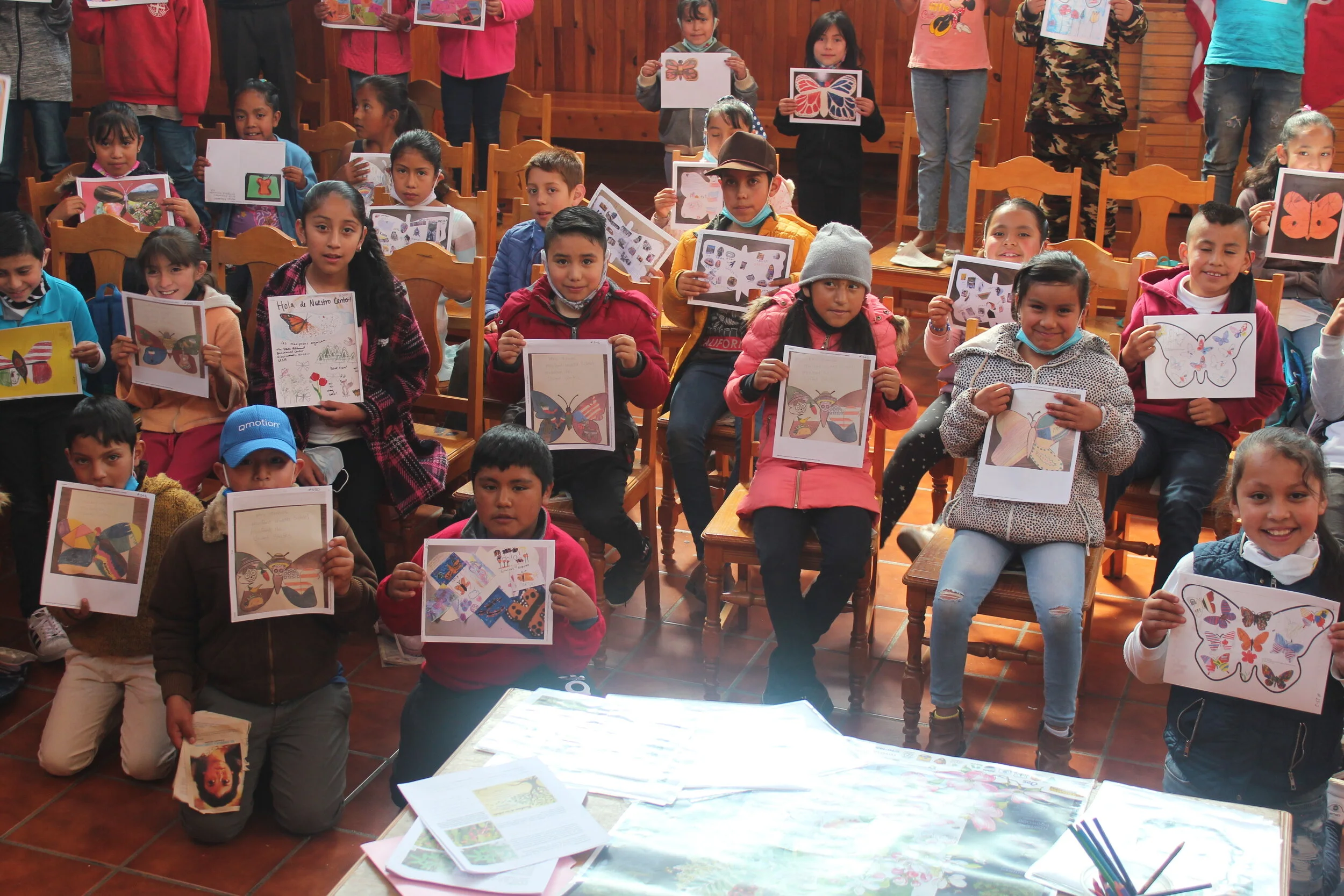
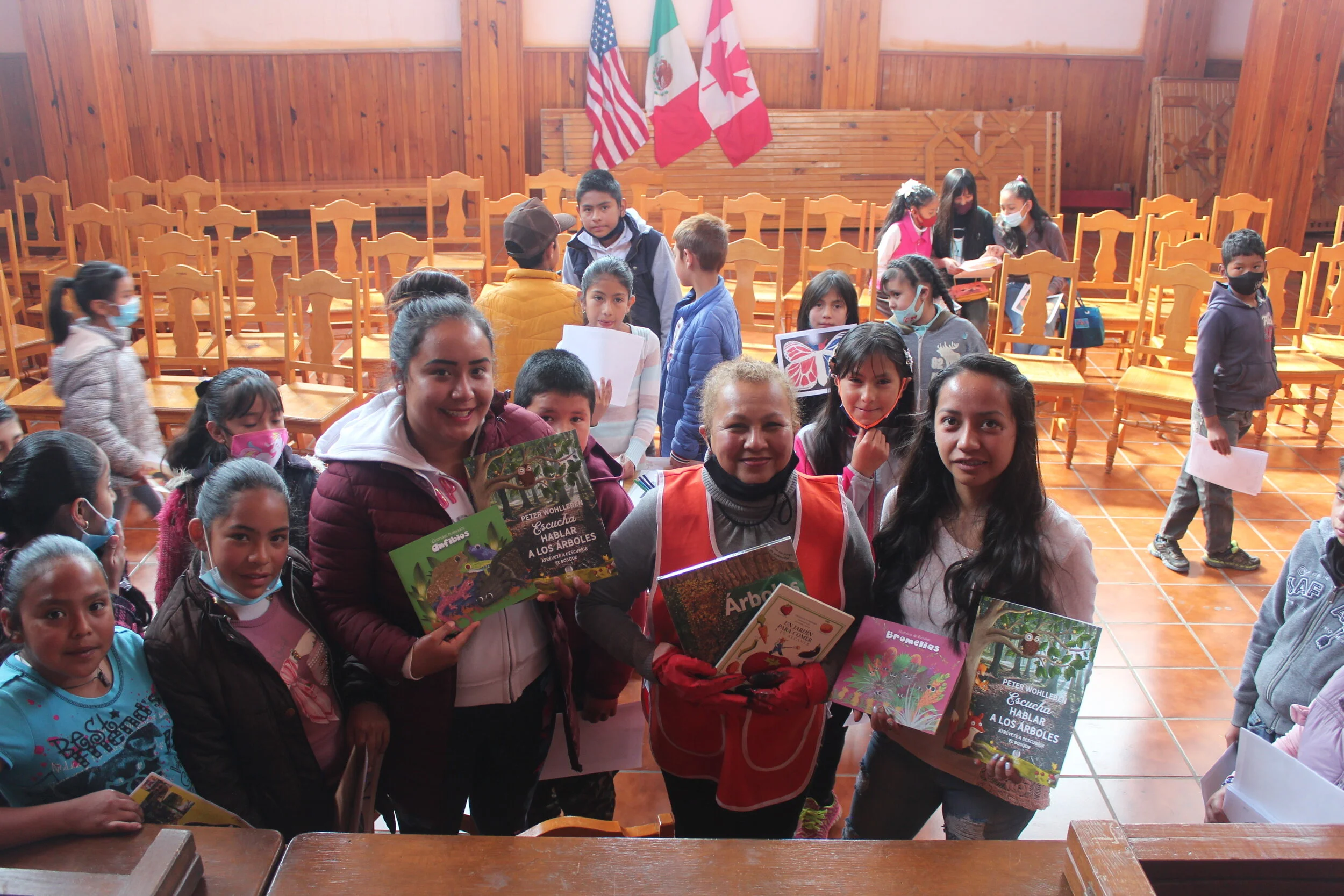
AMBASSADOR MONARCHS DELIVERED IN THIS VISIT
Moriarty Environmental Sciences Magnet School, Norwich, Connecticut
Johnson Elementary, Fort Thomas, Kentucky
Johnson Elementary, Fort Thomas, Kentucky
Johnson Elementary, Fort Thomas, Kentucky
Johnson Elementary, Fort Thomas, Kentucky
Poole's Mill Elementary School, Cumming, Georgia
Park Middle School, Bleckley, West Virginia
ecoEXPLORE, Ashville, North Carolina
ecoEXPLORE, Ashville, North Carolina
Krisle Elementary, Springfield, Tennessee
Plymouth Creek Elementary, Plymouth, Minnesota
Holy Family Catholic School, Fort Worth, Texas
Brushwood Center at Ryerson Woods, Riverwoods, Illinois
Munford Middle School, Munford, Alabama
Munford Middle School, Munford, Alabama
Munford Middle School, Munford, Alabama
Munford Middle School, Munford, Alabama
Munford Middle School, Munford, Alabama
Munford Middle School, Munford, Alabama
Arongen Elementary, Clifton Park, New York
Jalet Home School, Lincoln, Massachusetts
MacFarlane Park Elementary School, Tampa, Florida
Sunflower Farm Sprouthouse, Longmont, Colorado
Lincoln School, Lincoln, Massachusetts
Varner Elementary, Powder Springs, Georgia
Varner Elementary, Powder Springs, Georgia
The Advent School, Boston, Massachusetts
Woodlawn School, Davidson, North Carolina
Tilden Hogge Elementary, Moorehead, Kentucky
Simonds Elementary School, Warner, New Hampshire
Charles L Kuentz Junior Elementary School
Sandusky Intermediate School, Sandusky, Ohio
Bubb Home School, Ballwin, Missouri
Home School PA, Pennsburg, Pennsylvania
Meadow Montessori School, Monroe, Michigan
Kresson Elementary School, Voorhees Township, New Jersey
Bridges Charter School, Thousand Oaks, California
Cobb County Water System, Marietta, Georgia
Cobb County Water System, Marietta, Georgia
Cobb County Water System, Marietta, Georgia
Cobb County Water System, Marietta, Georgia
Cobb County Water System, Marietta, Georgia
Cobb County Water System, Marietta, Georgia
Monarchs Across Georgia, Watkinsville, Georgia
Monarchs Across Georgia, Watkinsville, Georgia
Monarchs Across Georgia, Watkinsville, Georgia
Monarchs Across Georgia, Watkinsville, Georgia
Milkweed Meadows Farm, Fruitland, North Carolina