
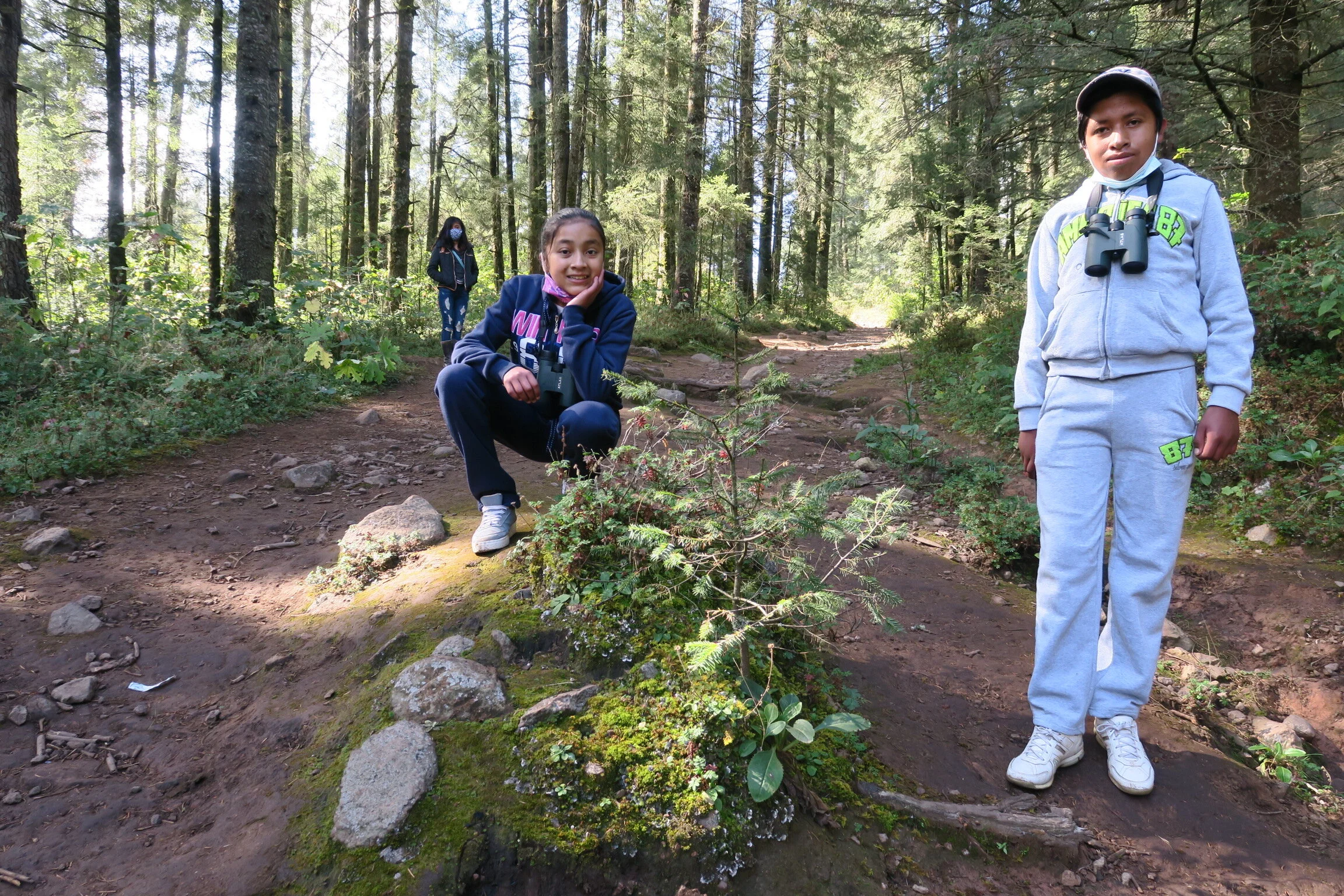
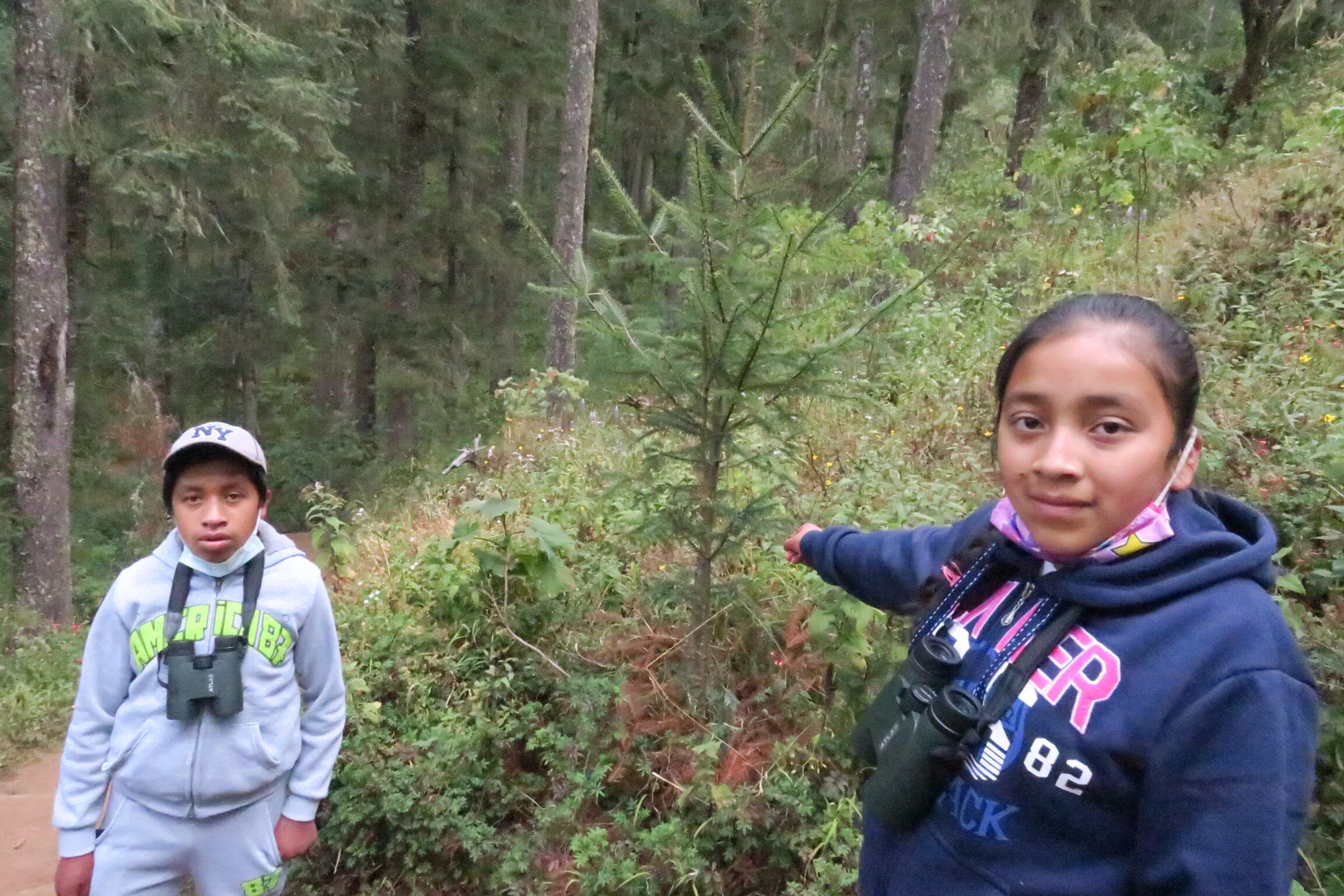
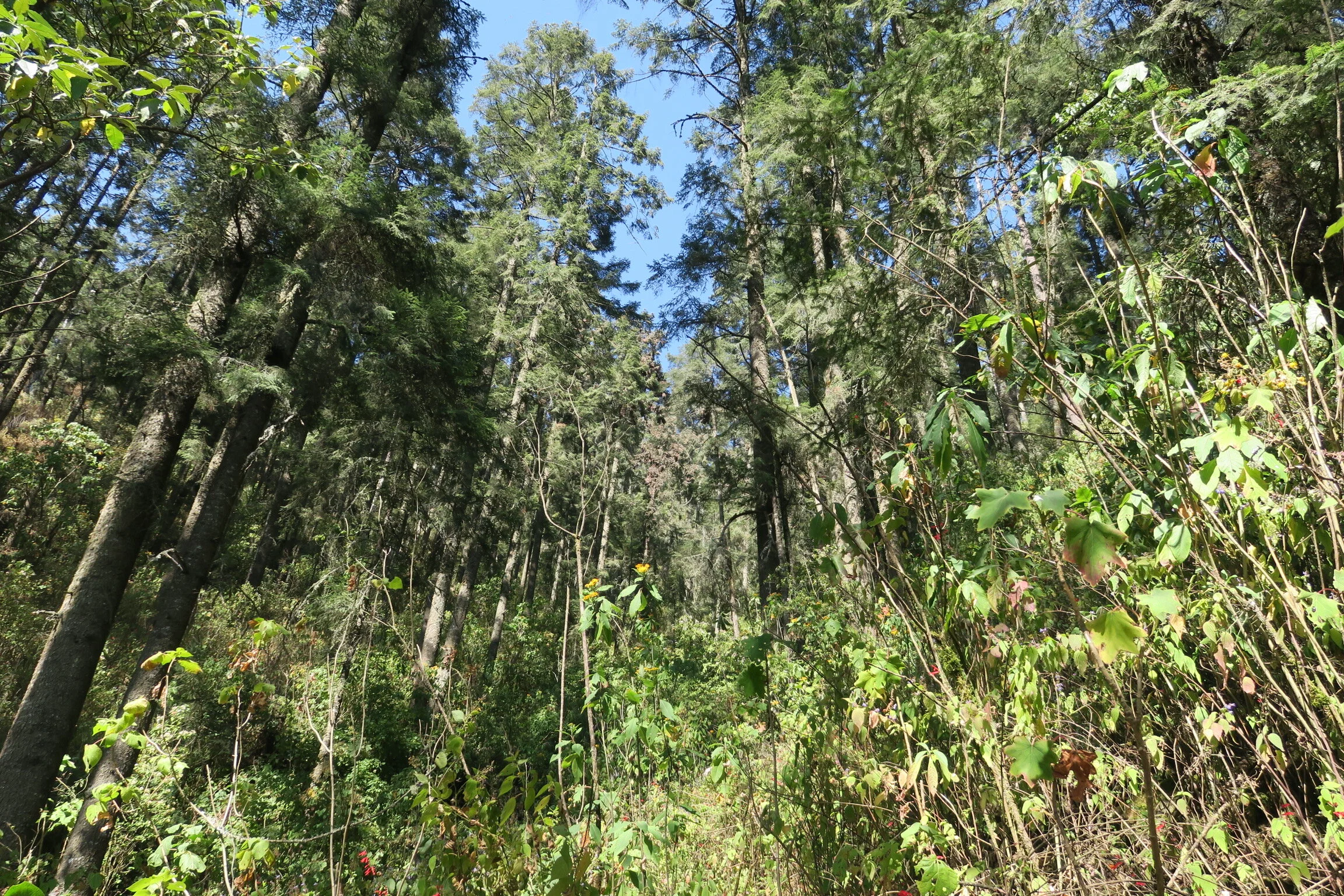
Oyamel trees grow under special conditions
THE VISIT
Dear friends,
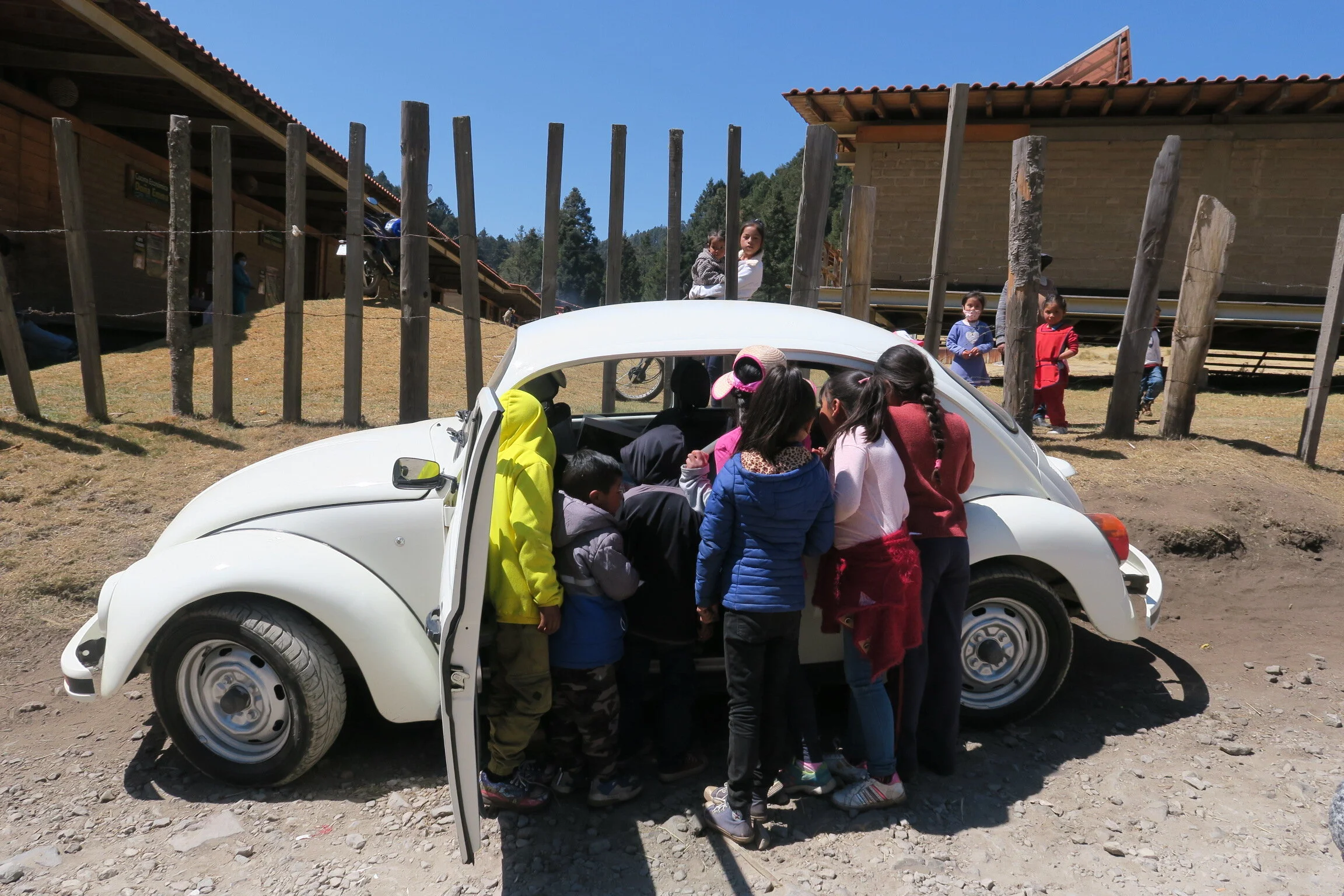
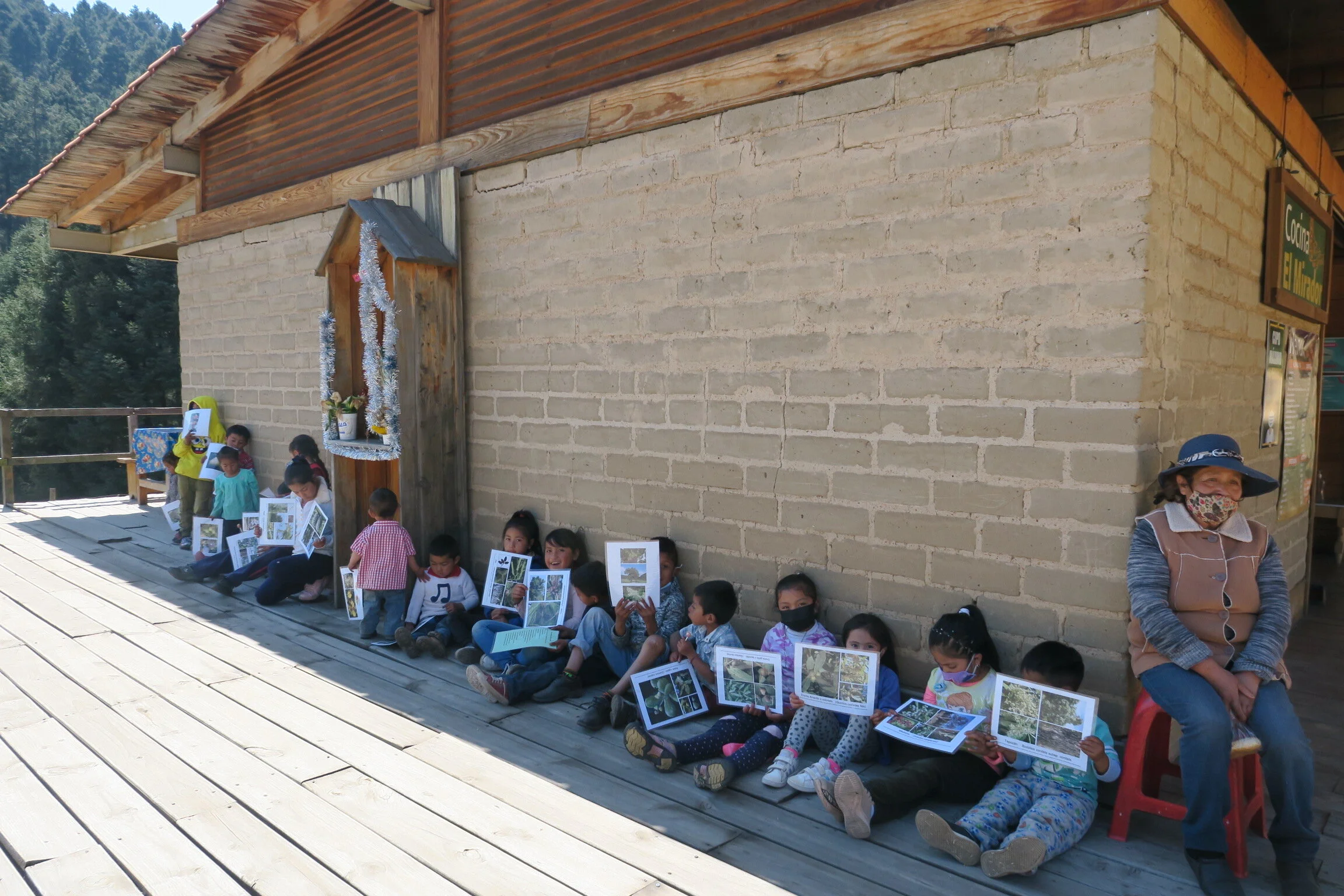
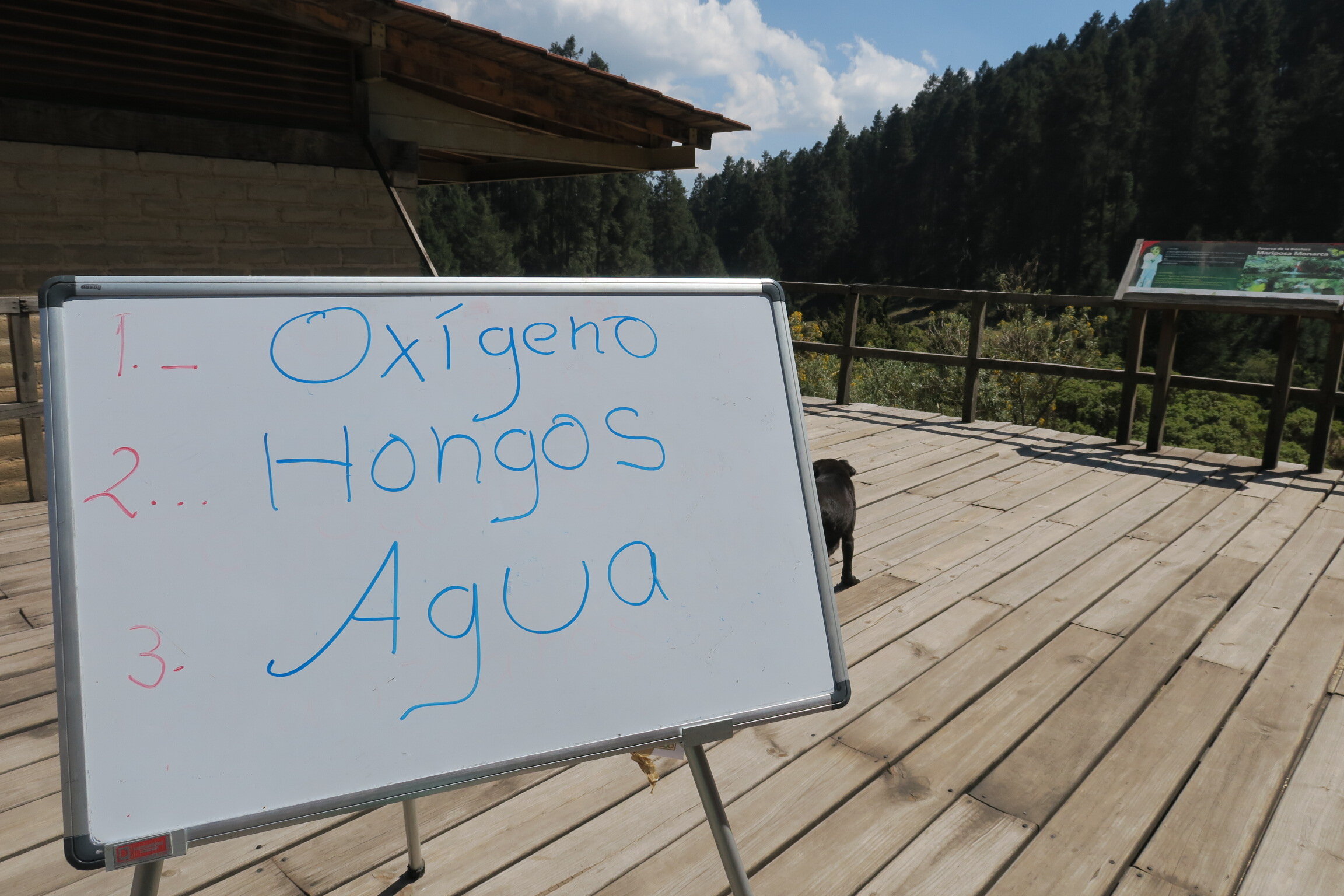
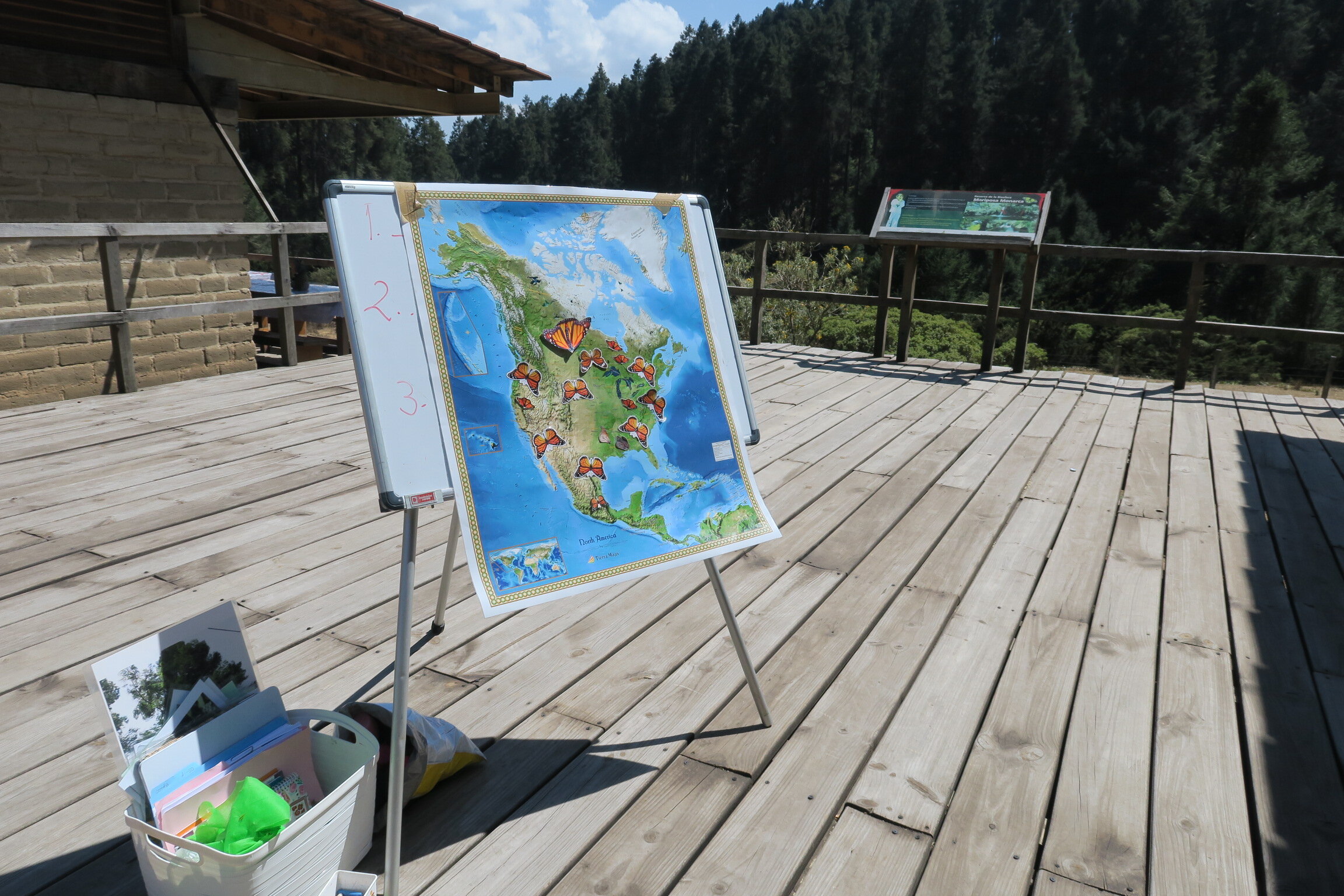
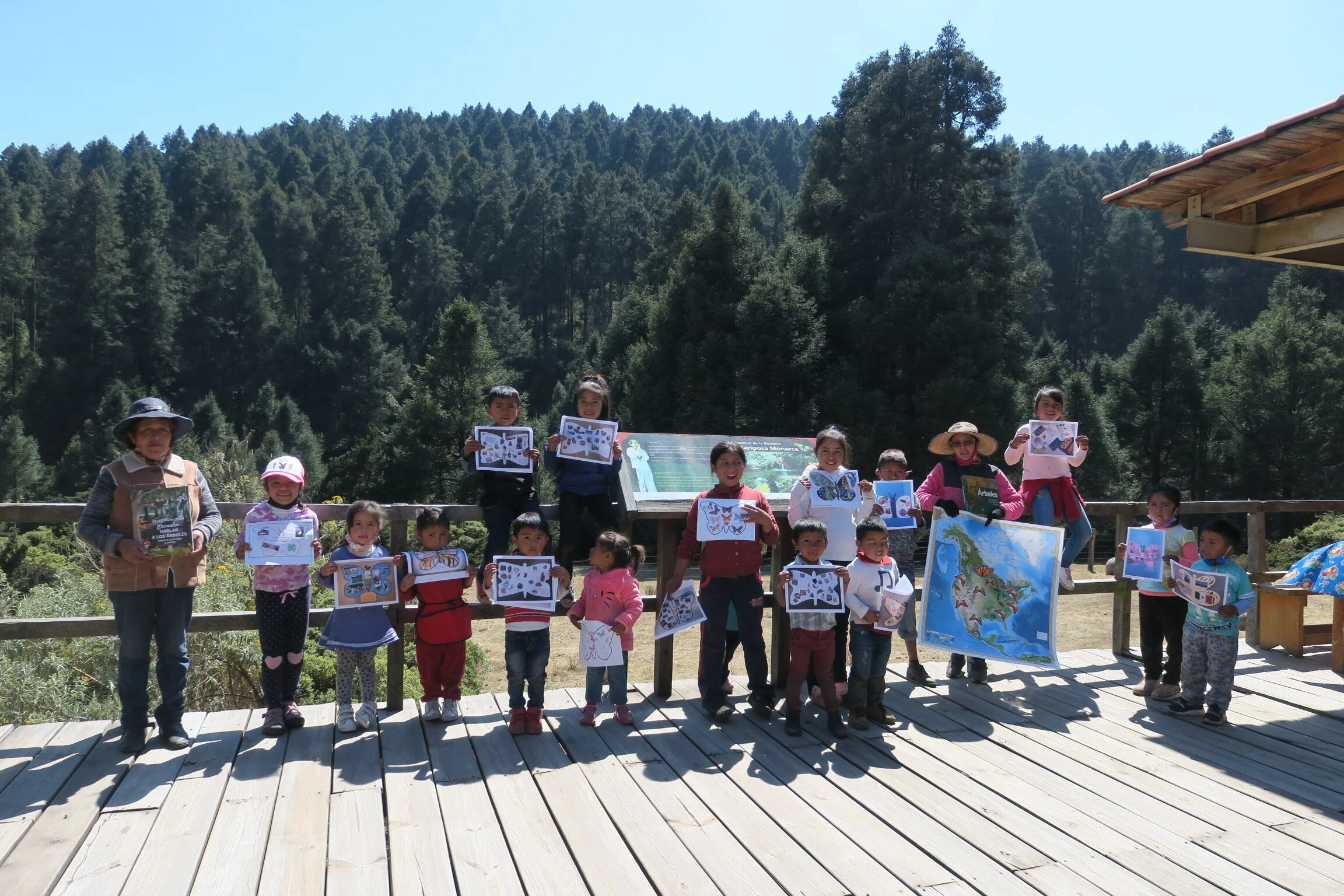
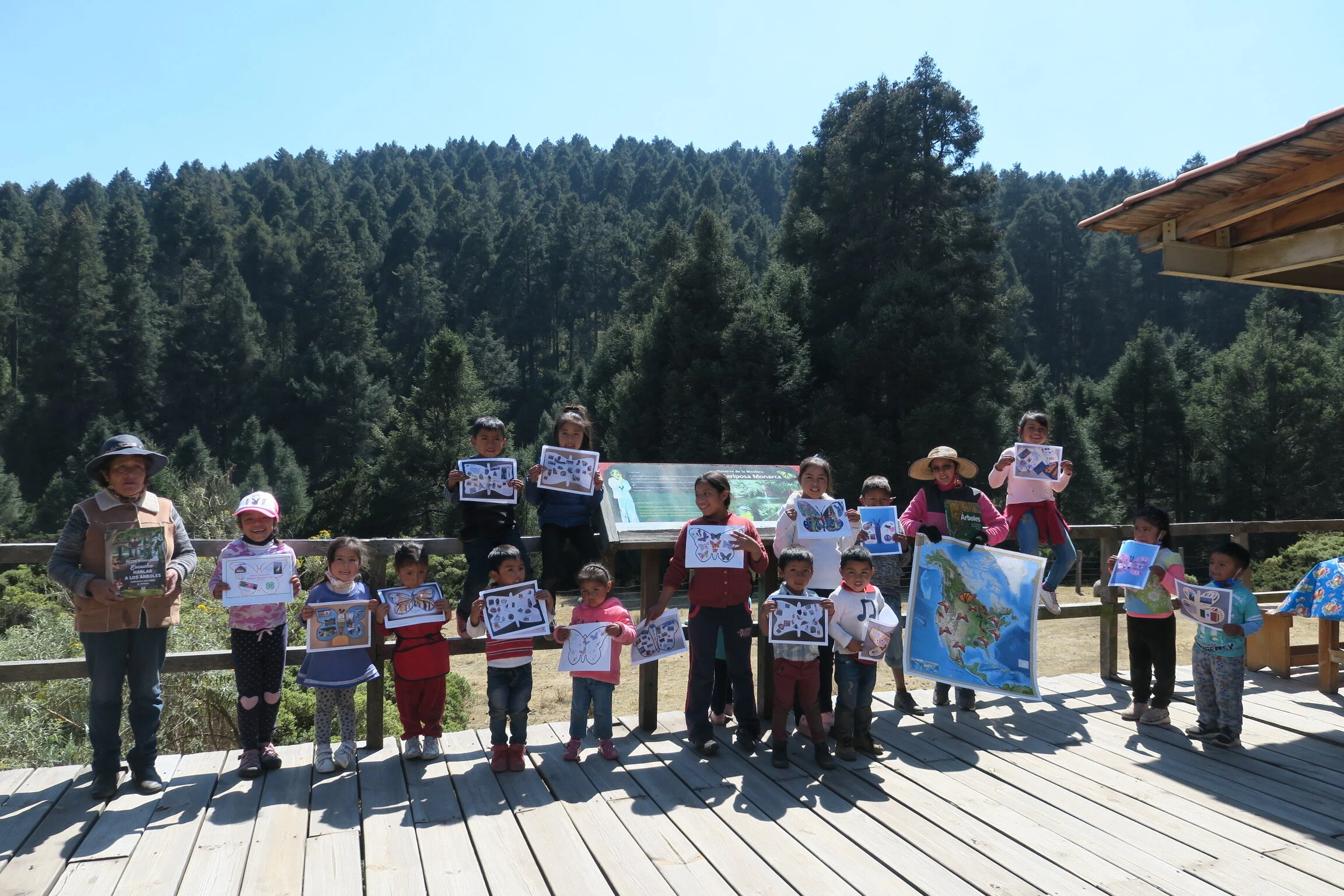
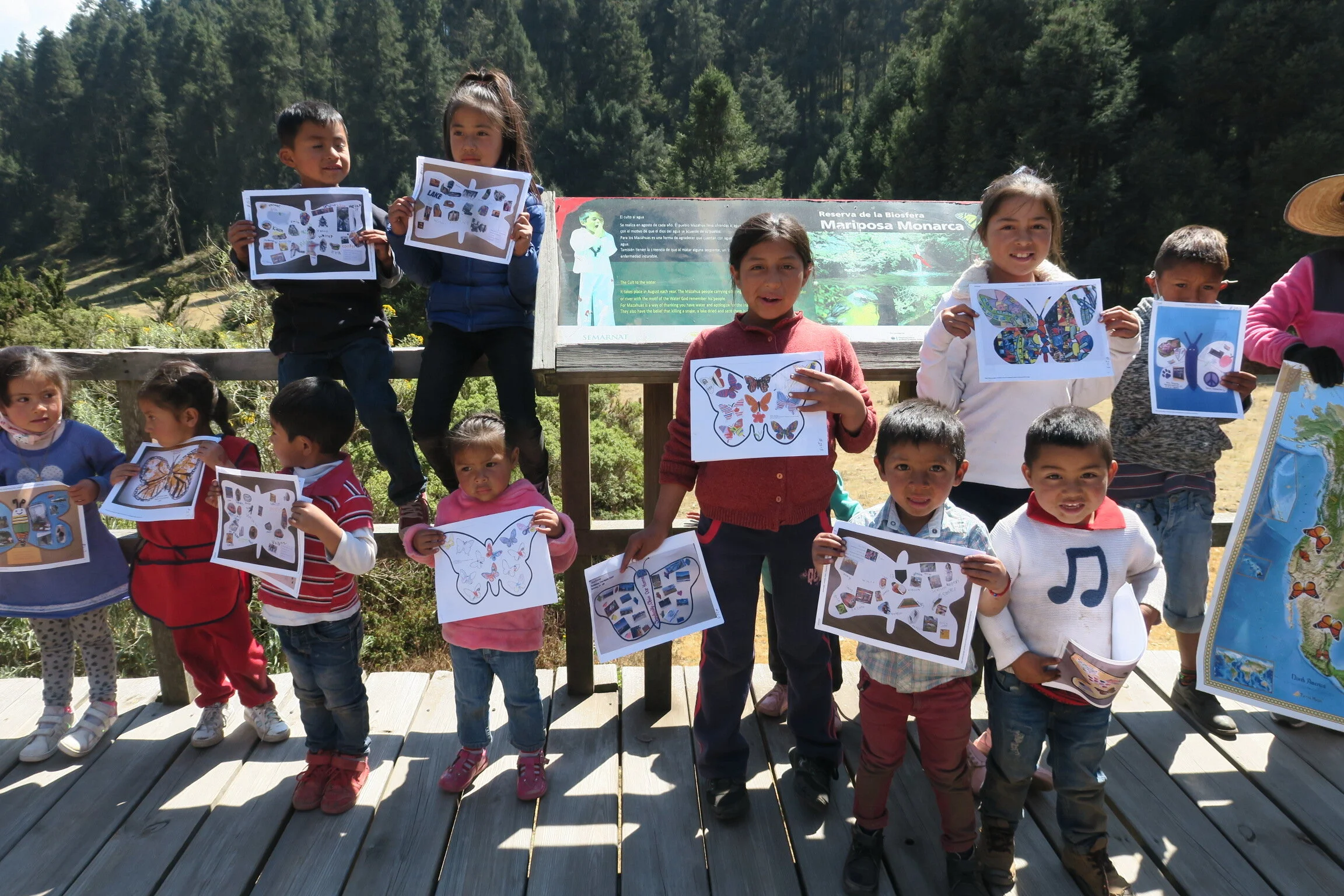
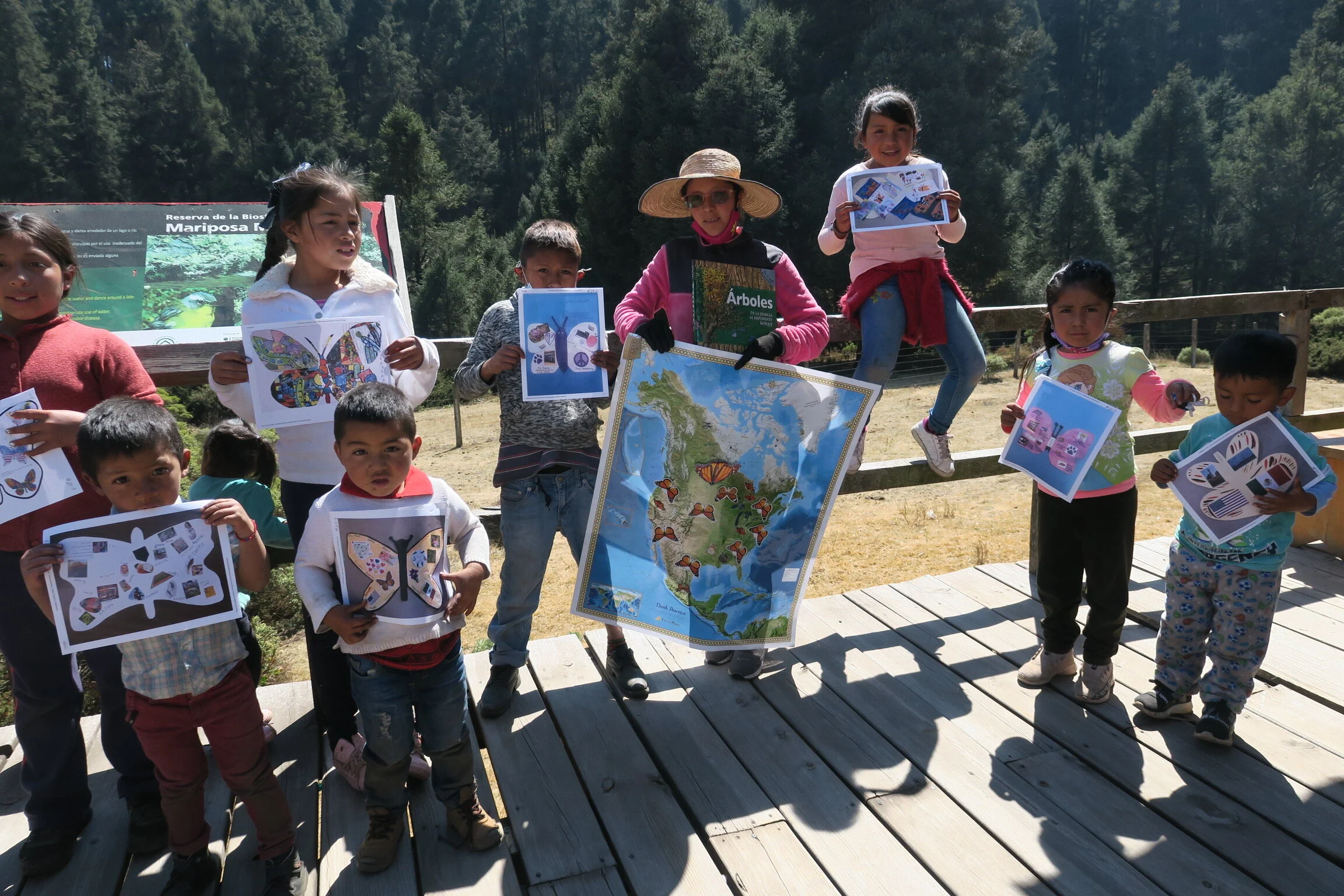
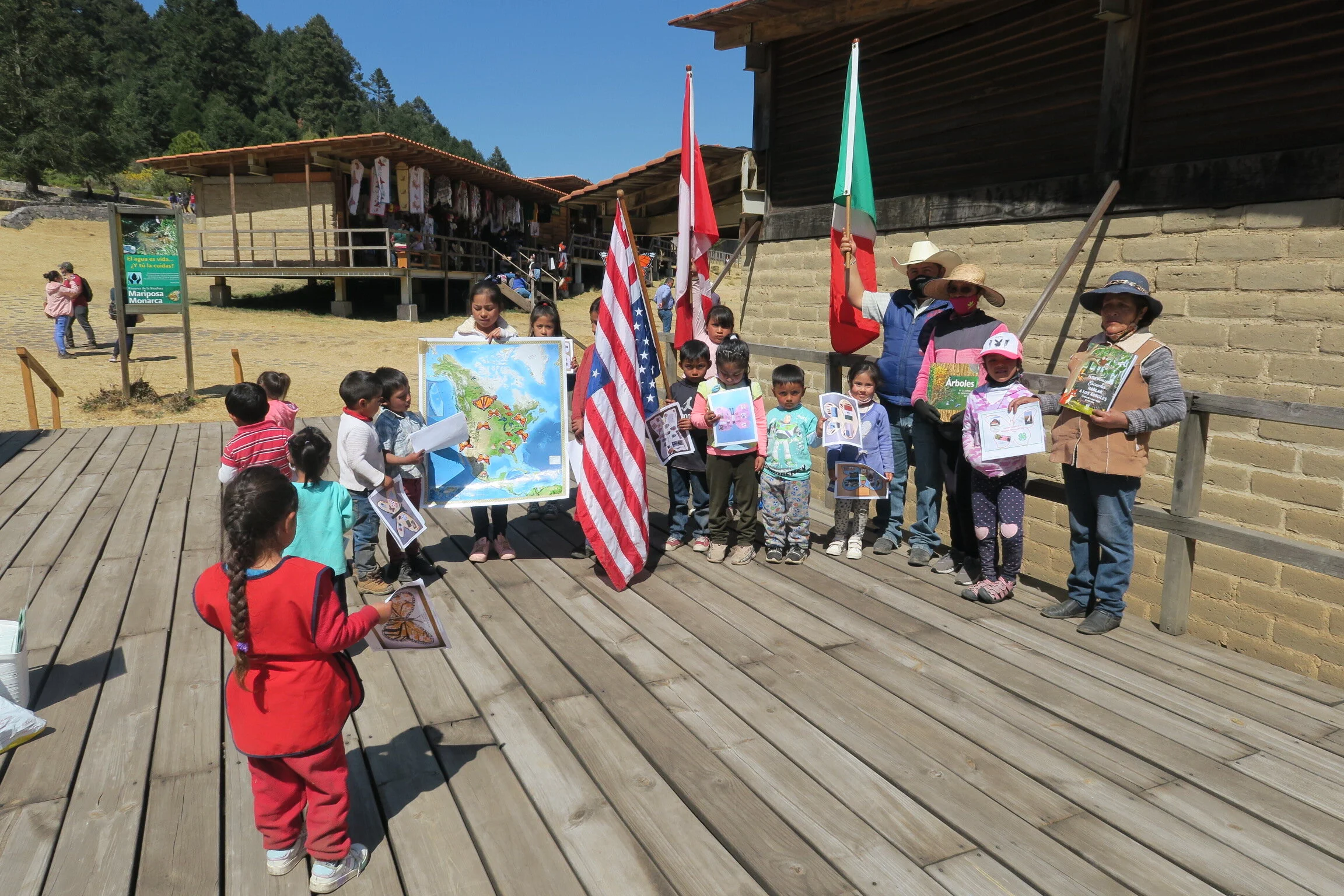
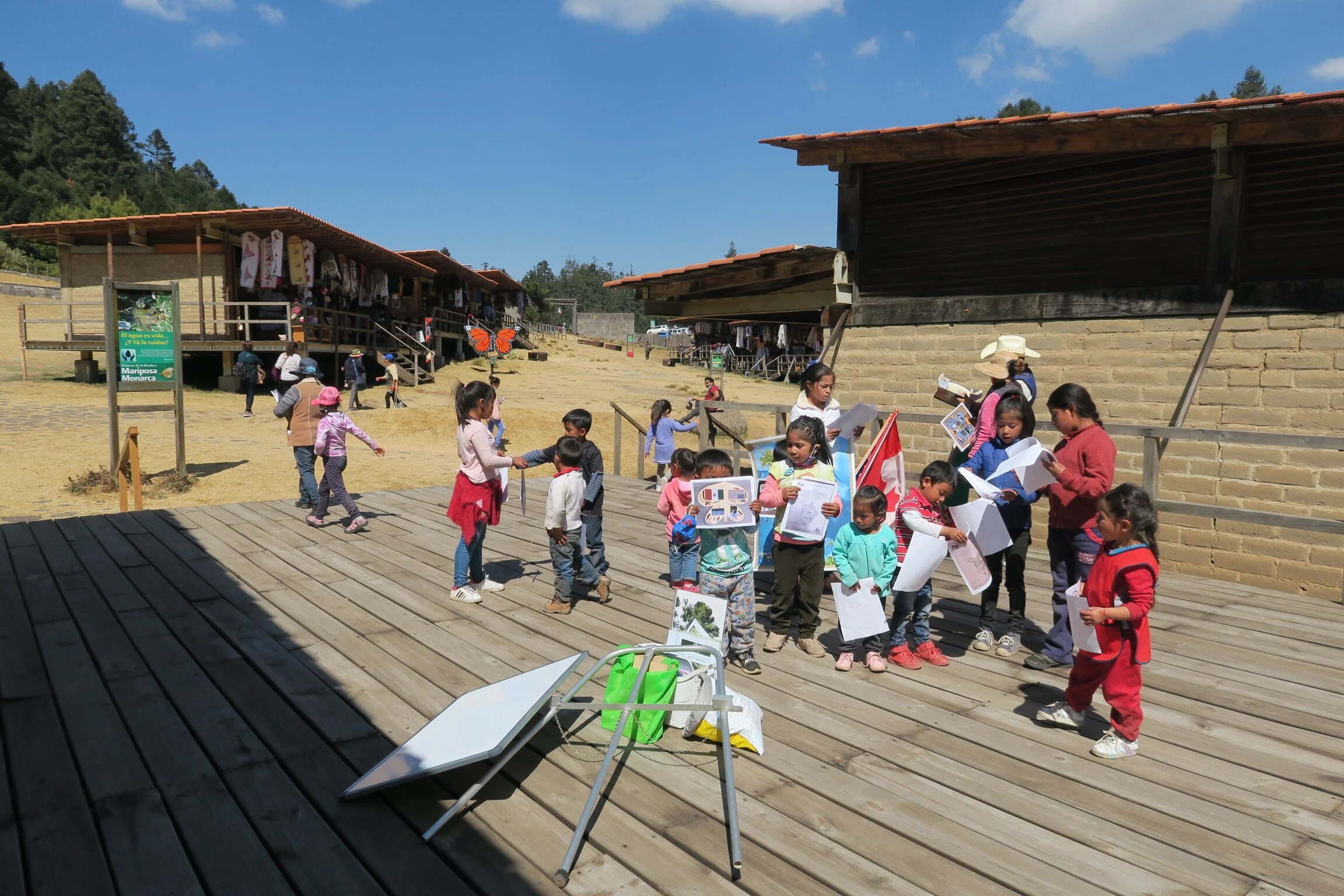
Once again our lesson on the benefits of trees visits a group of children to Ejidatario families running the Sierra Chincua Sanctuary. Introducing the class with the life cycle of Monarchs in a way that mainly little children get the general idea of it and older ones reassure their knowledge on it, shall be a first step on the start off of our lesson.
A main point to reach is to let them know, after going over the names of the different forest trees we have, that Oyamel trees are a really special conífera species that are exclusive to altitudes over 2,800 meters and cold to freezing weather conditions. “This is the favorite trees of Monarchs and the reason why maybe most of the Monarchs’ population migrating south for the winter come to these forests and do not choose any other region in our planet, but a few other sites rather far away that do not have these characteristics forming there rather tiny colonies.”
Older children then did a few participations. “Dad says that from the many, many Oyamel trees he and many, many of our dads and grandpas plant in the woods here every summer during the reforestation time, only a few really survive.” “My mom says that maybe the weather change to much warmer now is affecting them badly since the soil might be too dry for baby Oyamel trees to grow now. She says that when she was a child it was all over so wet and cold and rainy or foggy and they did not worry about planting trees, because it seemed as the forests would do it by itself all the time.”
To which the all-rapt-attention local family, husband, wife and grandma attending, responded taking turns. “That is true. We used to only really enjoy from March to mid-May without rain and with hardly really warm sun. The rest of the year was rain and cold to freezing weather all the time. It was to the point that many of us, ourselves native to this land, could even feel miserable at getting so much rain and freezing in the coldest days of winter. This would be worst mostly at our schools, where we would have no fire as in our kitchens at home to run and get a little warm for a minute! This means that we had intense rain and cold NINE MONTHS a year!. Now, very clearly during the last 12 years especially, we have fairly intense rain from late June to September and fairly cold from November through February, BUT this last summer, only average rain for three months and NO WINTER for us neither for Monarchs except for a few freezing nights and mornings without any rain in January and February!”
Well, experts assure us that Oyamel trees need as much green as possible around when they are planted for growing better. For a few seasons now, and specially this year, green around seems somewhat stressed all over, for which insects shall also get affected. The climate change did indeed reach Monarchs’ overwintering sites in this part of the globe. We are confident that just as Monarchs manage to adjust to new conditions, their Oyamel tree species will do so as well. We also realize that striving to revert the climate change phenomenon through conservation and restoration shall be our life-time mission.
AMBASSADOR MONARCHS DELIVERED HERE
Juneau County 4-H, Mauston, Wisconsin
Andrews Academy, Lake Saint Louis, Missouri
Pembroke Hill School, Kansas City, Missouri
Kent Place School, Summit, New Jersey
Parker Elementary, Elk River, Minnesota
Parker Elementary, Elk River, Minnesota
Parker Elementary, Elk River, Minnesota
Parker Elementary, Elk River, Minnesota
The Saint Michael School of Clayton, Saint Louis, Missouri
The Saint Michael School of Clayton, Saint Louis, Missouri
The Saint Michael School of Clayton, Saint Louis, Missouri
Sandusky Intermediate School, Sandusky, Ohio
Sandusky Intermediate School, Sandusky, Ohio
Sandusky Intermediate School, Sandusky, Ohio
Dana Elementary, Hendersonville, North Carolina
Dana Elementary, Hendersonville, North Carolina